Organised crime threatens San Bernardo mayor: experts warn of institutional breakdown
A criminal gang planned to attack the mayor Christopher White, revealing a new escalation of organised crime against local authorities in Chile.
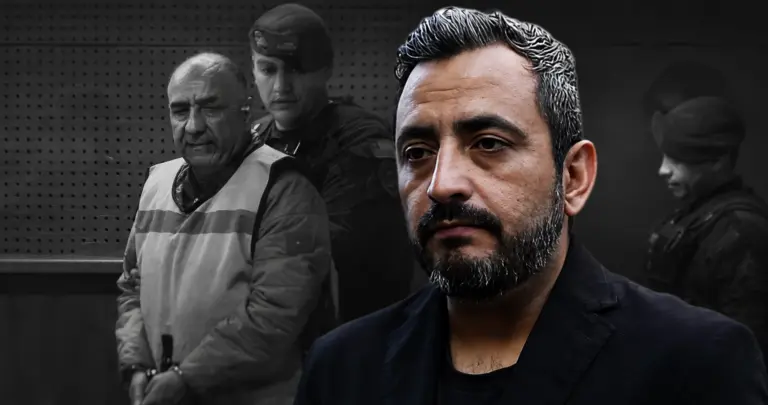
San Bernardo mayor under death threat: organised crime targets municipal authorities
"For the State to notify me that they are going to kill me is something terrible." With that phrase, San Bernardo mayor Christopher White publicly reacted upon learning that a criminal gang had planned an attack on his life, according to canal9.cl.
The alert emerged following the arrest of the man known as "El Indio Juan", a capture that not only ended one of the most controversial escape episodes in the recent prison system, but also exposed a meticulously prepared plan, with defined stages to carry out the attack against the municipal chief.
One of the hypotheses about the motive points to the position of the San Bernardo Municipality regarding the control of the Santa Rosa de Lima and San Esteban neighbourhoods, areas where drug trafficking and other illicit economies have gained significant presence. In those territories, any action by authorities can be interpreted by these networks as a direct threat to their interests.
A qualitative leap in criminal threat
International consultant and organised crime specialist Pablo Zeballos, in conversation with BioBioChile, noted that what occurred in San Bernardo reflects a dynamic that is not exclusive to Chile, but shared by several countries in the region.
Zeballos warns that the phenomenon should not be measured solely by the volume of crimes committed nor by the label of the gang responsible. The relevant metric, according to his analysis, is the capacity of organised crime to dispute authority, condition behaviour and establish mechanisms of territorial control. In those aspects, he argued, studies in Chile still have a pending debt.
That a criminal organisation reaches the point of planning an attack on a mayor reveals something more than the commission of crimes: it shows that these structures see authorities as an obstacle to their ends and, in certain cases, as a direct rival for territorial dominance.
To this is added, according to Zeballos, a logic that involves not only intimidation but also coercion. The municipal level is particularly sensitive in that scheme: mayors directly gather the concerns of neighbourhood leaders, maintain the closest contact with neighbourhoods and lead the recovery of public spaces.
The specialist emphasised that the focus should not be limited to White's case. Threats also reach neighbourhood leaders, who tend to be the first targets of these structures, and the State's response must be clear: it will not tolerate this type of pressure on its authorities.
"A true watershed moment"
The former vice-secretary of Carabineros and current director of the Centre for Security Studies at Central University, Neftalí Carabantes, was more categorical in his diagnosis.
"A true watershed moment. It is concrete evidence that organised crime is attempting to condition or, rather, capture the decisions of local authorities at the municipal level," he declared to this publication.
Carabantes noted that the case requires broadening the political debate about the strategy against organised crime. So far, the public conversation has revolved mainly around homicides, robberies, burglaries and other crimes; what occurred in San Bernardo would show, however, another dimension of the phenomenon.
"Organised crime can not only kill or extort ordinary people, but can also attempt to intimidate whoever exercises State authority in a municipal territory such as a mayor. Which, in my opinion, is far, far more serious institutionally," he stated.
The former vice-secretary recalled that among the essential tasks of a mayor are the recovery of public spaces, the demolition of drug-trafficking-related infrastructure, the pursuit of illegal commerce and direct collaboration with police forces. It is precisely those functions that convert municipal chiefs into potential targets for criminal organisations.
The gap between recognition and response
Whilst Carabantes valued that Chile has intensified its attention to organised crime over the past five years and has adopted various measures, he argued that a gap persists between recognising the threat and having a state prosecution system capable of confronting it and reducing it effectively.
The reinforcement of White's security following disclosure of the background reflects the seriousness with which authorities took the threat. At the same time, it establishes the urgency of defining in advance what level of protection is required by those who, through their territorial work, could become targets of these gangs.
Municipalities typically operate on the front line of community work: they lead operations, carry out demolitions, coordinate with police forces and maintain permanent contact with communities afflicted by criminality. They are, in that sense, the State's first window to citizens and, according to specialists, also to organisations seeking to control those same territories.
The San Bernardo case thus opens a discussion about the conditions under which mayors and local authorities must exercise their positions in municipalities where organised crime has relevant presence, and places that discussion at the centre of the Government's security agenda.
Source: Google News CL — Crime