Wave of fraud in Germany and Austria: Authorities warn of AI-powered phishing and fake letters
Federal Network Agency, BKA and other authorities sound the alarm: forged official letters, AI-generated shock calls and phishing emails are increasing dramatically.
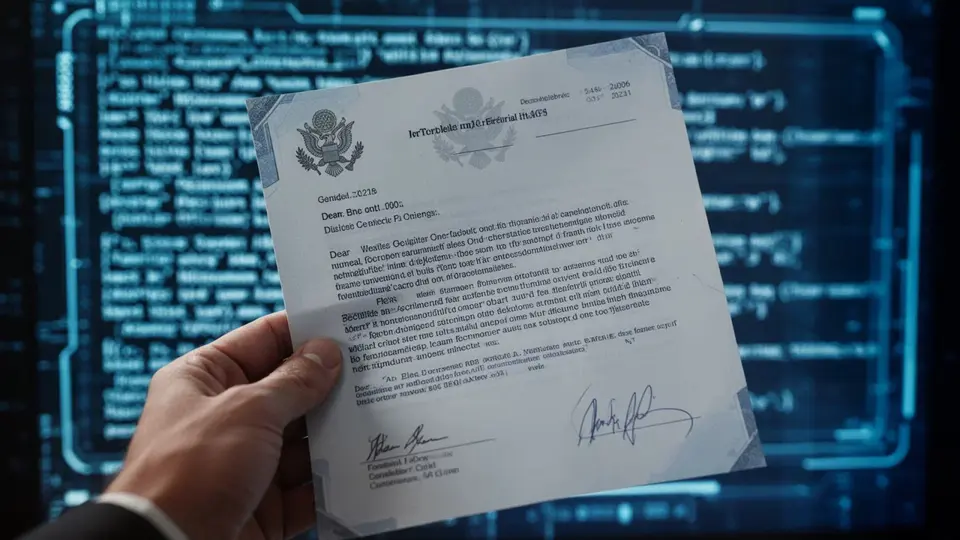
Forged official post, AI voices, phishing: Authorities warn of massive fraud wave
As boerse-express.com reports, a broad wave of fraudulent letters, emails and telephone calls is currently sweeping through Germany and Austria – with increasingly sophisticated methods, including AI-generated speech and forged official communications.
Fake letters targeting solar system operators
The Federal Network Agency warned on Tuesday of false postal deliveries deliberately targeting operators of photovoltaic systems. The letters claim the system is not registered in the market master data register and demand an alleged "failure to pay fee" of €41.60 – coupled with the threat to increase the amount to €208 and take legal action within 14 days.
The authority identified specific warning signs: the sender's address in Sömmerda does not exist, the area codes are incorrect, and the email domain used is not an official government address. "We never send such fines in this manner," the Federal Network Agency stated. Those affected are urged to file a report with the police.
BKA: No summonses via email
The Federal Criminal Police Office also warned on Tuesday of fraudulent emails containing alleged summonses or criminal charges. The names of high-ranking officers are used as senders – including that of BKA President Holger Münch. The purpose of the messages is to install malicious software or steal personal data. The BKA clarified: "Official summonses are never sent by email, but exclusively by post."
German Pension Insurance and Commerzbank targeted
The German Pension Insurance (Deutsche Rentenversicherung) raised the alarm on Monday over phishing emails designed to look like genuine DRV communications. The senders refer to alleged security updates for the "Digital Pension Statement" and request the entry of banking details. The Pension Insurance emphasised: "We never request sensitive data by email." According to the report, perpetrators are now using AI-generated speech to make the messages appear more credible.
On the same day, phishing emails appeared that purportedly came from Commerzbank. With subject lines such as "Final notice before account closure," recipients are asked to update the PhotoTAN app within 24 hours. Consumer advocates point out that the short deadline and the lack of personal address are typical identifying features of such fraud attempts.
Austria: Asfinag hoax and fraudulent pension insurance SMS
In Austria, the infrastructure operator Asfinag warned of emails allegedly disputing missing digital motorway vignettes. For a supposed "resolution," the perpetrators demand €12.36 – via a link leading to a page designed to capture credit card data. Additionally, the Austrian Pension Insurance Institution reported fraudulent SMS requesting updates to pension accounts.
AI-generated shock calls with demands of up to €140,000
Police in several German federal states are registering an increase in so-called shock calls. In Saxony-Anhalt, police warned on Monday of fraudsters posing as hospital doctors, describing an alleged intensive care stay of a relative and demanding immediate payment for expensive medicines. Here too, AI-generated voices are increasingly being used. In North Hesse, similar cases with demands of up to €140,000 have been reported.
Trial for gang-related document forgery in Hamburg
Parallel to the current fraud wave, proceedings for gang-related document forgery began at Hamburg Regional Court. Four defendants are accused of procuring forged European identity documents and tax assessments for non-EU citizens. According to the charges, the group pocketed a total of over €160,000 from their customers in nearly 100 documented cases.
Electricity network reform and fines threatened by Federal Network Agency
Alongside fraud prevention, the Federal Network Agency threatened two network operators on Monday with fines because they had failed to implement required network charge reductions for controllable devices such as heat pumps and charging stations. Moreover, a fundamental reform of the electricity network charge system is pending – triggered by a ruling of the European Court of Justice that is to be fully implemented by the end of 2028. Industry representatives expressed concern on Tuesday that households with solar systems may have to pay significantly higher basic fees in the future, which could slow the further expansion of private solar energy.
Source: Google News AT — Crime (de)