National Court endorses Encrochat evidence in drug trafficking convictions in Spain
The National Court delivers its first ruling endorsing the use of decrypted Encrochat messages. Defence teams refuse to concede and explore fresh legal avenues.
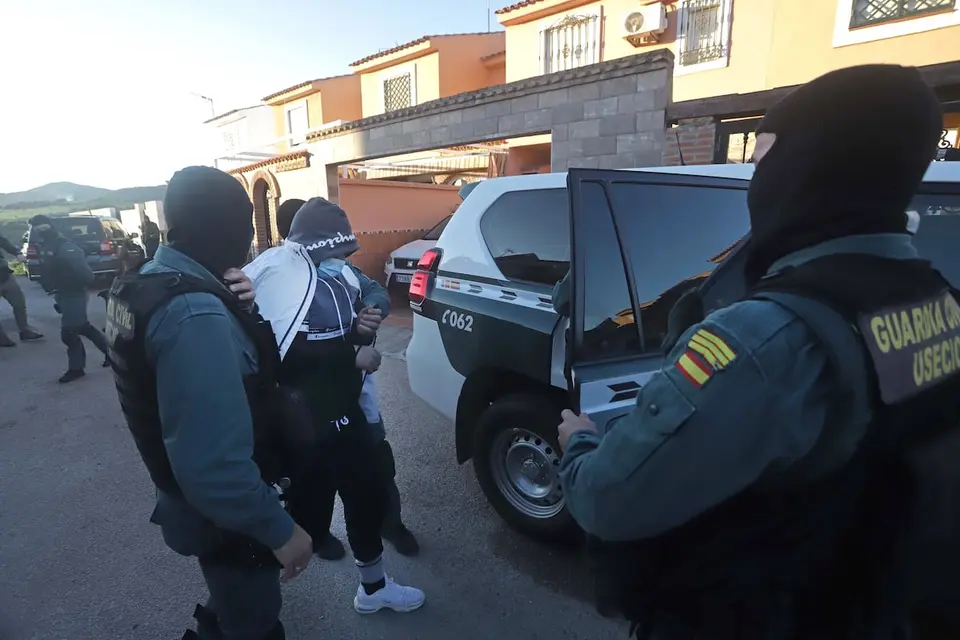
The legal battle over Encrochat messages reaches a turning point
The National Court has delivered its first ruling that "endorses" the use of intercepted Encrochat communications as evidence in drug trafficking cases, according to El País. The judgment, handed down on 22 May, follows another ruling from the Court of Justice of the European Union (CJEU) on 30 April that also gives general approval for their use, though with conditions that Spanish prosecutors' sources describe as "remediable".
Encrochat was an encrypted messaging platform with servers in France that organised crime employed under the belief it could operate with complete impunity. In 2020, France launched an operation—with judicial approval and details declared military secret—to infiltrate Trojan software into the system. The result was the extraction of 115 million "criminal conversations" from 60,000 different users, according to Europol figures. Since then, police forces across Europe have analysed that information to build investigations into drug trafficking networks.
Four years of legal battle without a definitive winner
Since 2020, lawyers for the accused have launched a systematic offensive to prevent those communications from being used as evidence in the courts. Four years on, neither side considers the debate closed.
"Each case is different, but people tend to extrapolate. There is still ground to be fought," says Ricardo Álvarez-Ossorio, one of the lawyers who has driven proceedings against the use of Encrochat. Álvarez-Ossorio identifies weaknesses in the collaboration system used to request data transfers from France and in the interception of communications from suspects located on Spanish soil. Criminal defence lawyer Luis de las Heras, also consulted by El País, goes further: "The State cannot pursue crime at all costs".
Several defence lawyers consulted argue that the two recent rulings include technical conclusions they can deploy to their advantage in bodies yet to be explored, such as the Constitutional Court, and in proceedings still awaiting resolution.
The CJEU sets conditions, the prosecution sees the path clear
The CJEU ruling of 30 April does not invalidate the use of Encrochat as evidence, but establishes a series of limitations that must be assessed in each case. Among them is that the evidence could not be used if the affected party cannot challenge it, a point on which Spanish prosecutors' sources consider there will be no problems in the Spanish legal context. The court merely sought to "clarify the conditions for the transmission and use of evidence in criminal matters with a cross-border dimension".
The National Court had already indicated in previous rulings that it accepted these communications, based on the "mutual recognition" agreement between Spain and France.
Rosa Ana Morán, head of the Special Anti-Drug Prosecution Service, expresses satisfaction with both rulings, although she acknowledges that technical aspects remain to be resolved. "They have endorsed its use. Now the evidence will be presented and analysed in each case," she notes. The prosecution currently has 46 investigations open with data from Encrochat. Morán underscores the scale of the phenomenon with comparative figures: "In England there are already more than 1,000 convictions. In Belgium, more than 400".
Security forces celebrate, but urge caution pending Supreme Court ruling
The National Court ruling has been received with satisfaction by the National Police, the Civil Guard and Customs Surveillance, the three forces that created dedicated groups of officers exclusively assigned to analyse these conversations. However, some commanders maintain "caution".
"Everything currently points to the fact that the evidence obtained will be accepted by the courts, but we must wait for more rulings and, above all, for the Supreme Court to pronounce on it in the future," warns a police official consulted by El País.
Much of the major anti-drug trafficking operations of recent years—valued both for the volume of hauls intercepted and for the relevance of the criminal structures dismantled—have been made possible thanks to information obtained from platforms of this type.
The political context: Barbate and Marbella in the spotlight
The debate has returned to the forefront at a moment of particular public attention to the fight against drug trafficking. On 9 February, two Civil Guards died in Barbate (Cádiz) after being hit by a narco boat. Shortly afterwards, the Government increased police presence in Marbella (Málaga), considered one of the epicentres of organised crime in Spain.
In that context, the judicial validation of Encrochat evidence takes on a dimension that goes beyond the technical-legal plane. For the Anti-Drug Prosecution Service and security forces, these communications represent, in their own words, the greatest milestone in decades of fighting drug trafficking. For the defence, the case remains open.
Source: El País