Permanent preventive imprisonment in Gipuzkoa for the murder of Aintzane Pujana, five years on
Five years have passed since the brutal murder of San Sebastián resident Aintzane Pujana at the hands of a couple who sexually exploited her. The Supreme Court confirmed the sentence this week.
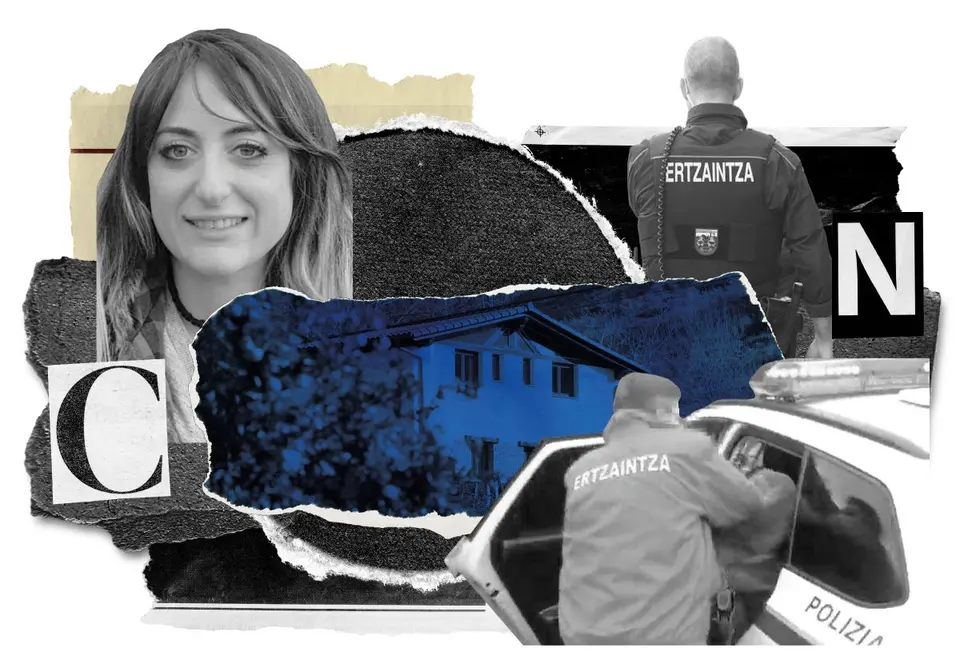
Five years since the crime that marked Gipuzkoa: the Supreme Court upholds permanent preventive imprisonment
Five years have elapsed since the murder of Aintzane Pujana, the woman from San Sebastián who was bound, beaten and stabbed in the early hours of 1-2 January 2021 at an agritourism establishment in Aizarnazabal. According to Ideal, the Supreme Court ratified this week the sentence imposed on the main accused, Erotz S. G., 24 years old at the time of the events: the only permanent preventive imprisonment handed down to date in Gipuzkoa territory.
The trial took place in 2024 before a jury tribunal at the Provincial Court of Gipuzkoa. The sentence was appealed by the defence of the convicted person, but was confirmed first by the Superior Court of Justice of the Basque Country and, finally, by the Supreme Court. The co-accused, Karmele U. T., 23 years old, was sentenced to 10 years in prison, conditional on admission of no more than 20 years in a psychiatric facility.
Forced cohabitation during the pandemic
Aintzane, 32 years old, arrived in Aizarnazabal in early December 2020. She told her boyfriend that she would move in with some friends at an agritourism establishment located half an hour's drive from Donostia, in the municipality of Urola Kosta. What she did not reveal—or perhaps was unable to—was that the couple with whom she lived forced her into prostitution. The two women had met in a flat in the Gipuzkoan capital where, according to what was established at trial, both would have engaged in prostitution. The accused, from Errenteria, also recorded pornographic videos which they uploaded to an online platform. They managed Aintzane's appointments and retained her earnings.
The refusal that triggered the crime
On the afternoon of 1 January 2021, the three returned to Aizarnazabal after visiting Hondarribia, where the couple celebrated the birthday of the man's mother. They arrived at the agritourism establishment at around 22.00 hours, according to what the Ertzaintza determined from analysis of the geolocation of their mobile phones. Shortly after, a resident of Azpeitia contacted to request Aintzane's services. The call was answered by the couple. Aintzane refused.
The refusal provoked a quarrel. To pressure her, Erotz took her dog 'Tyson' and locked it in his Volkswagen Passat. Aintzane then called her boyfriend to come and pick her up, but he, according to his testimony at trial, had no car or money to pay for a taxi to Aizarnazabal at that hour.
At 22.03 hours, the victim got into the couple's car heading to Azpeitia. Upon arriving at the given address—23.21 hours—she again refused to engage in prostitution. The man's reaction was to lock the two women without their mobile phones inside the vehicle so that they would reach an agreement. Failing to do so, he set off back to the agritourism establishment at 23.32 hours.
The first assault on a forest track
The journey to Azpeitia took barely 18 minutes. The return journey took 50 minutes. The Ertzaintza concluded that this delay was due to a stop on a forest track, where Erotz took Aintzane out of the car and ordered his partner to beat her. Karmele obeyed: she broke the victim's nose, who also sustained injuries to her arms whilst attempting to defend herself, according to the autopsy findings.
Back at the accommodation, the harassment continued. They placed cable ties around one of her wrists. The man, "to prevent Aintzane from being able to report them"—as recorded in the sentence—indicated to his partner to get a knife of approximately 13 centimetres in blade length. Karmele inflicted several stab wounds to the victim's body, who "was unable to defend herself".
The flight and the error that exposed them
That same early morning, the couple hastily devised a plan to destroy evidence. They called Aintzane's boyfriend to tell him that she had left in anger and that they had her dog. They loaded the corpse into the car and abandoned it approximately 500 metres away, next to some bushes in the Etxabe district. Then they took the road that runs along the Cantabrian coast and stopped at a car park on the N-634, between Getaria and Zumaia, where they threw several objects into the sea.
The plan unravelled at around 4 o'clock in the early morning of 2 January when an Ertzaintza patrol intercepted them for breaching the curfew in force due to the pandemic. Officers found in the boot of the Volkswagen Passat the dog 'Tyson' and women's clothing. Days later, a member of the public found in the same location the deceased's Mugi public transport card. Once the investigation was underway, the Basque Police located a knife sheath with DNA from the convicted person and the victim. It is believed that the weapon ended up in the sea.
Following the interception, the couple headed to Tolosa, where they entered a supermarket with their hoods up to conceal their faces and purchased cleaning products: bleach, ammonia and wipes.
A life marked by adversity
Aintzane's parents, both elderly, never ceased to support their daughter. The woman nevertheless experienced a life with psychological ups and downs and an ill-defined circle of friends, circumstances which, according to what was revealed during the trial, made her particularly vulnerable to the situation of exploitation in which she became trapped.
The case is thus concluded judicially, five years on, with the confirmation of the most severe sentence that a Gipuzkoan court has handed down: permanent preventive imprisonment for the principal perpetrator of one of the cruelest crimes recorded in Gipuzkoa in recent years.
Source: Ideal