Trial at CNIO uncovers alleged embezzlement of 25 million euros: taps, showers and screens purchased with public money
The UDEF and Anti-Corruption Prosecution are investigating an alleged fraud of 25 million euros over 17 years at the National Cancer Research Centre. The labour trial of the whistleblower, illegally dismissed, revealed unexplainable purchases of bathroom materials and IT equipment.
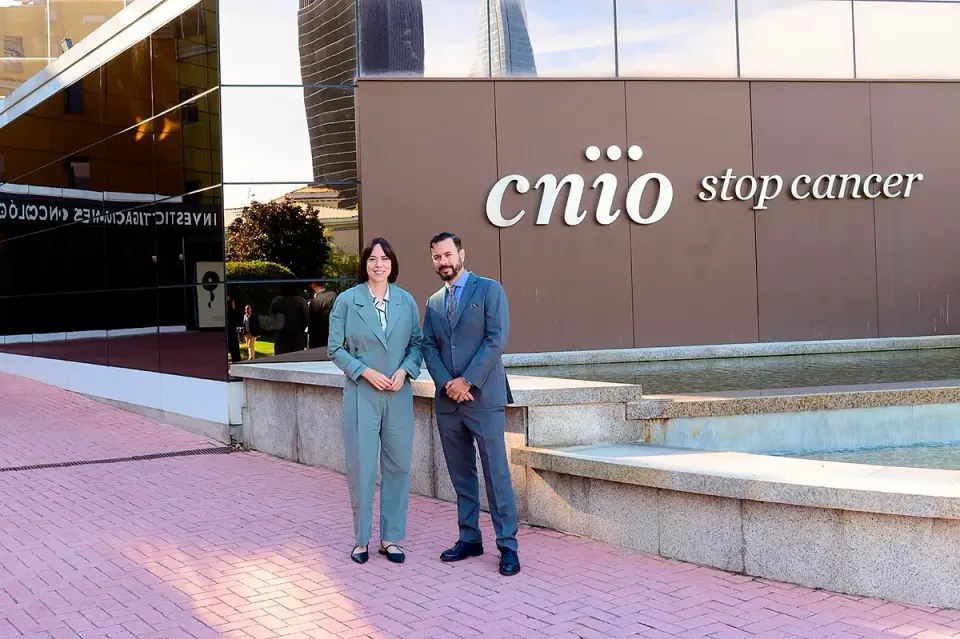
Taps, showers and thousand-euro screens: the alleged embezzlement at Spain's cancer flagship
Social Court number 12 in Madrid declared, just days ago, the dismissal of the former Operations Director of the National Cancer Research Centre (CNIO) to be null. The judge determined that his termination in August 2025 was retaliation for having reported an alleged embezzlement of between 20 and 25 million euros in public funds over 17 years to the Anti-Corruption Prosecution two months earlier. This has been confirmed by El Mundo, which has had access to the labour trial proceedings.
The National Police's Unit against Economic and Financial Crime (UDEF) and the Anti-Corruption Prosecution have been investigating the alleged corruption within the CNIO for months. According to the complaint lodged by the former Operations Director and another former senior official of the institution, a months-long forensic audit would have uncovered a scheme of continuous fraud: falsified contracts, payments for services not rendered, and acquisition of goods not intended for the scientific centre but for private businesses.
The alleged theft would have benefited, according to the complaint, a network of private companies controlled by former senior officials linked to the institution. The former manager of the CNIO denies any involvement.
Six hours of trial and a litany of irregularities
The labour trial, which lasted six hours, allowed much of what has been investigated to come to light. The key testimony was from a close collaborator of the former Operations Director, who described to the judge how both of them were discovering irregularities, sometimes moving clandestinely through the facilities of the CNIO headquarters in northern Madrid.
The witness recounted, among other episodes, how they requested a "feasibility study" for which public money had been spent. When the document did not appear, an official of the institution eventually provided them with what was presented as such a study: "A physical document of 400 pages that was not a feasibility study of anything, but rather catalogues of machines, which did not appear signed by anyone or with any supplier," the witness stated according to El Mundo.
When they enquired, they were told that the document was the work of a person identified as J.A.H., described as "an engineer close to the house" who "always sorts out any problem". That individual, the witness pointed out, was later implicated in the 'Púnica Case', the scandal of rigged public contracts in municipalities in the Community of Madrid.
Fragmented contracts and screens as "consumable materials"
Another of the irregularities described to the judge was the purchase of furniture through a contract deliberately "fragmented" so as not to reach the threshold that requires audit controls. When the Operations Director and his collaborator brought this to the attention of the technical management, they received no coherent response.
From that same department, the acquisition was also promoted of "13 or 14 computer screens as consumable material, that is, for single use", according to the witness's statement. The classification as consumable material had a concrete consequence: "So that it would not be inventoriable, and therefore controllable". The unit price of each screen exceeded 1,000 euros. The judge listened to the explanation, according to El Mundo, visibly astounded.
Both officials repeatedly found that the answers they received lacked logic, except as an indication of possible irregularities, and that in any case they violated the controls of the General Auditor of the State in force since 2020.
Hidden storage areas beneath the garage ramps
The situation led the Operations Director and his collaborator to go down personally to the institution's storage areas to check "on site" what was happening. The initiative caused alarm in technical management, but did not produce the expected result: the two officials were unable to locate several of the storage areas.
It was the UDEF who found them once the police investigation had begun. The witness described it to the judge: "The UDEF called me, and honestly I was unaware of part of the storage area. And two of them, large ones, were underneath what are the garage ramps. You went in and they had all kinds of materials. There was an entrance where you had to crouch down, like a passageway, and then you reached another more open area where you had materials that did not seem to be related to our investigation: spare hoses, bathroom things, taps, showers... Material that had nothing to do with the centre."
When the lawyer asked him if the quantities were reasonable, the executive was blunt: "In enormous quantities."
A central hypothesis: CNIO goods diverted to private businesses
The CNIO manages a budget of slightly more than 20 million euros in public funds per year and is considered the flagship of Spanish research in the fight against cancer. The main hypothesis being pursued by the UDEF and the Anti-Corruption Prosecution points to goods acquired with funds from the centre having been diverted to private businesses: "enormous quantities" of taps, showers and bathroom materials, towel rails, electrical cabinets more typical of housing developments than of a scientific laboratory, and high-price computer screens classified as consumables to avoid inventory.
The investigation into the alleged corruption at the CNIO remains open. The dismissal of the main whistleblower has been declared null by the Labour Court, which reinforces his status as a protected witness in the context of the case.
Source: El Mundo