Uruguayan arrested on sailing vessel with 2,100 kilos of cocaine off Galician coast
A Polish-flagged sailing vessel was intercepted 400 miles off the Galician coast with 2,100 kg of cocaine. Among the four crew members detained is a Uruguayan citizen.
Operation "Doncella": five arrested following seizure of two tonnes of cocaine in the Atlantic
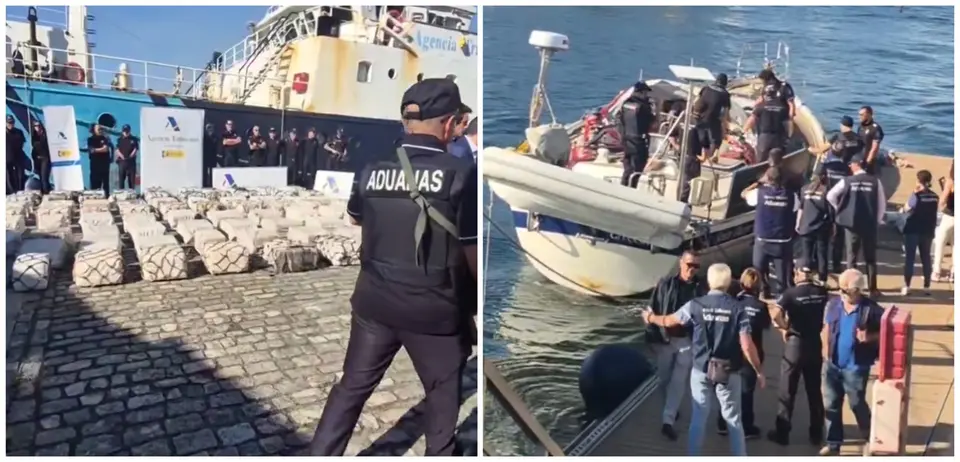
A Polish-flagged sailing vessel carrying 2,100 kilos of cocaine on board was intercepted approximately 400 miles off the coast of Galicia and towed to the port of Vigo, according to montevideo.com.uy. The operation, named Doncella, resulted in the arrest of five people and the partial dismantling of an organisation dedicated to supplying vessels for the maritime transport of large drug shipments.
The vessel, a sloop of approximately 14 metres in length, was located in the early hours of Monday, 14 July by the Special Operations ship Petrel I, from the Spanish Customs Surveillance Service, following several days of search.
An investigation that began months earlier
The inquiry began in February, when the Girona unit of the Customs Surveillance Service obtained information about a vessel allegedly linked to an illicit operation on the border between Spain and France, according to the Galician media outlet Vigo al Minuto. Investigators subsequently identified the sailing vessel and detected elements consistent with its use in drug trafficking activities.
The vessel was located in June at the port of Roses, where it came under surveillance. On 11 July it set sail without activating the AIS system—a localisation device mandatory in certain circumstances—which intensified monitoring by the authorities.
From that point on, investigators tracked its route towards the Atlantic with the collaboration of the British National Crime Agency (NCA) and the United States Drug Enforcement Administration (DEA), through the Maritime Analysis and Operations Centre for Narcotics (MAOC-N).
Boarding and discovery of 70 parcels
When the sailing vessel was boarded by the Petrel I, agents found numerous packages distributed in different areas of the vessel. In total, 70 parcels weighing approximately 2,100 kilos of cocaine were counted.
The four crew members were arrested immediately. They are citizens of Argentina, Uruguay, Colombia and Albania. According to the investigation, the Albanian citizen held a specific role: he acted as a supervisor for the organisation receiving the drug, tasked with verifying that the transfer proceeded as planned.
Fifth arrest on dry land
While the Petrel I towed the sailing vessel to Vigo, the operation continued on land. A Chilean citizen was arrested in the province of Girona, identified as the alleged person responsible for recruiting vessels with the necessary characteristics for this type of transport.
The investigation also points to a Spanish citizen resident in Barcelona, to whom custody of the vessels and monitoring of possible approaches by authorities is attributed. His arrest remains pending as of the time this information went to press.
A network that rented boats to drug traffickers
According to the Customs Surveillance Service, the organisation under investigation did not directly handle the transport of the drug, but rather supplied the vessels used by other drug trafficking networks. Investigators maintain that the group offered its services to organisations active in Eastern Europe and the Balkans.
The use of recreational sailing vessels and the choice of certain flags would form part of the method employed to hinder the detection of the shipments.
International collaboration and legal framework
The operation involved the participation of authorities from Poland, French customs and various international bodies specialised in combating drug trafficking, as well as the Centre for Intelligence against Terrorism and Organised Crime (Citco) and the MAOC-N.
The five arrested individuals are being investigated for alleged offences of belonging to a criminal organisation, smuggling and offences against public health. The case will be handled by the Spanish National Audience.
The operation is part of what is known as the Atlantic cocaine route, used by organisations to transport drugs from South America and conduct transshipments on the high seas before introducing the shipments into Europe. Those responsible for the operation do not rule out further arrests.
Source: Google News UY — Crime