Trial in Paris for Aramburu murder: xenophobia and extremism before French justice
Federico Martín Aramburu's mother testified that xenophobic insults preceded the 2022 shooting in Paris. Four defendants, including two former members of the French far right, face life sentences.
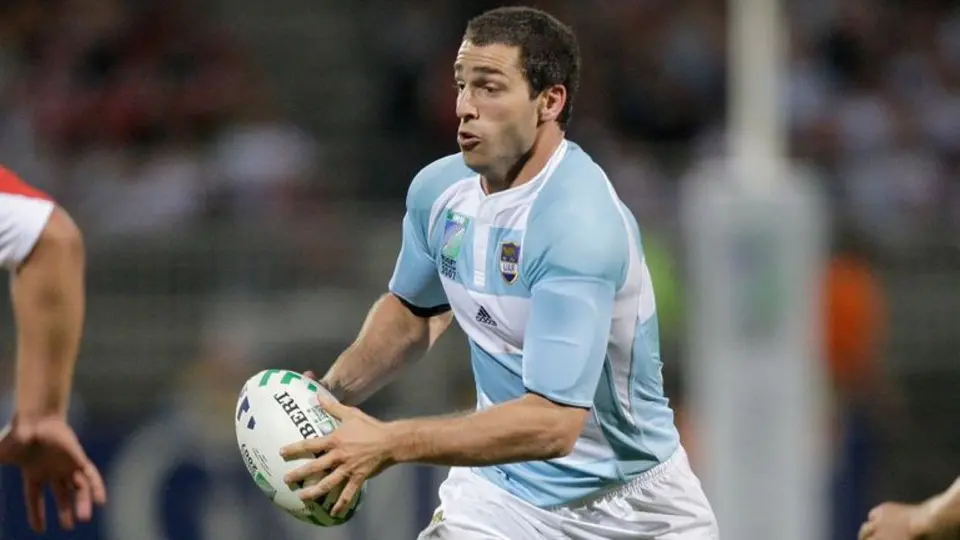
Aramburu's mother denounces xenophobic humiliation before deadly shooting in Paris
According to latinamericanpost.com, the trial in Paris for the murder of Argentine rugby player Federico Martín Aramburu entered its sixth day on 14 September with testimony from his mother, Cecilia Aramburu. Facing the defendants, separated by bulletproof glass, she described the insults that according to her account preceded the fatal shot on 19 March 2022.
Cecilia called the defendants "criminals who do not know what humanity is". Her statement was based on the account of Shaun Hegarty, a friend and the only eyewitness who accompanied Aramburu that night. It was not, therefore, direct testimony of the events.
The mother reproduced before the court the alleged distinction made by the defendants: "You, Argentine; you, New Zealander", followed by the assertion that they were at home. Hegarty, of New Zealand nationality, was the other recipient of that remark. Cecilia maintained that her son suffered deliberate humiliation based on nationality, not a simple bar altercation.
The defendants and their positions
Loïk Le Priol faces the principal charge of murder. At the opening of the trial on 7 September, he acknowledged causing Aramburu's death but pleaded self-defence, leaving to the court the legal characterisation of the act. Admitting responsibility for a death does not, in legal terms, amount to admitting murder.
Romain Bouvier, accused of attempted murder, offered a different version. According to EFE, he denied having intended to kill and described his shots as warning shots. He also asked for forgiveness, as did Le Priol. Both risk life sentences, although neither has yet received a verdict.
EFE identifies Le Priol and Bouvier as former members of the far-right group GUD. Cecilia stated that the family was unaware of that world until after the murder. Discovering the group's previous violence and the existence of a court order that prevented the defendants from seeing each other aggravated, according to her testimony, the pain of the loss. For her, that breached restriction raises the question of whether the death could have been avoided.
Four defendants with differentiated conduct
The proceedings try four people, but not for equivalent responsibilities. Lyson Rohemir, Le Priol's partner according to EFE, denies complicity in the murder. Antony Sorrentino acknowledges the facts that support charges of having helped Bouvier attempt to flee. Both are free, unlike the two principal defendants.
The court must evaluate each person's conduct separately. Participation in a homicide and subsequent assistance to a fugitive are separate legal matters, not variations of the same offence within a circle of acquaintances.
The physical confrontation prior to the shot is also part of the analysis. Le Priol was knocked down by Aramburu before the shooting. The court must establish the complete sequence without treating that initial blow as sufficient explanation for everything that followed. Similarly, past membership of an extremist group merits scrutiny, but does not automatically prove the motive for a specific act.
A business trip turned to tragedy
Thomas Lièvremont, Aramburu's former teammate at Biarritz club, had to interrupt his testimony, overcome by the memory, according to EFE. He described him as a man who opposed intolerance, someone with no personal reasons to seek conflict.
Aramburu and Hegarty jointly managed a sports tourism company and had travelled to Paris to close a contract linked to the France 2023 Rugby World Cup. Lièvremont noted that the purpose of the trip was to secure an agreement that would improve the family's economic stability. It was work after professional rugby, with obligations beyond the field.
That detail recovers a dimension that judicial records tend to flatten. Aramburu was not only a former Argentine international nor a symbol of sporting fraternity. He was 42 years old, had a wife and three small children, and was building a project with a friend. The tournament they hoped to benefit from took place in 2023 without him.
The trial schedule
Nearly four and a half years separated Aramburu's death from his mother's testimony. The trial is expected to conclude on 25 September. For his family, that timeframe belongs to a stretch of life already spent in his absence.
Cecilia told the court, according to EFE, that stating this crime should never have occurred was itself painful. The prohibition on contact between the defendants raises a question the trial must clarify: establishing that the restriction existed is different from determining who knew it was being breached and who could have acted. Accountability requires that distinction, also when a bereaved family perceives a prevention opportunity that was overlooked.
The alleged humiliation of an Argentine on French soil does not require previous sporting achievements to deserve judicial attention. His reputation for goodness mattered to those who knew him. It was not, however, a condition of his right to safety.
Source: Google News AR — Crime