Organised gang trafficking of glass eels: eight men on trial in Les Sables-d'Olonne
Eight men are appearing before the magistrates' court in Les Sables-d'Olonne for an international trafficking operation in glass eels valued at more than two million euros.
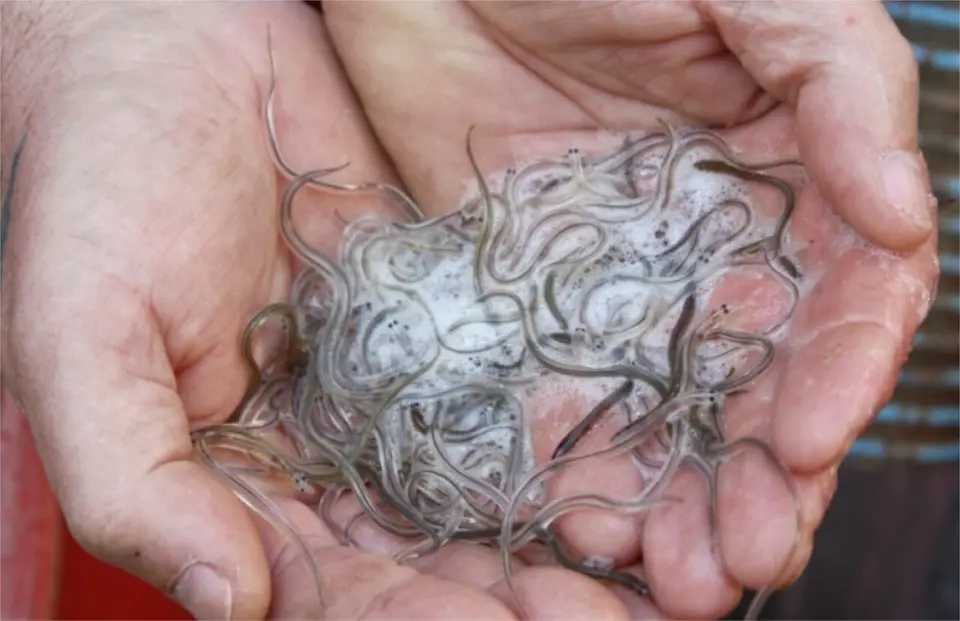
Poached glass eels bound for Spain and Romania: trial of a structured network
Eight men aged 34 to 64 appeared on Thursday 22 and Friday 23 June before the magistrates' court in Les Sables-d'Olonne for organised gang trafficking in glass eels, according to actu.fr. The offences concern the 2017-2018 period and involve four to five tonnes of fish fry collected between northern Charente-Maritime, the Vendée coast and southern Loire-Atlantique, before being smuggled abroad to Spain and Romania.
Investigators estimate the illicit turnover at more than two million euros. The operation was uncovered through a telephone intercept — one intercepted sentence cynically summing up the activity: "Glass eels can bring in a lot of money, but also a lot of hassle."
A protected fish nicknamed "white gold"
Presiding judge Nicolas Pautrat reminded the court of the value and fragility of the species. The glass eel, the fry of the European eel, is born in the Sargasso Sea and migrates towards European coasts. Facing extinction, it is subject to strict quotas governing both fishing periods and authorised volumes. Its price ranges between 300 and 500 euros per kilogram depending on the season.
The defendants allegedly engaged in unauthorised fishing, quota breaches and the use of illegal equipment. Prosecutor Julien Duchoze outlined the risks they faced: "You risk up to seven years in prison and 750,000 euros in fines."
A pyramidal structure modelled on drug trafficking
The prosecutor highlighted the structured nature of the network, comparable to that seen in drug trafficking operations: "everything is perfectly arranged with its pyramidal structure, from the foot soldiers to the lieutenants right up to the boss."
At the base, transporters made around forty trips, paid 250 euros for a journey to Spain and 1,700 euros to Romania — on behalf of a Bulgarian national. Each vehicle carrying fish fry was preceded by a scout car, identical to practices observed in drug supply chains. The drivers returned with envelopes of cash which were then handed to a "nanny", responsible for keeping the money safe before handing it over to the "boss".
At the intermediate level is a professional fisherman, nicknamed the "Gaul", currently in pre-trial detention in connection with a similar more recent case. He unloaded the merchandise, which came from both his own catch and that of poachers operating across several coastal zones. The latter have not been identified.
Network leaders
Two fish wholesaler company managers appear at the top of the hierarchy. The main organiser, nicknamed "Biscotte", is 55 years old and has nine convictions on his criminal record, including four for breaches of fishing legislation. He was arrested on 8 April 2018, as he was about to leave the country, and remanded in custody.
Nine civil parties, damage estimated at 15 million fry
Nine civil parties appeared before the court in turn, including several nature protection associations and the national, regional and local fishing committees. Their lawyers each highlighted "significant economic, but also environmental damage". The case represents, according to them, some 2.2 tonnes of glass eels, or nearly 15 million fry illegally removed. They also denounced "an underestimation of the reality".
The prosecution's submissions
Prosecutor Duchoze stated that "this case must serve as an example" and clarified his position: "Traffickers must understand that when you get caught you lose everything. The money collected illegally has been laundered, everything must be seized."
For the "foot soldiers" and the "nanny": between 10,000 and 15,000 euros in fines and a ban on engaging in any fishing activity for three years. For the "Gaul": six months' imprisonment, 30,000 euros in fines and five years' ban on fishing. For the first company manager: eighteen months' imprisonment of which twelve are suspended on probation for five years, 100,000 euros in fines and five years' ban on fishing.
For "Biscotte": three years' imprisonment of which fifteen months are suspended on probation, 100,000 euros in fines and repayment of sums owed. For all the defendants, the prosecution requested the confiscation of bank accounts, vehicles and any assets acquired with laundered funds.
Defence argues against "devastating" sentences
Defence lawyers converged on the same argument, denouncing "particularly heavy sentences which spell the social death" of their clients. Me Esthère Gallardo particularly defended the "nanny", whom she presents as "the fall guy in this affair": according to her, "Biscotte" had dangled a work contract in front of her which never materialised.
The judgment was set for 21 September.
Source: Google News FR — Crime (fr)