Vlajčić's pledge on aid ban: what about Boban, Dabro and Tolušić?
Minister Vlajčić has announced amendments to the law that would deny public funds to those suspected of serious criminal offences. Index.hr raises questions about a series of HDZ officials.
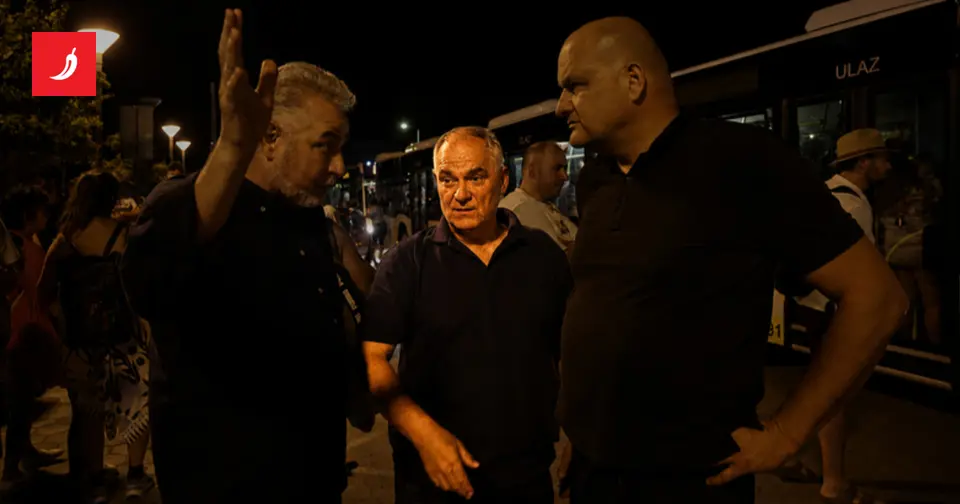
Minister announces aid ban, but what about HDZ officials who admitted to or are accused of crimes?
Agriculture Minister David Vlajčić of the Homeland Movement has announced amendments to the law that would prevent public subsidies and grants from being paid to people suspected of serious criminal offences or acts directed against the constitutional order of Croatia. The impetus is the case of Daniel Stegnjaić, suspected of setting ten fires near Zadar, who, as Index.hr reported, received €220,974 in state support.
"You set fires and receive agricultural subsidies? Not anymore," Vlajčić said on Facebook, announcing a meeting with Justice Minister Damir Habijan from the HDZ.
Prefect who publicly admitted to arson
However, within coalition ranks there is a case that brings Vlajčić's pledge into direct contradiction. Blaženko Boban, a long-time HDZ official and Split-Dalmatian County Prefect, publicly admitted in 2021 that in 2005, whilst serving as mayor of Solin, he deliberately set a fire at the archaeological site of Manastirine. The aim was to drive away an American film crew that was shooting the horror film "Omen 666" there.
According to a statement by then-director John Moore, the damage was worth approximately two and a half million kuna. The Split-Dalmatian Police Administration confirmed to Index.hr that the fire on the night of 9 to 10 December 2005 was indeed recorded, and following Boban's admission announced checks. Two days later, police announced that the statute of limitations for prosecution had expired for the criminal offence of destruction and damage to another's property.
Boban has never faced criminal or political consequences for the case and continues to hold his prefectural mandate, disposing of significantly larger sums of public money than the subsidies of one farmer.
Unclear criteria: suspected, accused or finally convicted?
Vlajčić did not clarify in his announcement whether the ban would apply to suspects, people against whom an indictment has been confirmed, or only to those finally convicted. This distinction is crucial: Stegnjaić himself, the case Vlajčić cites as reason for the legislative change, currently has only the status of suspect. If subsidies were to be denied at that level of proceedings, Vlajčić will have to explain how such a measure would be compatible with the presumption of innocence.
Another question is opened by the case of Josip Dabro, Vlajčić's party colleague and former agriculture minister. Dabro is accused of violating children's rights and unlawful possession of automatic weapons. Videos have been published in the public domain in which he sings songs glorifying Ustashism and the NDH — content contrary to the fundamental values of the Croatian constitutional order, the very order whose protection Vlajčić invokes in his announcement.
Tolušić case: confirmed indictment for European subsidies
Directly relevant appears to be the case of former HDZ agriculture minister and Deputy Prime Minister Tomislav Tolušić, who is on trial over allegations that he unlawfully obtained European subsidies using forged documents. Unlike Stegnjaić, an indictment against Tolušić has already been confirmed. If Vlajčić plans to condition the right to state and European funds on criminal proceedings, Tolušić's case is precisely the test case on which he will have to demonstrate how the new system would function.
Convicted former minister opened farm
Petar Čobanković, a former HDZ agriculture minister finally convicted, admitted guilt in the "Planinska" scandal and was sentenced to 730 hours of community service. After serving his sentence, he opened a family agricultural farm and began receiving grants from the Agricultural Payments Agency. Čobanković's case raises an additional question: does Vlajčić want to ban receiving subsidies from those who have already served their sentence, and if so — for how long and for which criminal offences?
Constitutional ban on retroactivity
Vlajčić did not explain which types of public funds would be covered by the announced ban. Agricultural subsidies, housing grants, funds from EU funds and wages from the state budget are not the same legal category and cannot be treated equally.
Moreover, the Constitution in Article 90 in principle bans the retroactive application of legal regulations. Paragraph 4 stipulates that laws and other regulations cannot have retroactive effect, whilst paragraph 5 allows an exception under which, for particularly justified reasons, only certain provisions of a law can have retroactive effect. This means that any new law could not be the basis for withdrawing funds that were paid in the past lawfully, according to the rules then in force.
As Index.hr concludes, if Minister Vlajčić has not taken these fundamental legal frameworks into account, his announcement is nothing other than populism.
Source: Index.hr