Fake invoice fraud in Morocco: 300 people facing justice
The General Directorate of Taxes dismantled several fictitious invoicing networks. Fiscal losses are reported to have been reduced from 10 to 8 billion dirhams.
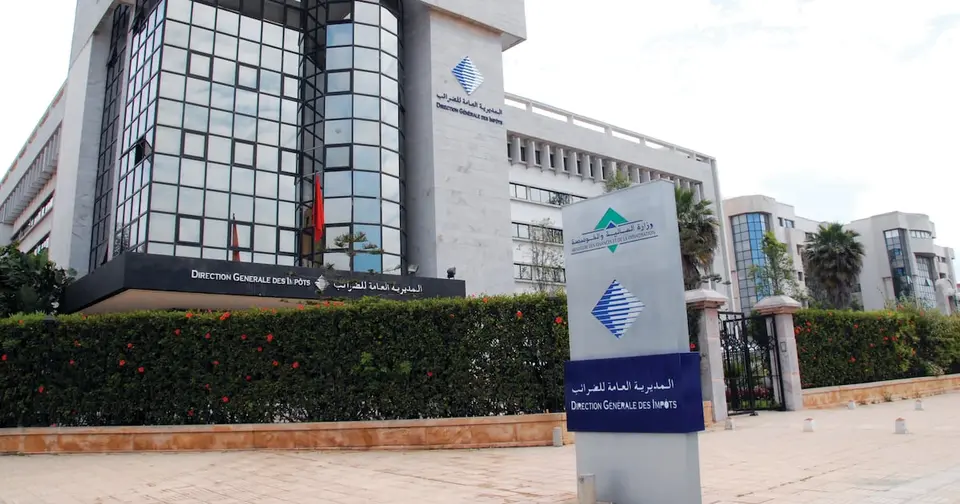
Dismantling of fake invoice networks: the DGI increases judicial pressure
Approximately 300 people have been referred to justice in Morocco as part of a vast operation against fictitious invoicing networks, according to fr.le360.ma, which cites the daily newspaper Al Akhbar in its edition of Wednesday 26 November. Among those implicated, some have already been sentenced to custodial sentences.
The General Directorate of Taxes (DGI), which falls under the Ministry of Economy and Finance, launched this offensive in coordination with the judicial police and various security services. The operation succeeded in dismantling several networks active in this field across the kingdom.
A dedicated unit to reduce fiscal losses
Sources within the Ministry of Economy and Finance, cited by Al Akhbar, indicate that this action is part of the fiscal reform undertaken in recent years. A monitoring and risk analysis unit was created within the DGI to specifically tackle the phenomenon of fake invoices, which costs the national economy several billion dirhams each year.
Thanks to this mechanism, fiscal losses — previously estimated at nearly 10 billion dirhams — are reported to have been reduced to around 8 billion. The same sources specify that this approach has made it possible to increase tax revenues without introducing new taxes, notably because certain companies were collecting tax from their customers without ever paying it to the State.
Shell companies and black market for invoices
Investigations revealed that members of these networks created fictitious companies to issue and sell fake invoices to third parties. These entities were also used to obtain fraudulent loans in the context of questionable financial operations.
Searches resulted in the seizure of documents relating to the creation of shell companies, numerous invoices, chequebooks, commercial documents, identity documents belonging to third parties, as well as stamps and electronic equipment containing digital traces of illegal operations.
Among the methods identified is the keeping of commercial registers of several shell companies, whose identities are affixed to invoices resold to other businesses. These companies use them to simulate non-existent purchases or services and artificially inflate their expenses, with the aim of reducing their taxable profits. Investigators thus intercepted individuals who owned companies displaying high annual turnover figures but existing only on paper, with no concrete activity. Their owners were collaborating with intermediaries operating on the black market, selling invoices for between 100 and 200 dirhams for a declared value that could reach 10,000 dirhams.
Legal framework and persistent gaps
The DGI had previously established a blacklist cataloguing companies specialised in the sale of fake invoices. Several files were forwarded to the public prosecutor to pursue fraudsters. The General Tax Code requires that any operation to purchase goods or services be genuine and justified by a legally issued invoice. When the administration finds that an invoice comes from a supplier defaulting on its declarative or fiscal obligations, or engaging in no real activity, the corresponding deduction is automatically rejected. The tax administration also makes available to taxpayers, via its website, a regularly updated list of the tax identification numbers of suppliers deemed non-compliant.
The law grants the Minister of Finance the power to forward complaints relating to the issue of fake invoices directly to the public prosecutor, excluding them from the competence of the Commission on Fiscal Offences.
Despite these adjustments, several illegal practices persist. A report from the Higher Court of Accounts confirms the existence of shell companies with no real activity, whose owners are engaged in the sale of invoices for tax fraud purposes. This same report emphasises that the majority of regional tax directorates do not have an effective strategy for dealing with the case of inactive companies — whether struck off or not — which have not operated for years. In the absence of checks with commercial courts or other competent bodies, these companies retain their legal existence and can at any time resume tax filings after having long escaped taxation.
Source: Google News MA — Crime (fr)