Drug trafficking: Martinique's Grand Maritime Port equips itself with €3 million in new security measures
Martinique authorities presented on Friday new security measures for the Grand Maritime Port, including intelligent cameras and drones, to curb cocaine trafficking.
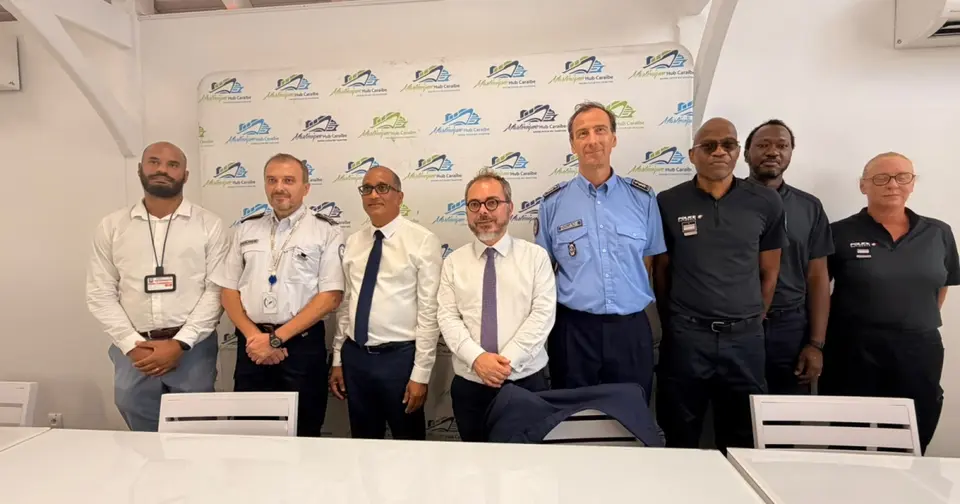
Security reinforcement at the Grand Maritime Port in response to drug trafficking
Intelligent cameras, ground and aerial drones, and an investment of nearly €3 million: the authorities presented on Friday 25 September, in Fort-de-France, a set of new security measures deployed at the Grand Maritime Port of Martinique to combat drug trafficking, according to rci.fm.
The prefect of Martinique and the monitoring group of the action plan visited the port platform in order to review recent progress and present developments in the security arrangements for this site considered crucial for the territory.
An access charter for cameras signed with the police
Among the flagship measures is the signing of a charter allowing police services direct access to the port's video surveillance images. Michel Aleu, territorial director of the Martinique police, described this agreement as a major technological advance.
"This agreement will allow us to transmit all video surveillance images directly to the information and command room of the DTPN," he declared. "The immediate objective is to curb the flows of cocaine transiting through Martinique to Europe. But it is equally about protecting the local population, because drug trafficking generates insecurity, violence, proliferation of weapons and homicides in our neighbourhoods."
Aleu clarified that the fight was not limited to cocaine destined for export, but also targeted "trafficking that is eating away at Martinique territory".
Three million euros invested in 2026, with a similar effort planned for the following years
Bruno Mence, president of the board of directors of the Grand Port, detailed the scale of the investments made. "We have made massive investments, namely nearly €3 million in 2026," he stated, adding that this cycle would continue "at an equivalent amount in the coming years in order to achieve the best international standards".
The deployment includes a complete renewal of the video surveillance system, the installation of intelligent cameras, as well as drones to ensure monitoring of the terminals and to eliminate doubt in the event of an incident. Mence emphasised that the primary objective was to make the Martinique port "a reference in terms of security" for its clients and for the entire territory.
Triple challenge: security, protection of workers and attractiveness
Etienne Desplanques, prefect of Martinique, recalled the three dimensions of the security plan. The first is the protection of Martiniquans against the consequences of drug trafficking. "The aim is to ensure that cocaine or cannabis use other routes and no longer supply the French Antilles," he stated.
The second dimension concerns the protection of professionals working on the port, exposed according to Desplanques to attempts at compromise or direct threats from drug traffickers. "Securing the port makes it possible to keep traffickers at a distance," he said.
Finally, the prefect raised an issue of economic attractiveness. In a context of competition between Caribbean ports, Desplanques felt that a high level of security was now "essential to attract clients to Martinique," with certain destinations in the region suffering according to him from a deficit in image on this matter.
Enhanced access control to restricted areas
Beyond technological equipment, the authorities also emphasised the strengthening of strict control of access to restricted areas of the port. Video surveillance has been considerably extended in recent months, according to information presented during the official visit.
This security plan is part of a broader context of fighting drug trafficking in Martinique, where the cocaine trafficking in transit to Europe remains a persistent problem for local and national authorities.
Source: Google News MQ — Crime