Sócrates accuses judge of "judicial violence" and prepares complaint during Operação Marquês trial
Former Prime Minister José Sócrates has turned against judge Susana Seca in a memorandum filed in the case records, claiming to be subject to a "defence by no one".
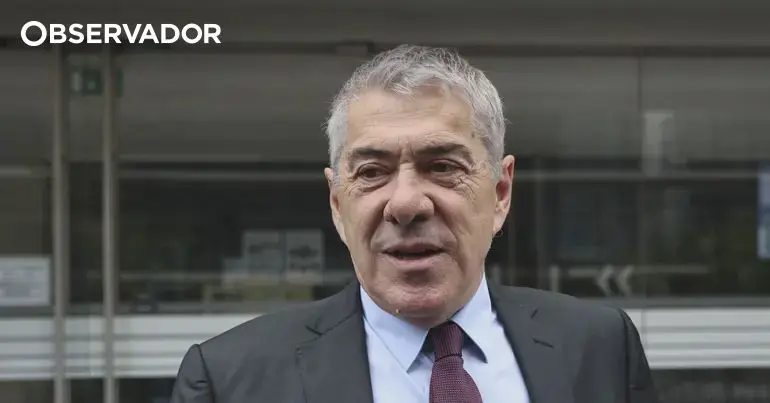
Sócrates denounces "escalation of judicial violence" in new memorandum in Operação Marquês
José Sócrates submitted a memorandum on Monday to the case records of the Operação Marquês trial in which he directly attacks the presiding judge of the panel, Susana Seca, and signals that he may file a formal complaint. According to Observador, which gained access to the document, the former Prime Minister claims to be subjected to a "defence by no one" — referring to the court-appointed lawyer Luís Carlos Esteves, whose appointment he continues to challenge.
The memorandum comes following two consecutive judicial setbacks: the Administrative Court of the Lisbon Circle rejected the precautionary measure that Sócrates filed against Esteves, and judge Susana Seca dismissed his request to remove the effectiveness of actions taken by the lawyer during the trial.
"Defence by no one"
At the heart of Sócrates's challenge lies a ruling of 14 September, in which the magistrate emphasised that the legal argument invoked by the defendant "cannot result in the halting of the procedural course, nor annul the regime of mandatory court-appointed representation established" by law.
The former Prime Minister rejects the judge's reasoning. "The request was dismissed, that is true, but the question does not disappear — if the defender is called upon to argue against the defendant, who, after all, is defending him? The answer is no one. This is where we have arrived, defence by no one," the memorandum states.
Sócrates goes further and considers the situation "particularly obscene": "By tasking my supposed court-appointed defender with exercising the right of reply against me, you prevent me, in practice, from exercising my right of appeal against this extraordinary decision."
Accusations against the judge and request for certificate
In the same document, Sócrates accuses Susana Seca of reaching "a new level in the escalation of judicial violence and an undisguised hostility". The former official criticises the request for a right of reply from the court-appointed defender, arguing that this circumstance formally prevents him from appealing the decision.
Sócrates's argument also centres on the fact that Esteves adopted, in another case, a position contrary to his. "The State maintains as a defender a lawyer who is called upon to pronounce himself against the claim of the defendant he is supposed to defend and who, in another case, adopted a procedural position contrary to his. This is the new level of violence I am referring to — it is no longer the Public Ministry exercising the right of reply against me, it is the court-appointed defender that the State chose and imposed on me without a draw," he writes.
On these grounds, Sócrates requested that the court issue an authenticated certificate of the contested ruling, in order to appeal to the "appropriate authorities" to exercise his "right to a fair and equitable trial".
Position of the judge and court-appointed defender
Judge Susana Seca had already recalled, in the ruling now being challenged, that "to date there is no evidence" that the appointment of Luís Carlos Esteves "resulted from any unlawful or invalid act" on the part of the Bar Association. The magistrate also informed the former Prime Minister on various occasions that he may engage a new lawyer at any time.
Susana Seca also confirmed that Esteves merely "argued against an action in which he had been sued by the defendant himself, without this affecting his position as defender in the present case".
Luís Carlos Esteves himself replied to the judge that his intervention "was solely intended to exercise his right of reply to rebut imputations that called into question his honour and professionalism".
Context: the carousel of resignations
Sócrates's hostility towards Esteves has roots in the recent history of the case. The court-appointed lawyer accepted the appointment from the Bar Association, thus ending a carousel of resignations that began in November 2025 with Pedro Delille and which involved José Preto and Sara Leitão Moreira until the end of February. It was precisely this acceptance that made Esteves the prime target of the defendant's criticism.
Source: Google News PT