Court rejects Sócrates' interim measure in Operation Marquês and upholds ex officio defender
The Lisbon Administrative Court rejected Sócrates' request to annul the appointment of ex officio defender Luís Carlos Esteves in Operation Marquês.
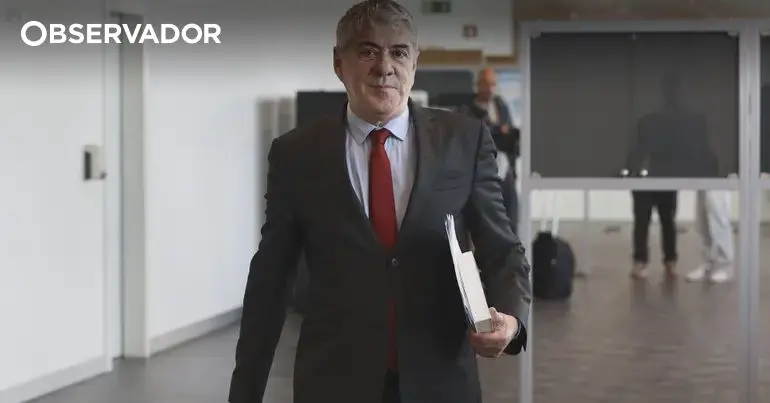
Lisbon court upholds appointment of ex officio defender for Sócrates in Operation Marquês
The Administrative Court of the Lisbon Circuit (TACL) rejected the interim measure filed by former prime minister José Sócrates to annul the appointment of lawyer Luís Carlos Esteves as his ex officio defender in the Operation Marquês trial, as Google News PT — Crime (pt) reported based on a judgment to which Observador had access on Thursday.
In the decision, dated 29 July, judge Fernanda Carqueijó declared the request for suspension of the act of assumption of jurisdiction by the General Council of the Bar Association (OA) — by resolution of 9 March — and likewise the appointment of Luís Esteves to be inadmissible. "I declare inadmissible the requested suspension of effectiveness of the act of assumption of jurisdiction, carried out by the General Council of the Bar Association, by resolution of 9 March, as well as the act of appointment of the interested party Luís Esteves, as defender of the applicant", the judgment states.
Three requirements not met
For the interim measure to be upheld, it was necessary to meet three preconditions: risk of a right remaining without remedy if the court delayed in deciding, serious evidence of the validity of the request before in-depth analysis, and weighing of the interests at stake. The failure to meet a single precondition determines the rejection of the interim measure — which the TACL established.
Sócrates had argued that the nomination of Luís Carlos Esteves by the General Council of the Bar Association had been arbitrary and personal, in contradiction with the model of random or sequential appointment provided for in the regulations. The Bar Association, for its part, invoked a "public interest" to justify the assumption of jurisdiction that normally falls to the Regional Council of Lisbon.
Successive refusals of appointments
The judge noted that the successive resignations of mandate and requests for recusal submitted by the previous defenders appointed to the defendant justified the direct intervention of the General Council. "Given the successive resignations of mandate and requests for recusal presented by the defenders appointed to the defendant, it cannot be seen that the appointment of the interested party was contrary to law, personal or arbitrary, as the applicant alleges", Carqueijó stated.
The magistrate added that the functions of Luís Carlos Esteves cease as soon as Sócrates appoints a new representative in the proceedings, even if the ex officio defender attends the hearings continuously — thus dismissing any alleged conditioning of the defendant's freedom in choosing his defence.
Original jurisdiction of the General Council
With regard to the question of jurisdiction, the court also rejected Sócrates' argument that the General Council of the Bar Association did not have the power to assume the appointment of the ex officio defender, a function usually delegated to Regional Councils. The judge considered that this jurisdiction is "original or direct", acquired by force of law, and that its delegation to Regional Councils never implied the loss of the power to call it back. "In this respect, the alleged illegalities of the assumption of jurisdiction act are not verified", Carqueijó added.
The magistrate also emphasised that the resolution to assume jurisdiction did not target specifically the Operation Marquês proceeding, applying to all proceedings declared of "special complexity" — so the same mechanism can be replicated in other cases with defendants without defence. According to the decision, such an appointment aims to "ensure the effectiveness of the right to defence of defendants, in return for merely formal defence".
Request made directly by judge to General Council
The judgment also addressed a relevant procedural aspect: the resolution of the General Council of the Bar Association stated that the request for appointment of an ex officio defender should be made by the Superior Council of the Judiciary or by the presiding judge of the respective jurisdiction, whereas in practice the request came directly from the trial judge, Susana Seca. The TACL concluded, through comparison with various regulations, that "the General Council cannot limit or restrict the jurisdiction that was attributed to it".
Impartiality of the Bar Association not questioned
The court also rejected the allegation that the Bar Association or defender Luís Carlos Esteves would have an interest in "harming" José Sócrates, noting that the defendant "does not allege, concretely, any facts that could support it". Neither was any "serious doubt about the impartiality of the action" of the Bar Association demonstrated, nor any "enmity" by bar president João Massano towards the former government official.
Last August, Sócrates had sent a submission to the Operation Marquês court records communicating the "withdrawal of effectiveness" of the acts carried out by the ex officio defender in his representation, denouncing an "escalation of abuses" in his defence. The former prime minister was also ordered to pay the costs owed in this administrative proceeding.
This decision adds to earlier setbacks for Sócrates before the TACL in the same context: the court had already rejected the filing of an incident against the Bar Association and the hearing of witnesses in the same matter.
Source: Google News PT — Crime (pt)