Property fraud in Brașov: 182 families seek help from Nicușor Dan over apartment deception
182 signatories of a petition claim they were deceived by developer Dynamic in Brașov and are calling on Romania's president to involve the competent authorities.
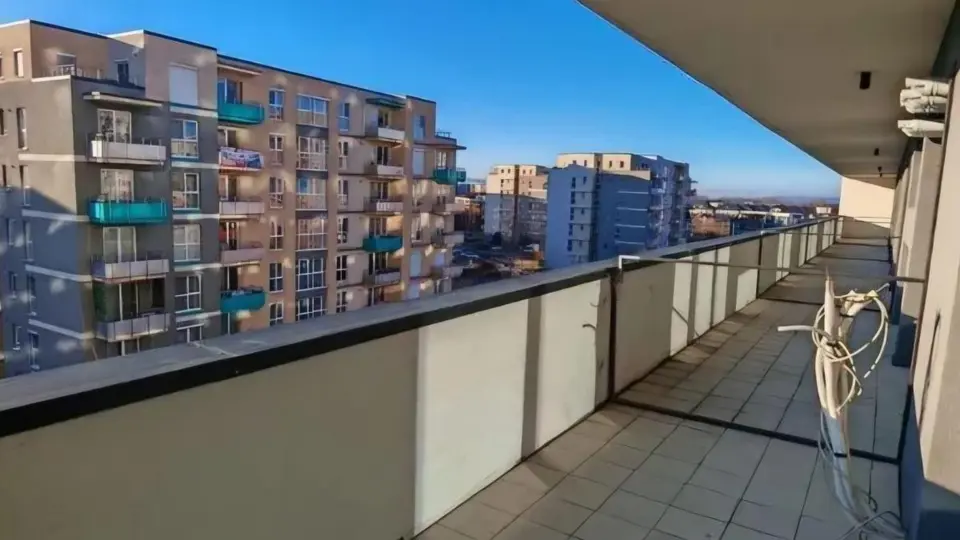
Over 400 families in Brașov at risk of eviction after paying in full for new apartments
Jurnalul.ro reports that 182 people who purchased apartments in newly built blocks in Brașov have sent a petition to Romania's president, Nicușor Dan, requesting his intervention in what they describe as a new property fraud of major proportions. The buyers claim they were defrauded by developer Dynamic BuildInvest from Brașov and fear that, should insolvency proceedings be opened against the company, they will be treated as ordinary creditors — despite having paid the full price for the apartments and already residing in them.
The petitioners are asking Nicușor Dan to notify the National Consumer Protection Authority (ANPC) to investigate the developer's commercial practices towards buyers, in accordance with Law 207/2025. They are also requesting notification of the National Office of the Trade Register (ONRC) and ANAF, to investigate the administrative structure — including the actual role of Martinaș Daniel-Florin — and any artificial financial arrangements between companies controlled by associates.
The petition also targets Brașov Municipality Town Hall — the Urban Development Department, to clarify the status of building permits and the acceptance of works on all four projects mentioned in the document addressed to the president.
The "Nordis Model" and suveică-type schemes
The case in Brașov is described in the context of a broader phenomenon known as the "Nordis Model" — the most publicised residential property fraud scheme in Romania in recent years, which subsequently triggered a series of investigations into similar schemes. The mode of operation involves the developer promising luxury residential and hotel complexes, persuading clients to pay huge down payments or even the full price for an apartment still in the design phase, in exchange for substantial discounts. Many of these apartments were subsequently sold multiple times to different clients.
A criminal case was recently opened in the Planorama case in Bucharest, considered one of the largest property frauds since 1989. The scheme began during the property boom of 2005–2007, when a developer promoted a project with nearly 1,000 apartments in Sector 2 of the capital, on Doamna Ghica Street. Over 800 buyers paid the down payment or the entire sum, and the developer collected over 20 million dollars. The project entered insolvency, leaving most of the buildings at an unfinished concrete structure stage for over a decade.
White Tower, Ploiești and recent networks in Bucharest and Ilfov
Another reference case is White Tower / Lupu in Ploiești, which highlighted complicity between certain developers and lawyers or notaries. The developer sold the same apartments in newly built blocks to two or three different people, and the contracts were abusively authenticated, with the help of notaries, bypassing legal entries in the Land Register. New buyers thus had no way to verify that the apartment had already been sold to someone else.
Organised networks active in Bucharest and Ilfov in the past year have been caught in authorities' nets. The General Prosecutor's Office conducted searches in a case with estimated prejudice of 16 million lei, against a developer who sold 13 apartments to two or three different buyers. Clients paid the sums in full, but found themselves in a situation where the properties already had other owners registered in the Land Register.
In Chiajna, in Ilfov, the fraud was made possible with the help of managers of a real estate agency, who convinced clients to sign pre-contracts only "by hand", to avoid notarial fees. The apartments transacted were either already sold to other people or mortgaged to banks, with buyers losing hundreds of thousands of euros.
The most common patterns of property fraud
The most common schemes involve selling the same apartment to multiple buyers, promises of residential complexes that are never built again, or false rental advertisements. There are also cases of fake owners asking for a down payment — via bank transfer or payment applications — to "reserve" a non-existent apartment or one they do not own.
However, cases with phantom developers remain more frequent: real estate projects sold "on paper", at low prices, where the developer collects a large down payment, after which enters insolvency or abandons the site before the deeds of ownership are completed.
In most such situations, victims accepted paying money in advance without the deed being entered in the Land Register or signed illegal pre-contracts to obtain a lower price. Specialists recommend as a first protective measure verifying the legal status of the property through a recent land register extract, requested directly by the buyer, not intermediated by the seller.
Source: Jurnalul.ro