Bezák: Investigators Concealed Records in Judáš and Očistec Cases from Lipšic
Lawyer Martin Bezák claims that between 2020 and 2023 there was systematic circumvention of the procedural rights of the accused. He addressed the matter in the programme TERAZ TAKTO.
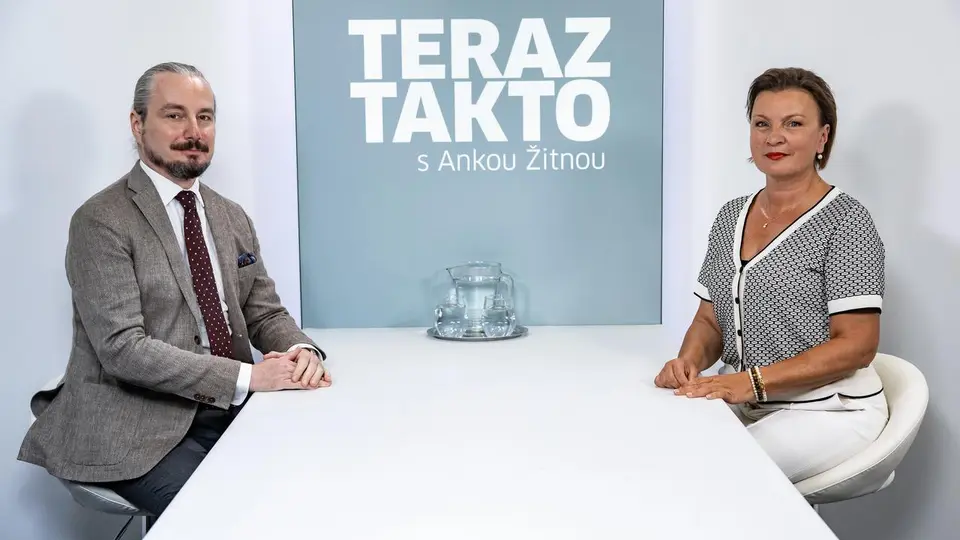
Bezák: Official Records Used to Circumvent Procedural Rights of the Accused
Lawyer and member of the Judicial Council Martin Bezák has publicly spoken about procedures which, according to him, characterised several politically sensitive criminal cases from 2020 to 2023. In the programme TERAZ TAKTO with Anka Žitná, which was highlighted by Nový Čas, he commented on the Judáš and Očistec cases as well as on the case of former Slovak Information Service director Vladimír Pčolinský.
The Pčolinský case took a new direction in late summer when an official record appeared which, according to Bezák, fundamentally undermines whether the former SIS chief even accepted the bribe for which he was prosecuted, charged and ultimately tried.
"This modus operandi could be seen repeatedly in those individual proceedings," Bezák stated. According to him, investigations were routinely split into separate proceedings, whereby co-accused found themselves in a situation where they had no access to witness testimony from the original criminal case.
Official Record Instead of Proper Interrogation
Official records became the key tool for circumventing procedural rules, according to Bezák. "An official record is not a piece of evidence at all. It is merely a document in which police officers record their activities," he explained.
Despite this, investigators used them in practice instead of proper interrogations. Persons who were to be questioned as witnesses, suspects or accused were not informed, according to Bezák, of the right to refuse to testify, of the right to a defence counsel or of the consequences of false testimony. "In this way, proper procedural processes were circumvented," he stated.
Informant Testified Contradictorily in Two Cases
Bezák gave a concrete example in connection with his client Marián Kučerka. He was charged and convicted partly on the basis of testimony from informant Ľudovít Mako, according to which he was to have brokered a bribe. In the Očistec case, however, the same Mako testified about the same matter differently — without any mention of Kučerka. According to this version, the bribe was to be handed over directly to Bernard Slobodník.
"It is entirely clear that he described the course of events diametrically differently," Bezák stated. Courts, according to him, instead of applying the principle in dubio pro reo — in doubt in favour of the accused — preferred the version unfavourable to the defendant. The change in testimony occurred, according to the file, shortly after Marián Kučerka's wife filed a complaint for disciplinary prosecution of prosecutors.
"The End Does Not Justify the Means"
Bezák refused to characterise such procedures as technical errors. "In criminal proceedings, the end can never justify the means. If you do not have a lawful process, you cannot arrive at a lawful result," he emphasised.
According to him, the state has a moral right to prosecute only if it itself acts in accordance with the law. "I have a keen interest in ensuring that the period that was here does not return. So that the bodies engaged in criminal proceedings proceed only in the manner prescribed by the criminal procedure code. Only under such circumstances can we live in a rule of law," Bezák concluded.
Source: Nový Čas