DOJ Indicts Five Russian Operatives in Murder-for-Hire and Sabotage Plots Targeting US and Europe
The Justice Department charged five suspected Russian intelligence operatives for allegedly plotting murders and sabotage attacks worldwide, including a Brooklyn-based assassination scheme.
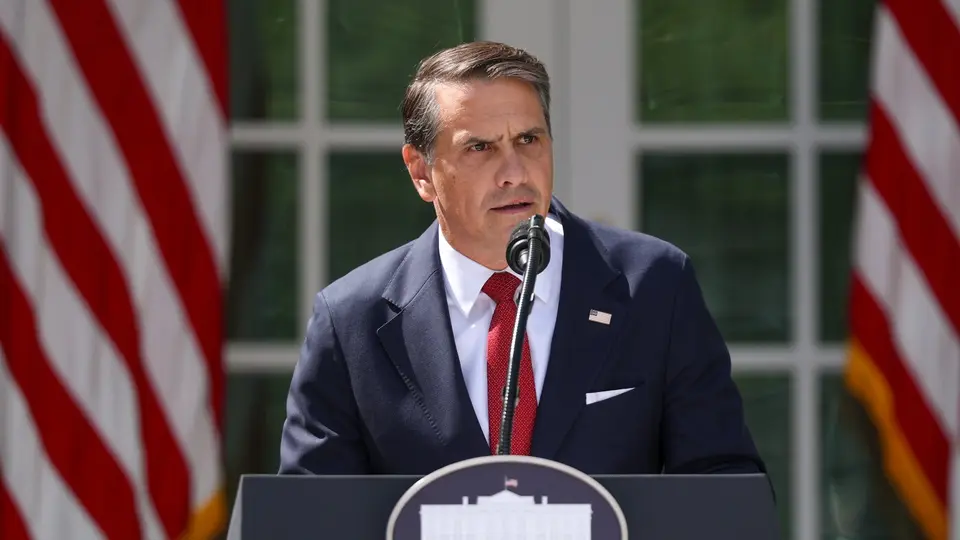
Five Charged in Russian Murder-for-Hire Network Targeting Dissidents in US and Europe
The Justice Department has charged five suspected Russian intelligence operatives with conspiring to carry out targeted killings and acts of sabotage against the Kremlin's perceived enemies, including at least one prominent dissident living in the United States, NPR National reports.
The indictment, unsealed in federal court in Manhattan, describes the defendants as members of a network that "is one arm of the Russian Federation's apparatus used to carry out external attacks, including murder, around the world."
"It is our job to stop America's adversaries from unleashing violence and terror on American soil," Attorney General Todd Blanche said. "And that's precisely what we are doing thanks to the work of the FBI and our Justice Department prosecutors."
The Defendants
Court papers name two of the five defendants as Yuri Khrameev, a former colonel in Russian intelligence, and his son Kirill Khrameev, a suspected officer in Russia's FSB. The remaining three — Oemis Romagoza Durruthy and Yaidel Delgado Suarez, both Cuban nationals, and Angel Eduardo Castro of Venezuela — are said by prosecutors to reside in Russia.
All five face charges of conspiracy to finance terrorism. Yuri Khrameev, Suarez, and Castro face an additional count of murder-for-hire conspiracy. All defendants remain at large.
Brooklyn Surveillance Plot, Summer 2026
One alleged plot unfolded between July and August 2026, when prosecutors say the network recruited a Venezuelan citizen — identified only as U.S. Resident 1 — living in Brooklyn. The individual was allegedly asked to surveil and kill a prominent Russian dissident based in the United States; the dissident's name does not appear in court papers.
Castro and Suarez communicated with U.S. Resident 1 through an encrypted messaging app, according to the indictment. They provided two addresses linked to the dissident and gave detailed instructions on photographing and filming both locations.
Suarez allegedly described the target as someone they "want to eliminate they want to disappear" and offered $40,000 "for whoever does the work."
U.S. Resident 1 indicated he was willing to conduct surveillance but refused to commit murder. Suarez then asked whether he knew "someone who wants to do construction" — language prosecutors characterize as code for carrying out the killing. Suarez also allegedly said he was under pressure from a superior and that a team in Mexico could handle it, though they were not immediately available.
Vilnius Assassination Plot, 2025
A separate alleged scheme, documented in the same indictment, targeted a Kremlin critic believed to be living in Vilnius, Lithuania. In late June 2025, prosecutors say, an unnamed American citizen met Kirill Khrameev at the Estonia-Russia border. Khrameev offered to pay the American to photograph an address in Vilnius.
The American subsequently maintained contact via encrypted messaging with Yuri Khrameev, who instructed him to send images or video of the target's residence every two to three days, according to the indictment.
Yuri Khrameev explained the target was being pursued for "spreading dirt" about Russia and "telling the media and the common people that the Russians are the aggressors," court papers state.
The American was offered $25,000 to carry out the murder. Khrameev suggested the killing could be carried out by "throwing a bottle of gasoline" or "sticking a knife" in the victim. The American declined, saying he feared being caught easily.
Khrameev then proposed a "simpler job," such as setting fire to a warehouse or electrical substation. "I am interested in all the countries that are helping Ukraine," Khrameev allegedly wrote, stating he wanted to target "military facilities and dual-use facilities… located in the countries of the NATO military bloc." He added: "I'm offering serious money for serious work."
European Sabotage Operations
The indictment connects the alleged network to broader accusations of Russian sabotage on European soil — charges that Poland, Germany, and Czechia have each raised in recent years following Russia's full-scale invasion of Ukraine in 2022.
Durruthy, one of the Cuban defendants, is accused of coordinating travel arrangements and payments for terrorist acts, including in Prague. Prosecutors say he transferred more than $1,000 in cryptocurrency to a "criminal associate" and booked hotels in both the Czech Republic and Poland for that individual. The indictment includes a photograph pulled from an online account linked to Durruthy that prosecutors say appears to show potential attack sites in the Polish capital.
The five defendants are alleged to have been actively recruiting and executing the network's operations since 2024.
Source: NPR National