Epstein Files Drive Ohio Senate Race as Wexner Donations Fuel Attack Ads
Les Wexner's $116,000 in contributions to Sen. Jon Husted have become a flashpoint in Ohio's U.S. Senate race. A traveling Epstein files exhibit heads to Ohio on Oct. 7.
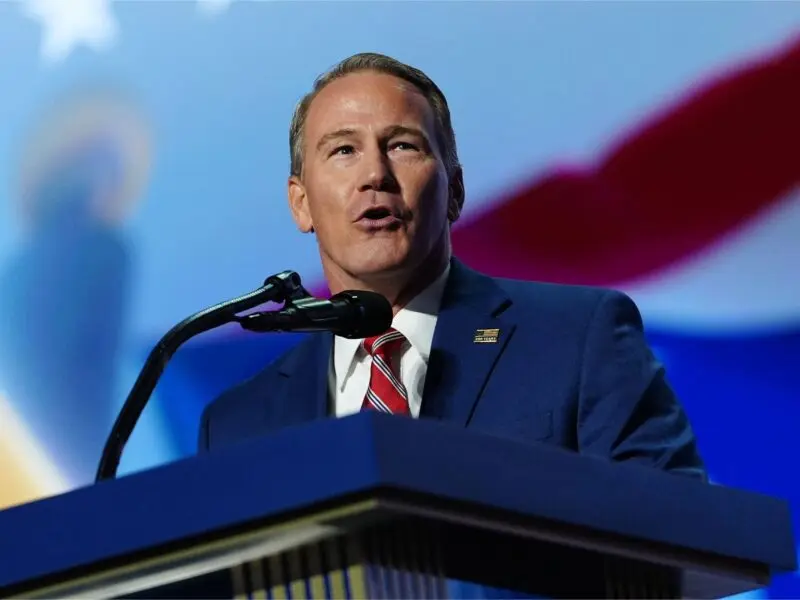
Epstein Donations Dominate Ohio's Costliest Senate Battle
Billionaire Les Wexner's long history of political giving is reshaping Ohio's U.S. Senate race — and, according to Courthouse News Service, the Epstein files are about to make it more turbulent.
A traveling exhibit displaying more than 3 million pages of Justice Department documents on Jeffrey Epstein is scheduled to arrive in Ohio on October 7, reigniting scrutiny of the state's ties to the late convicted sex offender.
Epstein served for years as Wexner's personal financial adviser. Wexner, the 89-year-old retail billionaire behind L Brands, has publicly disavowed that relationship, telling members of Congress during a February deposition that he had been "duped by a world-class con man." He has not been charged, and his lawyer has stated he was not a target of any investigation.
$116,000 and a campaign weapon
Federal records show Wexner contributed approximately $116,000 to support Republican Sen. Jon Husted between 2001 and 2025, spanning the two decades Husted spent in Ohio state politics before being appointed last year to fill the seat vacated by Vice President JD Vance.
That figure amounts to a modest slice of Husted's overall fundraising, but his Democratic opponent, former Sen. Sherrod Brown, has seized on it. Brown's campaign has aired at least three television commercials arguing that Husted received more money from Wexner than any other sitting member of Congress.
One ad featured footage from Wexner's congressional deposition, in which Wexner confirmed being a longtime donor to Husted. Another described Wexner as "an Epstein co-conspirator" — a characterization Husted's campaign contests, noting that Wexner has faced no criminal charges.
Brown's team also highlighted a $3,500 donation Wexner made to Husted in July 2025, less than ten weeks before Husted joined most Senate Republicans in blocking a Democratic effort to force the release of the Epstein files.
Husted fires back
The Husted campaign has not stayed quiet. Spokesperson Amy Natoce pushed back on Brown's claim that Husted "voted to cover up the Epstein files," arguing that the only vote that counts on the matter was the November vote on the Epstein Files Transparency Act — on which Husted voted yes. She described the earlier vote as procedural.
The campaign also went on offense, releasing ads pointing to donations Brown accepted from individuals whose names appear in the Epstein documents. Those named included Wexner's wife Abigail, former U.S. Treasury Secretary and Harvard president Larry Summers, and former Google CEO Eric Schmidt. Federal Election Commission records confirm that Brown did not accept any direct contributions from Wexner himself. Brown did not return donations from roughly a dozen individuals identified as "Epstein associates" in Husted's ads, though none of those individuals has been accused of any crime.
Natoce said Husted donated all traceable Wexner contributions — $34,300 — to an anti-human trafficking charity. Earlier contributions had been spent in prior campaign cycles.
An exhibit, accusers, and demands for accountability
The Epstein Reading Room tour, the nonprofit exhibit organized by the Institute for Primary Facts, has already made stops across the country and plans at least 20 more. David Garrett, the organization's executive director, said the tour's purpose is unambiguous: "We want to show these elected officials and the candidates that the public is interested in this topic, and the public is demanding justice for survivors and the public is demanding accountability, no matter how rich and powerful the perpetrators and enablers of these crimes are."
Annie Farmer, an Epstein accuser who has joined the tour, said the flow of donor money from Epstein-connected individuals to politicians creates a structural incentive to suppress the truth. "We should be asking hard questions to everyone who is related to Epstein and is financially supporting politicians. Are they hoping to benefit from silence?" she said. "To people with that much wealth, they feel they don't have to play by the same set of rules."
Farmer said she was 16 when Epstein abused her and her sister Maria Farmer in the 1990s. Maria Farmer, one of Epstein's earliest accusers, alleges her assault took place in 1996 in New Albany, Ohio, where Epstein maintained a residence while working for Wexner, whose estate is situated there.
During his February deposition, Wexner testified that he had no knowledge of Maria Farmer until her name appeared in press reports and that he did not know whether she had ever stayed on his property. He also stated under oath that he never lobbied Husted or any other official to block the release of the Epstein files.
National implications, Ohio epicenter
Ohio's Senate contest is shaping up to be among the most expensive in the country this cycle, and the Epstein dimension has given it national resonance. Epstein's decades of contact with influential figures — and Congress's fractious efforts to compel the Justice Department to release its full investigative files — have surfaced in House and Senate races across the country. In Ohio, the issue has moved to the center of a race that will help determine the balance of power in the U.S. Senate.
At the exhibit's first stop in Dallas, Farmer and other accusers met with Democratic Senate candidate James Talarico and Democratic congressional candidate Gina Hinojosa, who is running against Texas Gov. Greg Abbott. The tour's Ohio stop on October 7 is expected to draw similar political attention.
Source: Courthouse News Service