Idaho cold case: Chemist Betkouski identified after 44 years, linked to 1982 Tylenol murders
Ada County Sheriff's Office has identified the 'Unknown Wanderer' found dead in a Boise church in 1982 as chemist Dr. Mathew Betkouski, possibly linked to the Tylenol killings.
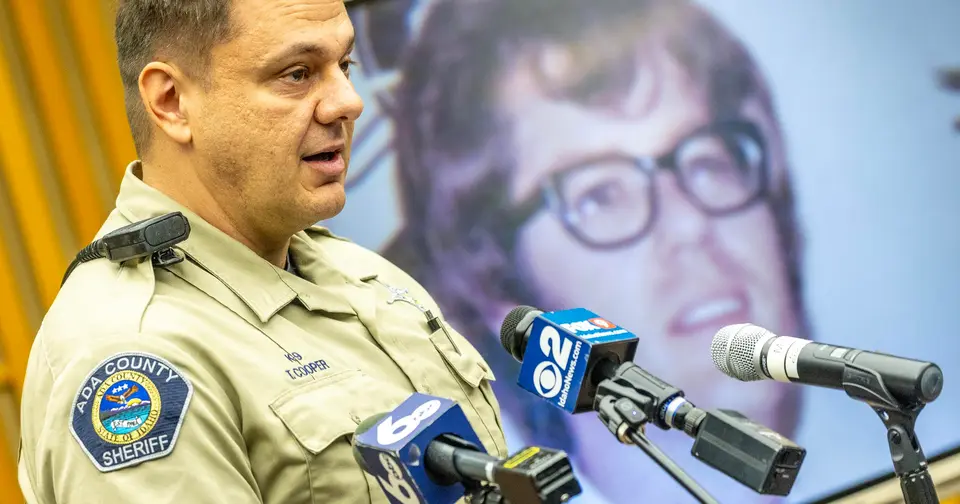
Idaho cold case cracked: chemist found dead in church may be connected to 1982 Tylenol poisonings
Dr. Mathew Francis Betkouski, an organic chemist who once worked for Lockheed Martin on NASA-related projects, has been identified as the man who poisoned himself with cyanide inside Sacred Heart Catholic Church in Boise, Idaho, on 4 December 1982 — and was buried without a name for more than four decades. According to spokesman.com, Ada County Sheriff's Office Detective Tim Cooper announced the identification at a press conference on Wednesday.
Before his identity was established, the man was known only as the "Unknown Wanderer." The case was reopened in 2019 after a member of the church inquired about its progress.
From the lab to the confessional
Betkouski had a "documented fascination" with chemistry and explosives, Cooper said. His behaviour became increasingly erratic after he suffered a brain injury in 1974, when he fell from a tall fence. Though plagued with mental illness, Cooper described him as a "brilliant man" who struggled to connect with people.
In March 1982 — months before the Tylenol deaths in the Chicago area — Betkouski attempted to obtain capsules of some kind at a pharmacy in the Las Cruces, New Mexico area. Police were called and he was escorted home. Investigators later found that he had been removing unauthorised material from his lab at the White Sands Test Facility in New Mexico, and cyanide was discovered in his room. Coworkers recalled that Betkouski frequently discussed how cyanide could be used in "the perfect crime."
He subsequently received months of outpatient and inpatient psychiatric treatment at the UCLA Resnick Neuropsychiatric Hospital in Los Angeles. When he returned to work in Florida, he was dismissed, partly because his behaviour had not improved. In the weeks preceding the Tylenol homicides, he made frequent calls to chemical supply and pharmaceutical companies in Pennsylvania.
Betkouski eventually sold his car and other possessions at his home in Las Cruces and disappeared.
Keys and a wallet solved a 44-year mystery
When his body was found in a church pew on 4 December 1982, two items were on his person: two key rings and a wallet. One key — a house key — led investigators to a street in Jacksonville, Florida, known as Mills Court. Property records pointed to a man whose brother had disappeared in 1982. That lead directed detectives to Betkouski. A DNA comparison between the brother and material found on the unidentified man's wallet confirmed they shared the same father.
Betkouski came from a prominent Los Angeles family and was a graduate of Loyola University in Los Angeles. Newspaper records show he was granted a teaching internship at the University of Dayton in Ohio. He and his ex-wife became engaged in April 1967; she also graduated from the University of Dayton.
Suspicion without accusation
Ada County Sheriff Matt Clifford made clear that authorities are not formally naming Betkouski as a suspect in the Tylenol murders. "We sent all our information to the Chicago area. It's really not our job to name him as a suspect," Clifford said. "What we are looking for is … Do you have any information?"
Cooper said the goal is to "generate new leads" and to encourage anyone with knowledge of Betkouski's whereabouts in 1982 to come forward.
Seven dead, seven bottles of poisoned Tylenol
The Tylenol killings began in the greater Chicago area in autumn 1982. Twelve-year-old Mary Kellerman died in hospital after consuming Tylenol capsules. Six more people — all under the age of 35, all living in the Chicago area — died the same way. Investigators determined the capsules had been laced with lethal doses of cyanide, triggering a nationwide recall and the removal of Tylenol from shelves across the country.
Johnson & Johnson concluded that whoever tampered with the capsules had done so after the product left its distribution centres: bottles were removed from store shelves, poisoned, and returned. Some of the affected stores were more than 20 miles apart.
The prime suspect who maintained his innocence
For decades, investigators' primary focus was James Lewis, a man convicted of attempting to extort Tylenol's manufacturer. Around the time of the poisonings, Lewis wrote a letter to Johnson & Johnson stating the killings would stop if $10 million was wired to a Chicago bank account belonging to a travel agency. Lewis admitted to writing the letter but claimed it was intended only to embarrass the agency's owner, whom he believed had underpaid employees — a detail reported by the Chicago Tribune. Lewis also described to investigators, during post-killing interviews, how one might hypothetically poison grocery shoppers with cyanide, but never admitted to carrying out the attacks. He maintained his innocence until his death in 2023.
Former U.S. Attorney Dan Webb said there was never sufficient evidence to formally charge Lewis, according to the Chicago Tribune. Some FBI agents nonetheless believed Lewis was responsible.
The priest who never spoke
By the time Betkouski died in that Boise church pew two months after the poisonings, he was well dressed and appeared to be a man of means. He died during the hours of the confession service, which has fuelled speculation that he may have sought absolution before taking his own life. The priest present that day, however, never provided a statement to investigators about what, if anything, the man said.
"We have heard various things that may have been said or done in the church that day, and some are interesting," Cooper said. "But in the end, we cannot independently verify what was or wasn't said in the confessional."
Source: Google News MT