Texas court acquits Crystal Mason after decade-long illegal voting case
Texas's highest criminal court let stand the acquittal of Crystal Mason, who was sentenced to five years for casting a provisional ballot in 2016 that was never counted.
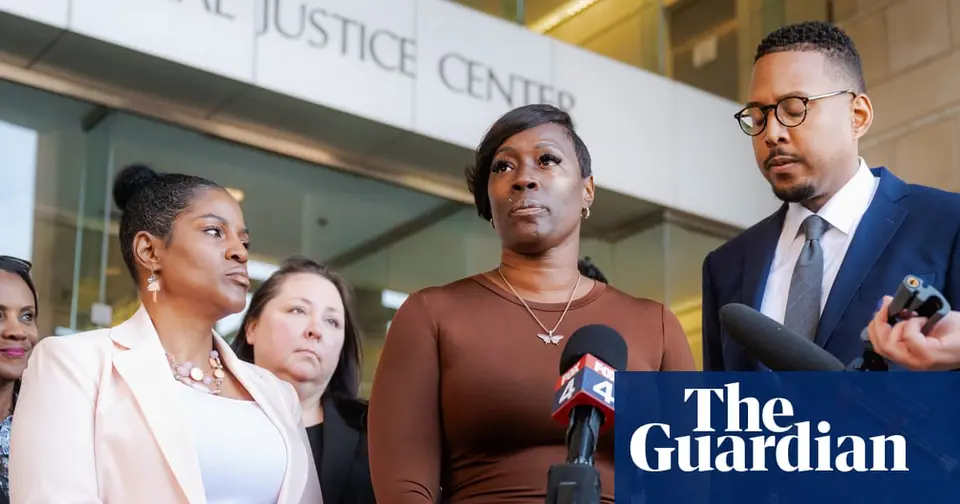
Texas court ends decade-long case against woman jailed for uncounted provisional ballot
Texas's highest criminal court has ruled that the illegal voting case against Crystal Mason — a Black woman sentenced to five years in prison for casting a provisional ballot that was never counted — will end in acquittal, theguardian.com reported on Thursday.
The 5-4 decision by the court reversed its earlier agreement to hear an appeal from the local prosecutor and offered no explanation for the change. The acquittal issued by the Texas Court of Criminal Appeals in 2024 now stands.
"After 10 long years of fighting, I am overwhelmed with joy and gratitude. It's hard to put into words how excited I am right now. This journey has been long, exhausting, and emotional, but God has carried me through it all," Mason, 51, said in a text message.
A ballot cast in 2016
Mason was serving supervised release for a federal tax felony when she went to the polls on election day in the 2016 presidential election. When she arrived, officials could not find her name on the registered voter rolls and offered her a provisional ballot — a safeguard required under federal law. Mason cast the ballot; it was never counted.
Texas, like many US states, prohibits people with a felony conviction from voting while on probation or supervised release. Mason signed an affidavit stating she was eligible to vote, but she has consistently maintained she did not read the language on the form and was never informed she was ineligible. Federal probation officials who testified at her 2018 trial confirmed they had not told her she could not vote.
Poll workers testified at trial that Mason swore the information in the affidavit was true. Mason has always disputed that this occurred.
Prosecutors argued that Mason knew she was ineligible because she signed the affidavit and had sworn to its contents. A judge found her guilty and sentenced her to five years in prison, triggering widespread criticism given Mason's assertion that the vote was an innocent mistake and that the ballot itself was never counted.
Ten months in federal prison
Because Mason was convicted of a criminal offence while on supervised release, she was returned to federal prison for ten months. During that period, she came close to losing her home to foreclosure. Her teenage daughter took over running the household, and her college-age son gave up a football scholarship to return home and help with costs. Mason has three children and also raised four of her brother's children. She has ten grandchildren.
The case drew national attention as then-President Donald Trump amplified claims of widespread voter fraud following the 2016 election. Many observers saw Mason's prosecution as an effort to make an example of her.
Prosecutors and defenders respond
Phil Sorrells, the Tarrant County district attorney who pursued the case, issued a statement Thursday standing by his office's position. "Illegal voting remains a crime in Texas," he said. "If there is evidence that someone knowingly violates our election laws in Tarrant County, we will investigate it and, when the evidence supports it, prosecute it."
Thomas Buser-Clancy, an attorney with the Texas chapter of the American Civil Liberties Union, which helped represent Mason, said the outcome affirmed a fundamental right. "Civic participation without fear of imprisonment is a cherished right that is critical to our system of democracy. The highest criminal court in Texas affirmed that right by letting the lower court's acquittal stand," he said. "Ms. Mason has spent nearly a decade defending her rights in Texas and today we see that her efforts have been successful not only in defending her own freedom, but also in protecting the ability of Texans across the state to participate in our democracy without fear."
Alison Grinter, another of Mason's attorneys, said the ruling carried significance ahead of upcoming midterm elections. "This really is a great day for Texas voters who can finally celebrate their right to go to the polls unafraid and undeterred by partisan intimidation and scare tactics," she said.
Four dissenting justices
Four justices on the court wrote dissenting opinions, arguing there was sufficient evidence that Mason knew she was ineligible when she voted. Judge Lee Finley, joined by judge Gina Parker, wrote: "The evidence presented by the State at Appellant's trial for illegal voting was sufficient to show that Appellant 'actually knew' that she was ineligible to vote. The provisional voter affidavit, corroborated by the additional evidence presented by the State, leaves no doubt whatsoever that the trier of fact was presented with sufficient evidence to sustain Appellant's conviction. This is not a close case."
From defendant to advocate
Mason was not particularly politically active before 2016. Since her conviction, however, she has become a prominent voice on voting rights. In 2022, she opened a campaign rally for Democratic gubernatorial candidate Beto O'Rourke and worked to educate voters about their rights.
She also recalled a recent encounter that underscored the unlikely arc of her case: the wife of Tarrant County district attorney Phil Sorrells — the same official who pursued her prosecution — knocked on her door to ask whether she would consider voting for him.
"The irony of that moment is something I will never forget," Mason said.
Source: Google News IE — Crime (en)