Rastafarian leader condemns St John cannabis raid seizing 6,000 plants
Paul Ras Simba Rock of the African Heritage Foundation says a police raid in St John that destroyed 6,000 cannabis plants hurt poor communities.
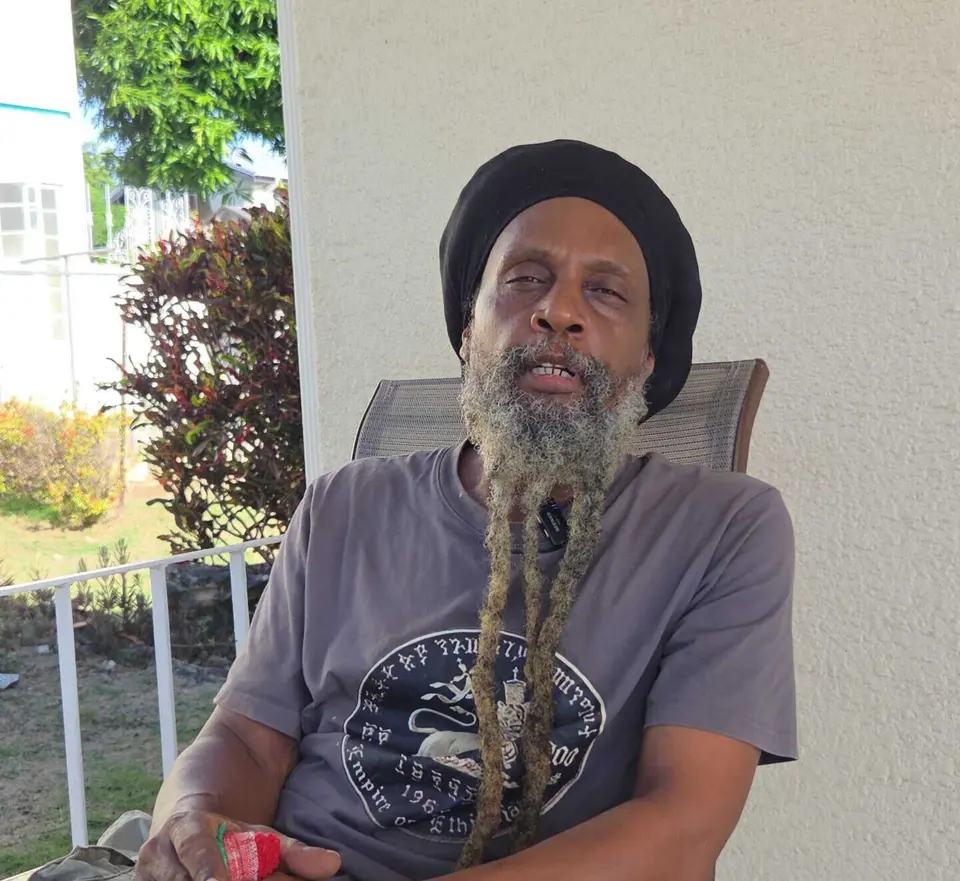
African Heritage Foundation head slams St John cannabis crackdown
Paul Ras Simba Rock, President of the African Heritage Foundation, has sharply criticised police following a recent raid in St John, Barbados, telling Barbados Today the operation "disenfranchised" small-scale local growers.
Officers seized and destroyed 6,000 cannabis plants during the operation, with authorities placing the estimated street value at $1.4 million.
Ras Simba, a vocal advocate for cannabis legalisation, argued that publicising such figures is a deliberate strategy to turn public opinion against traditional farmers.
"Each time the street dollar value is expressed and put out there, it is a thing done to 'incensitise' the public," he said. "Drugs have the stigma attached to them of being big money makers. When you put that value on it, it speaks in a certain way to the general public."
He contended that the $1.4 million figure represents revenue stripped from impoverished communities, while established businesses profit freely under new medicinal cannabis legislation.
"For years, ganja has been part and parcel of the economic stronghold, not only of the Rastafari community, but of disenfranchised, poor people," Ras Simba said. "What that $1.4 million says to me is that this is revenue being taken out of the hands of poor people. If it was under the so-called legislation, it would be no problem, because we have well-to-do people making that amount and more legally from therapeutic shops and legal spaces."
Asked whether traditional growers face barriers to entering the regulated market, Ras Simba said the current framework effectively excludes ordinary farmers through economic bias, strict licensing conditions, and heavy penalties.
"The regulated industry was not set for the average grower," he stated. "Most of us just want to have access to the plant so we can do our own thing — use the roots, use the leaves, make our butters legally. Every Barbadian should have access to at least seven to nine female plants."
He also pointed to the burden of court fines as a mechanism that traps traditional growers in criminality rather than offering a path out of it. He cited a recent case involving a member of his community.
"Just about a month ago, a young brother in our community was held and charged $50,000 for cultivation," Ras Simba said. "He had to spend a month on remand and now has a fine of $50,000 to pay in 18 months. The only way for him to get this money is to go ahead and plant more herb. This is what the law has been doing to poor people ever since: giving them fines they know they cannot pay."
Ras Simba further criticised the legal cannabis market for importing North American products rather than supporting locally grown, organic alternatives.
"Right now, what we have is an influx of North American herb, which the Rastafari community has queries about regarding health, because organic food is better for you than food farmed with a lot of pesticides and fertilisers," he noted.
Despite continued police operations and ongoing prosecutions, Ras Simba said Rastafarian farmers would press ahead in their push for full legal access and the unrestricted right to cultivate cannabis.
Source: Barbados Today