RCMP officer wept on stand after fatal shooting of autistic teen in Surrey
A Mountie testified he was "repulsed" at shooting 15-year-old Chase de Balinhard, who was carrying a pellet gun. Officers lacked autism de-escalation training.
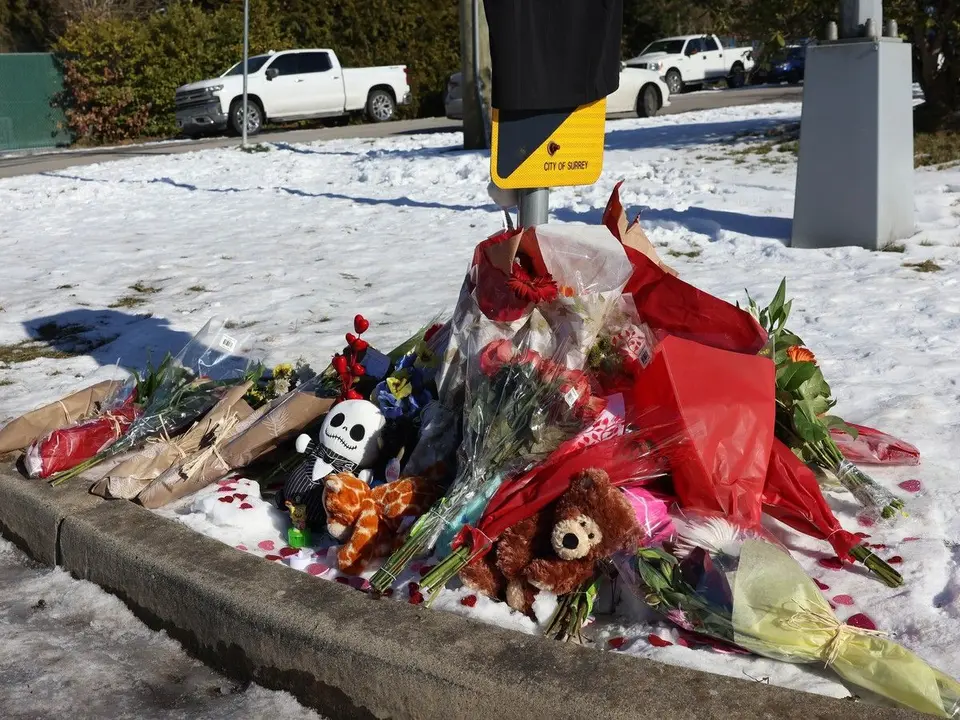
Mountie breaks down at inquest into shooting death of autistic 15-year-old in Surrey
A veteran RCMP officer wept on the witness stand as he described opening fire on a 15-year-old autistic boy last February, telling a coroner's inquest he was "repulsed" by the thought but believed he had no other option. Vancouver Sun Crime reports that Staff Sgt. Christopher De Hart and a second officer shot and killed Chase de Balinhard on Feb. 9, 2025, on a Surrey street, after the teen pointed what appeared to be a firearm at police.
"I was worried that he was going to shoot me, I was worried that I wasn't going to be able to pull the trigger," De Hart said, stopping repeatedly to wipe his eyes. "When you train for these type of things, you envision the bogeyman. You don't think it's a 15-year-old kid."
Chase was carrying a pellet gun that officers said was indistinguishable from a real firearm. When he did not respond to repeated calls to drop the weapon, De Hart fired — as did a second Mountie, RCMP Const. Hamza Khan.
Officers knew Chase was autistic but lacked specific training
Testimony at the inquest on Friday revealed that both officers were aware Chase had an autism diagnosis, but neither had received formal training in how to de-escalate confrontations involving neurodivergent individuals. That gap, the jury heard, left them without tools beyond their firearms when the situation escalated.
De Hart is a use-of-force instructor with 20 years in the RCMP, teaching officers how to use handcuffs, batons and Tasers — though he is not a firearms instructor. Khan was a member of a mobile integrated crisis response team focused on mental-health calls. Despite those backgrounds, both said they felt lethal force was their only remaining option.
Crouching behind a police cruiser at 185th Street and 70th Avenue, De Hart said he turned to a dog-handler on the tactical team, hoping for a "miracle answer" on how to disarm the teen safely.
"So the firearm, in my mind, was the absolute only option that I could think of — and believe me when I tell you that I tried to think of something," De Hart told the inquest.
RCMP had attempted to apprehend Chase for more than 20 minutes, according to a report on the incident. The teen did not respond verbally to officers or follow their instructions during that time.
Doorbell footage shown; second officer also fired
The five-person jury was shown doorbell camera footage of Chase walking across a snow-covered lawn. When police called out to him, he turned and extended his arm toward officers, appearing to aim the pellet gun. Within seconds he moved behind a tree, at least one shot rang out, and several Mounties rushed to his side.
Khan, watching the footage from the witness stand, sobbed so intensely that the inquest was suspended for a 15-minute recess. He later testified that he too fired because he believed he was about to be killed.
"I was trying to tell him it's going to be OK. Help is on the way," Khan said of the moments after the shooting, when he ran to Chase's side.
De Hart said that when he saw colleagues performing first aid on Chase, he collapsed: "I couldn't breathe, and I felt sick."
Family does not blame officers
A lawyer representing Chase's parents told both De Hart and Khan directly that the family holds neither officer responsible. Police had genuinely believed the teen was armed with a real gun and feared for their lives, the lawyer acknowledged.
The inquest jury will not assign blame for Chase's death. Its role is to hear evidence and issue recommendations aimed at preventing similar fatalities in the future.
Proposed changes include autism training and "blue flag" system
Several possible reforms were raised during Friday's testimony. These included mandatory autism-specific training for police, simplified procedures for nurses to share relevant psychiatric information with officers during active calls, and a voluntary "blue flag" system that families could use to attach an autism diagnosis to a person's file — alerting officers before they make contact.
De Hart was asked whether having access to "safety words" known to calm Chase could have changed the outcome that day.
"It's a great idea," he answered.
After the incident, Khan took his own steps to address the training gap. He approached the Canucks Autism Network to arrange a day of autism education at his detachment, and his sergeant organized a course through the Pacific Autism Family Network. When a lawyer asked whether that optional training would have prevented the need for lethal force on the day Chase died, Khan lowered his head and fought back tears for more than a minute before answering quietly: "It would not."
The jury has not yet heard which officer's bullet killed Chase de Balinhard. The inquest continues.
Source: Vancouver Sun Crime