Organised crime infiltrates formal economy and pressures Central Bank and Coaf to strengthen controls
The advance of organised crime over the financial system was the central theme of Febraban's 16th Money Laundering and Terrorism Financing Prevention Congress. The Central Bank, Coaf and banks defend data integration and stricter penalties.
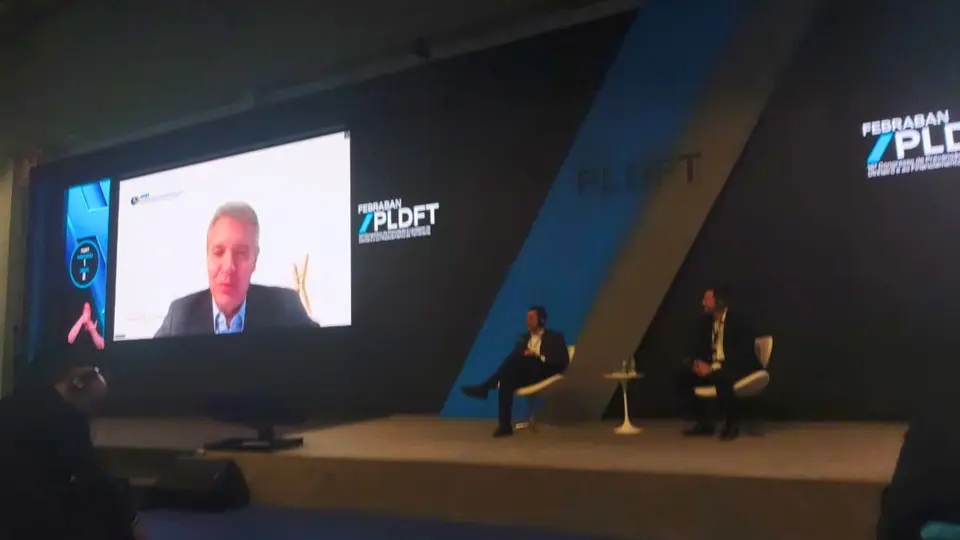
Organised crime infiltrates formal economy and pressures financial system regulators
The advance of organised crime over the national financial system and formal economy concerns regulators and financial institutions, according to reporting by finsidersbrasil.com.br. The issue was at the centre of discussions at the opening of the 16th Congress on Prevention of Money Laundering and Financing of Terrorism (PLD/FT), held on Tuesday (17) by the Brazilian Federation of Banks (Febraban).
During the event, sector executives and representatives of the Central Bank (BC) and the Financial Activities Control Council (Coaf) defended the strengthening of prevention mechanisms, the integration of information between institutions and the improvement of accountability of those involved.
"We need to keep building the wall every day. This is a never-ending game, an endless daily game. We have to work very seriously, empower the client to be part of the solution. This is not an exclusive responsibility of financial institutions, it is of the regulator, the banks, the clients, the judiciary," said Milton Maluhy Filho, executive director (CEO) of Itaú Unibanco, at the opening of the congress.
Maluhy Filho also defended legislative advances to curb the use of shell accounts. "We need to see laws also evolving in this direction to prevent situations such as shell accounts, people who lend their accounts to be able to move money and obtain personal benefits," he added. In the executive's assessment, without stricter penalties, it will be difficult to curb the use of third-party accounts and other strategies adopted by organised crime.
Digitalisation opens new loopholes for crime
One of the main concerns of the BC and Coaf is the infiltration of organised crime into the formal economy. PLD/FT mechanisms become increasingly important in this context, but the challenge is making them keep pace with the evolution of criminal networks.
"This infiltration of organised crime into the financial and payments system is an evolution that emerged with Pix, with the evolution of digitalisation. With this, new challenges and new risks emerged. One of them is crime perceiving the gains of infiltrating the financial system and the formal economy as a whole," said Gustavo Martins dos Santos, head of the conduct supervision department at the BC.
According to Santos, organised crime stopped operating only in traditional sectors and began to exploit digital and financial environments as well. The scenario has become more complex and demands a proportional response from regulators and institutions.
As part of this effort, Coaf is developing a new system for communicating suspicious operations aimed at sectors required to report irregular transactions.
KYC and relationship networks become central
Money laundering prevention and KYC (know your customer) practices continue to be fundamental, but what needs to change is the depth of analyses. Instead of assessing only companies or clients in isolation, institutions should also consider their relationship networks and connections with other operations.
The betting market illustrates this challenge. Some companies have short lifespans and, when they cease operations, others quickly emerge in their place. Monitoring, therefore, cannot be limited to a specific company: it also needs to monitor bettors, their links and transactions between different platforms.
From laundering to revenue generation
"Organised crime has sought to infiltrate the formal economy increasingly. Before, the sole and exclusive objective was to launder money. Over time, it was realised that the formal economy could be a source of resources, making money to reinvest in crime," pointed out Ricardo Andrade Saadi, president of Coaf.
In addition to using companies to conceal the origin of illicit resources, these organisations have come to see the formal economy itself as an opportunity for revenue generation and expansion of activities. With access to strategic sectors, they expand their capacity to operate and facilitate other crimes, such as drug and arms trafficking.
Operation Hidden Carbon exposes connection with PCC
Operation Hidden Carbon exemplifies how organised crime can distort competition in different sectors of the economy. By operating without collecting taxes, these organisations reduce costs and offer products at lower prices than competitors operating within the law.
The investigation revealed a complex structure of money laundering, fuel adulteration and tax fraud linked to the First Capital Command (PCC). The operation also identified connections between organised crime and Faria Lima, through the use of a fintech to launder resources.
Data sharing as central strategy
To identify these structures, Coaf considers it essential to bring together information from different participants in the financial market. The crossing of data makes it possible to build a broader view of suspicious transactions and identify connections that would go unnoticed in isolated analyses.
The executives present at the congress reinforced the importance of sharing information between banks, fintechs and other companies in the financial system. Integration makes it possible to identify patterns and relationships between operations that, analysed individually, may not raise suspicions.
Source: Google News BR — Crime