ENCCLA debates anti-corruption and anti-money laundering strategies in Rio de Janeiro
About 90 public and private bodies met in Rio to evaluate actions in 2026 and define priorities against corruption and money laundering in 2027.
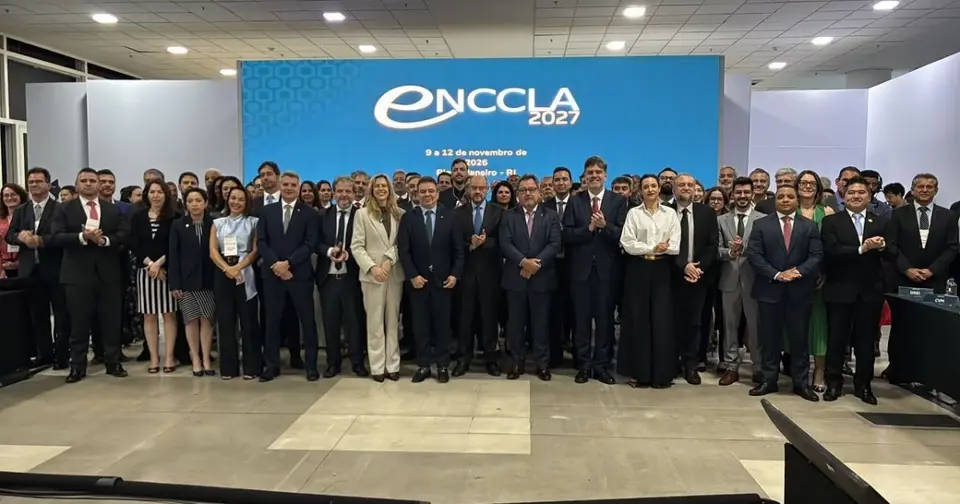
Meeting brings together 90 bodies in Rio to combat financial crimes in 2027
About 90 public and private institutions met on Thursday (12) in Rio de Janeiro to evaluate actions taken in 2026 and outline new strategies to combat corruption and money laundering for 2027, according to reporting by cnnbrasil.com.br.
The meeting was the XXIV Plenary Meeting of the National Strategy to Combat Corruption and Money Laundering (ENCCLA), the principal decision-making forum of the institutional coordination network overseen by the Ministry of Justice and Public Security (MJSP). The event brings together representatives annually from the Executive, Legislative and Judicial Powers, as well as the Public Prosecution Service.
Among participants were the Federal Police (PF), the General Comptroller's Office of the Union (CGU), the Financial Activities Control Council (Coaf), the Central Bank, the Federal Revenue Service, the Federal Public Prosecution Service (MPF), the National Council of Justice (CNJ), the Court of Accounts of the Union (TCU) and the Brazilian Federation of Banks (Febraban). Also present were Rio de Janeiro's interim governor, Ricardo Couto, and the Minister of Justice and Public Security, Wellington César Lima e Silva.
The National Secretary of Justice, Maria Rosa Loula, highlighted that joint action among institutions is essential to confront crimes involving complex financial structures that transcend the remit of a single body.
"Criminal organisations are constantly adapting their methods of operation, exploiting new technologies and seeking vulnerabilities in control mechanisms. For this reason, tackling money laundering requires that our institutions also evolve continuously, evaluating the results of their actions, identifying weaknesses and developing new solutions," Loula stated.
The plenary meeting, held annually, allows bodies with distinct responsibilities to share experiences, map common challenges and establish priorities for integrated solutions. The model aims to overcome the fragmentation of efforts and broaden the State's capacity to respond to increasingly complex economic and financial crimes.
Source: Google News BR — Crime