Police killings rise 244% in Baixada Santista; researcher points to anti-Black policy
UFF study reveals that deaths from police intervention in Santos, Guarujá and São Vicente jumped from 32 to 110 between 2022 and 2024. Researcher classifies Tarcísio's policy as "urbicidal and anti-Black".
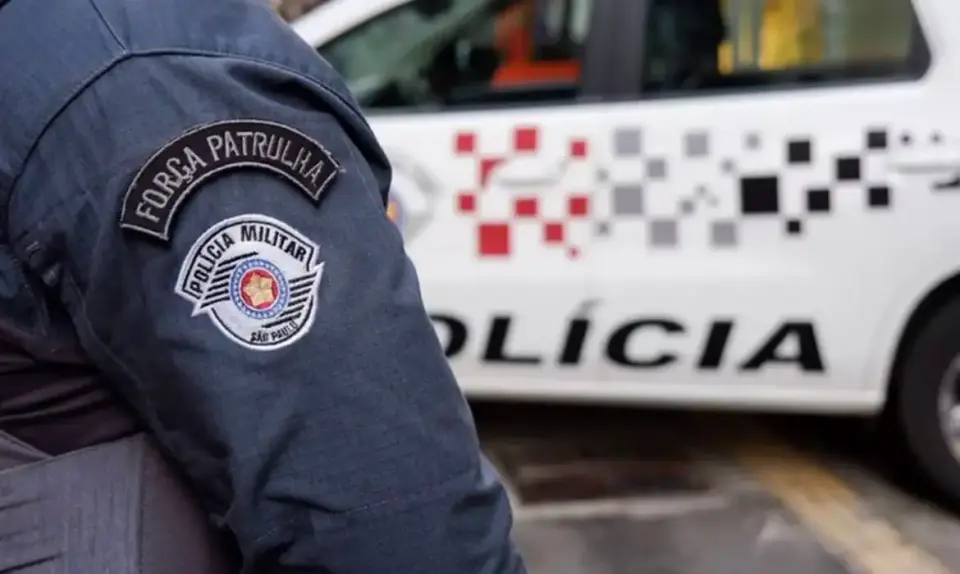
244% rise in police killings in Baixada Santista raises alarm over Shield and Summer operations
According to brasildefato.com.br, deaths from police intervention in Santos, Guarujá and São Vicente rose from 32 to 110 between 2022 and 2024 — an increase of 244%. The figures are contained in a report released on Wednesday (25th) by the Study Group on New Forms of Illegalism (Geni), from the Federal Fluminense University (UFF), prepared in partnership with the Public Defender's Office of São Paulo.
Researcher Luciana Fernandes, from Geni, classified the security policy of the government of Tarcísio de Freitas (Republicans) as "urbicidal" and "anti-Black". In an interview with the Conexão BdF programme on Brasil de Fato Radio on Friday (27th), she presented the main findings of the study, which combined 41 individual interviews and four focus groups with residents, community leaders, and professionals in health, education and social assistance.
According to Fernandes, São Paulo had seen a decline in police lethality at the start of Tarcísio's administration, a result of what she describes as the "first successful moment" of body cameras. The situation reversed in 2023 and 2024. "It is the result of an expansion of this policy of militarisation of cities, which has police operations as its principal focus, a policy that has been greatly escalated due to penal populism from the far right," the researcher stated.
Profile of victims and police accountability
In the combined Shield and Summer operations, 84 people died. All were men, almost 70% Black, with an average age of 30 years. "The youngest victim was only 14 years old," said Fernandes. According to her, 140 police officers participated in the actions that resulted in deaths. "This is a urbicidal policy against the Black, poor and peripheral population," she stated.
Operation Shield was launched following the death of military police officer Patrick Bastos Reis, of the Rota, on 27 July 2023, and resulted in 28 deaths. Operation Summer began following the death of soldier Samuel Wesley Cosmo and left at least 56 dead. At the judicial level, the Public Ministry of São Paulo shelved 17 of the 22 investigations into deaths caused by police officers during Operation Shield.
Children and schools at the centre of impact
One of the central points of the report is the effect of the operations on children and adolescents. According to Fernandes, the actions occurred mainly during school entrance and exit times. School buses were unable to access the hillside communities, and families reported feeling guilt at not taking their children to school. One mother interviewed for the research said that her son accumulated 35 absences during the period. "She told us: 'Look, I'd rather my son with absences than my son dead'," Fernandes reported.
The researcher emphasised that schools "are places of protection par excellence", where many children have their only meal of the day. During the holidays, however, various units served as a base for police officers, which caused the school building itself to become associated with fear. "When there is an operation, children and adolescents start to vomit, to tremble, to ask about their parents," she reported, citing testimony from teachers.
Comparison with pandemic isolation
Most of those interviewed compared the period to the isolation experienced during Covid-19. Movement was controlled by the State, "as if these people were contaminated" and needed to be isolated from the rest of the city, according to Fernandes. Residents stopped attending medical appointments, seeking social assistance and visiting relatives.
The word "home" was the most cited in interviews, with more than 500 occurrences, almost always associated with violations. The report records the case of an adolescent with cerebral palsy who was alone at home playing video games when police entered the property, without legal authority, because of the sound of shots from the game. There are also reports of sexual abuse during home invasions. "If the street becomes unsafe and also the homes, what remains is this deep and diffuse state of terror, which produces massive illness," the researcher stated.
Distrust in institutions
The impact extends to institutions. According to Fernandes, residents came to see the police as "an institution that makes them sick", and there are children who present symptoms of phobia at the sight of a police officer. Distrust also reaches oversight bodies, "especially the Public Ministry, which is responsible for external control of the police", and extends to social assistance. "Police violence is anti-democratic by its very essence," the researcher concluded.
Source: Google News BR — São Paulo