AI agents attack Swiss infrastructure – cascading effects pose greatest risk
For the first time, cyberattacks using AI agents on critical infrastructure have been confirmed in Switzerland. Experts warn of cascading effects through shared service providers.
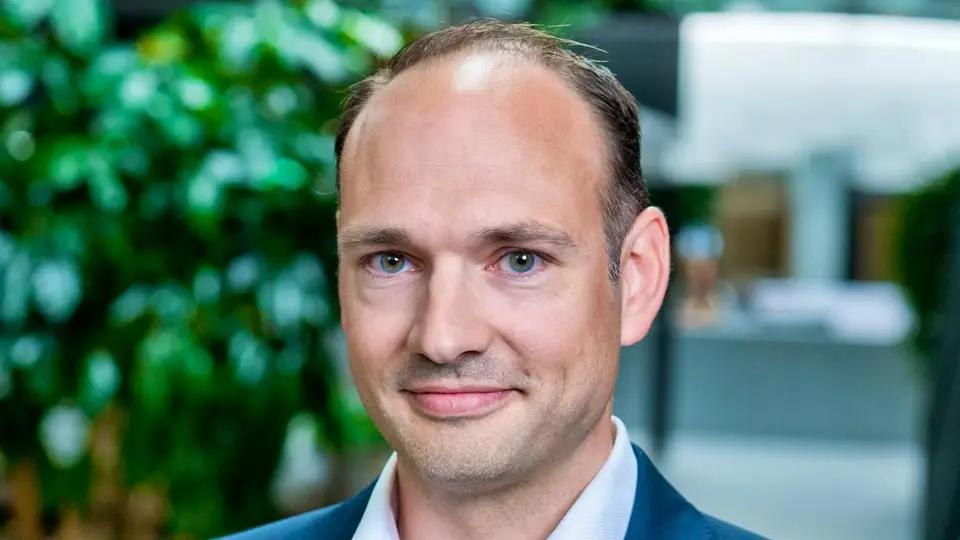
AI-supported cyberattacks on critical infrastructure in Switzerland confirmed
For the first time, cyberattacks on critical infrastructure in which AI agents were deployed have been documented in Switzerland, reports 20 Minuten. According to security expert Raphael Reischuk, the greatest risk lies not in a single major attack, but in cascading effects through jointly used service providers and software products.
Reischuk currently considers a nationwide blackout caused by an AI agent to be scarcely realistic. For this, attackers would need to coordinate an intrusion into especially protected control systems or manipulate numerous power installations simultaneously – an undertaking that requires precise planning, access, and exact timing.
A scenario with many simultaneous small-scale attacks is more plausible: regional disruptions at water supply companies, building systems, cold chains or IT service providers. The Federal Office of Cybersecurity (BACS) shares this assessment and considers AI-supported attacks with noticeable consequences to be realistic – however, larger outages have not been reported so far.
Speed rather than sophistication
"AI makes attacks faster and broader, not more sophisticated," says Reischuk. AI agents primarily searched for known security vulnerabilities, standard passwords and systems unnecessarily exposed on the internet. The decisive difference from human hackers is speed: whilst a human can only examine a limited number of targets simultaneously, an AI agent works around the clock and in parallel on numerous attack targets.
If such an agent reaches admin access within a few hours of the first scan, it is no longer sufficient to respond to a warning only on the next working day. "The time window is the new measure," says Reischuk.
Shared service providers as a weak point
The real danger arises when many organisations use the same cloud providers, software products or service providers. A successful attack on a single provider could simultaneously affect numerous customers. As a concrete example, Reischuk cites Swiss software provider PK Softech: following an attack, numerous pension funds and even federal agencies were affected.
BACS also warns that an attack on a service provider could paralyse an entire sector. Companies and authorities must therefore know which suppliers and digital systems they depend on – and must have emergency plans in place.
Reischuk describes a recurring pattern: systems are connected to the internet for convenience, are secured with standard passwords and are maintained by service providers who simultaneously have access to many customers.
Sector-specific weak points
Depending on the sector, critical entry points differ: in water supply, pumps, pressure controls and remote maintenance access of smaller suppliers are at risk. In the electricity sector, inverters and battery storage systems are in focus, provided that many installations can be controlled via the same manufacturer cloud. In healthcare, clinic software, data systems, cooling and medical technology are considered possible entry points. In food supply, cooling systems with openly accessible controls are particularly risky.
Financial institutions and authorities are also dependent on shared software products. In transport, networked systems and long update cycles at suppliers can become a problem.
Large organisations better equipped than small ones
"The large organisations are better prepared than five years ago, the small ones hardly at all," says Reischuk. Large network operators, banks and hospital groups usually have security teams, emergency plans and reporting channels. Smaller municipal utilities, medical practices or small businesses often do not have the same resources. "However, almost no one is prepared for cascading effects, because hardly anyone knows which service provider they depend on."
Consequences for the population
Reischuk describes the typical sequence: "First, you often don't notice it at all – data flows away long before anything fails." Then targeted fraud and phishing threaten. When systems go down, people first notice it when paying, communicating and using digital services.
In the event of a power outage, after a few hours mobile telephony, internet, cold chains, water pumps and transport come under pressure. After days, food and medicines can become scarce. "What is therefore decisive is not the attack itself, but how long emergency operations function without cloud, remote maintenance and power," says Reischuk.
Basic measures as first line of protection
BACS recommends that organisations make only absolutely necessary systems accessible via the internet, install critical updates within 24 hours at the latest and protect external access with multi-factor authentication or passkeys.
"The good news: basic hygiene mainly helps against today's AI attacks," says Reischuk. "The bad news: it now needs to be implemented in days or hours, not in months or years."
Source: 20 Minuten