Colombian peasants receive death threats over land granted six months ago
Guillermo Pérez, leader of the Landless Peasants' Association of Cesar, received a body bag as intimidation after obtaining land from the Colombian State.
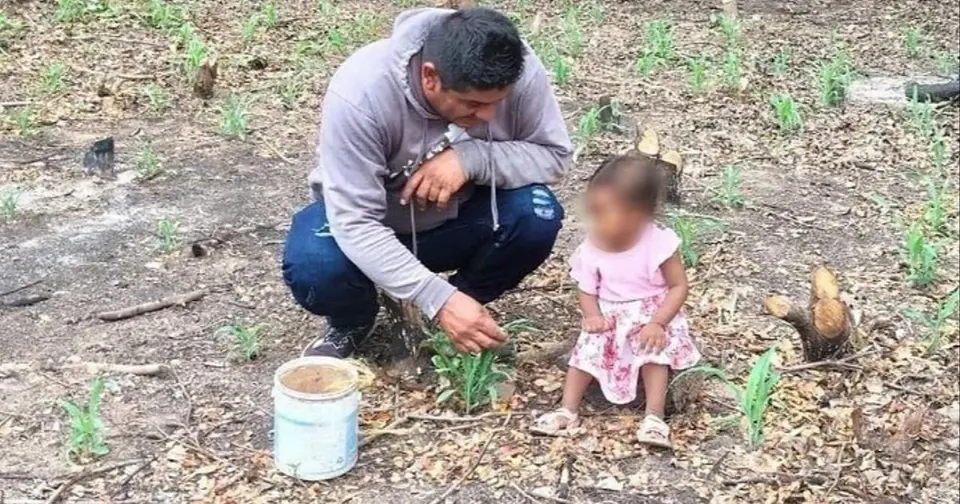
Threats and body bags at La Alquería farm, Valledupar
A body bag. That is what Guillermo Pérez, leader of the Landless Peasants' Association of Cesar, received just one month after he and 76 other families took possession of approximately 400 hectares that the Colombian State had handed over to them in May of this year. The message was clear: abandon the land. According to El Deber, citing BBC News Mundo, the intimidation has not ceased since then.
"They began to tell us that we had to leave land that was not ours," Pérez told BBC News Mundo.
More than ten years of searching, six months of possession
Pérez was a victim of Colombia's armed conflict and was forced to abandon his land in 2013. For more than a decade, together with 77 other peasants, he sought a place to settle and farm.
In May of this year, the National Land Agency (ANT) provisionally handed over 466 hectares of La Alquería farm, located in the rural area of Valledupar municipality, approximately 450 kilometres north of Bogotá, to the peasants. The farmers began planting maize, watermelon, cassava and plantain. Shortly after, the threats arrived.
"You could lose what you produce when the farm returns to its former owner's hands," workers from neighbouring farms told them, according to what Pérez recounted.
Land with a paramilitary history
La Alquería farm came into State hands as part of the paramilitary demobilisation process begun in 2003, when commander Salvatore Mancuso handed it over as a form of reparation to victims. However, the property had been registered in the name of Hugues Rodríguez, alias "Comandante Barbie", identified for having facilitated the arrival of paramilitary groups to the department of Cesar and for his links with figures such as the alias Jorge 40.
In 2008, Rodríguez fled to the United States, where he turned himself in to authorities accused of drug trafficking-related offences. In 2010, the charges were dropped and his whereabouts have been unknown since then. Colombian justice declared him a fugitive.
"Those territories had belonged to former paramilitary leader Hugues Rodríguez, known by the alias 'Barbie', and had been handed over to the State as part of the process of reparation to victims," Pérez explained.
Land reform and its fragilities
The handover of La Alquería farm is part of a broader land reform process promoted in Colombia following the peace agreement with the FARC in 2016. According to data from the ANT itself, the agency has distributed approximately 380,000 hectares to 116,000 families, whilst a further 400,000 hectares continue to be in the management process.
The historical backdrop is one of decades of dispossession. According to data from the Land and Property Protection Project for the Displaced Population (PPTP) and the Land Restitution Unit (URT), the armed conflict deprived the peasant population of approximately six million hectares. The confrontation between the army, guerrillas and paramilitary groups over five decades also generated seven million displaced persons, mostly inhabitants of rural areas.
"What matters most to us is that the land is handed over definitively, because that would give us legal security," Pérez said. "Although that would not prevent them from trying to evict us by force," he added.
Congressional denunciation and questioned links
Senator Iván Cepeda, former presidential candidate, made the situation public in a debate held in Congress last October. There he maintained that the threats would be related to alleged links between alias Barbie and the current president, Abelardo de la Espriella.
"What is most worrying is that the new government, which has had demonstrated relations with people such as Hugues Rodríguez, halts the land reform that began following the Peace Agreement of 2016," Cepeda told BBC Mundo.
According to publications by independent Colombian media outlets such as Vorágine and La Silla Vacía, De la Espriella would have acquired a property in Cesar that belonged to Rodríguez. Furthermore, citing judicial authorities, those outlets point out that the sister of "Comandante Barbie" was a business partner of the current president in several ventures linked to his law firm.
BBC Mundo contacted representatives of the Colombian government to obtain a response, but did not receive one.
"We received the farm with great hope"
The peasants who today inhabit La Alquería spent years working as day labourers or leasing other people's land to grow their produce. The provisional handover in May represented the end of a wait of more than a decade.
"We received the farm with great hope, because we had spent many years living as day labourers or leasing land that was not ours to plant our crops," Pérez stated. Until the threats arrived, which have not stopped since then.
The uncertainty surrounding definitive titling aggravates the families' vulnerability. Without full legal security, the peasants of Cesar face both pressure from external actors and the fragility of an agrarian process which, according to Cepeda, runs the risk of being paralysed under the current government.
Source: El Deber