Colombia, De La Espriella's anti-crime plan fails: 3.7 attacks per day
A grenade struck the headquarters of RCN broadcaster in Colombia; over the past three months there have been 515 deaths, 315% more than under the previous government.
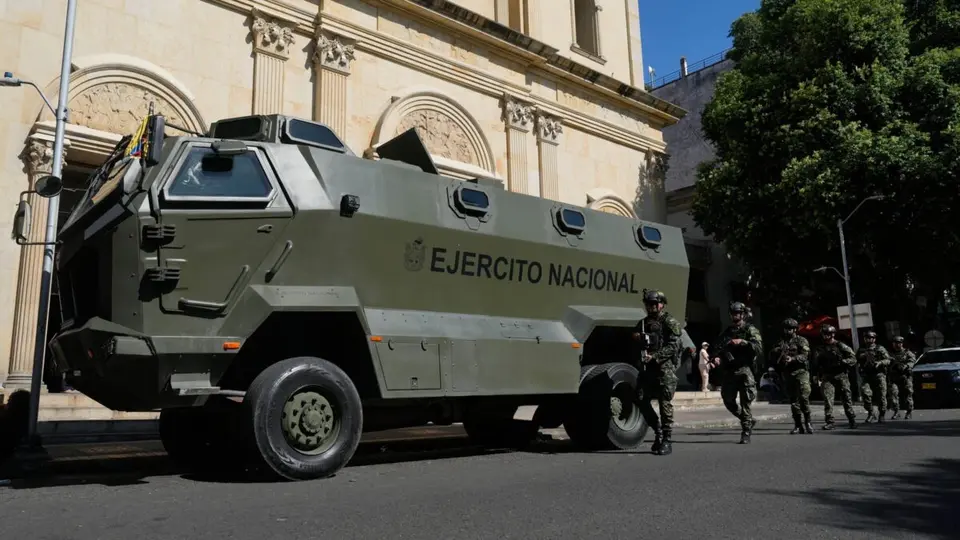
The failure of the presidential "shock plan" in Colombia
According to Il Fatto Quotidiano – Cronaca, on Wednesday at dawn a grenade struck the headquarters of RCN, Radio Cadena Nacional in Bogotá. The building sustained partial damage and broken windows, but there were no casualties. The attack was attributed to the Ejército de Liberación Nacional (ELN), which had previously threatened both RCN and Caracol Televisión.
On the same day, a few hours earlier, in Tibú in the department of Norte de Santander a drone attack killed one man and injured two others during a clash between the ELN and dissident factions of the Revolutionary Armed Forces (Farc). Between 7 and 8 November, again using drones, three soldiers were killed in Santa Rosa del Sur in Bolívar province, highlighting the effectiveness of these weapons in making military bases vulnerable.
Overall data reveal the inadequacy of the government's strategy. Colombia is recording 3.7 attacks per day. Over the past three months, since President Abelardo De La Espriella took office, the country has recorded 515 deaths: an increase of 315.3% compared to the first ninety days of the previous government under Gustavo Petro. Law enforcement forces suffered 38 deaths and over 235 injured during the same period. According to Ombudsman Iris Marín Ortíz, 36% of Colombia, equivalent to 400 municipalities, is on alert.
De La Espriella had promised during his election campaign to "regain control of the territory in ninety days" through a "shock plan" that included "aerial bombardments". On Mix 92.2 FM radio he threatened criminals: "Soon you will know how strong the Tiger's bite is". The deadline of 5 November passed without tangible results. Retired sergeant Alexander Chala Sáenz commented on X: "The promise of ninety days has become an institutional farce; security is not resolved through artificial targets or election campaign promises".
The president had already tried to downplay the promise on 10 June, declaring on Caracol that he had actually only said he would "capture or eliminate ten bosses" in ninety days. Senator Ariel Avila stressed: "He did neither". Ombudsman Marín Ortíz accused the government of having "turned security into a competition in cruelty and mutual humiliation with armed groups".
A particularly serious aspect concerns the recruitment of minors. During the first ninety days of the De La Espriella administration, 131 cases of child recruitment were recorded. Paola Franky, head of Child Protection at Unicef Colombia, stated: "In this country a child or adolescent is recruited every 22 hours. The war changes, but recruitment persists".
Sources from the Special Jurisdiction for Peace reported that recruitment frequently takes place through social media — TikTok, Facebook and Telegram — with content that "glorifies" the guerrillas, deceptive offers or contacts in video game chats. The phenomenon is also linked to sexual exploitation. One victim, identified as Alexandra, told authorities she was lured on TikTok: "There were many of us, none of us wanted to be there. We cried, we could not see our parents". The Palacio de Nariño authorities claim a "significant decline" in human trafficking in the last quarter.
Armed groups have expanded their interests into illegal mining. In October, the government abolished the mining reserve that declared the Colombian Amazon biome — 42% of national territory — a "zone free from mining and hydrocarbon extraction". The measure was approved shortly after the signing of a memorandum of understanding between Colombian Foreign Minister Omar Bula and US Secretary of State Marco Rubio concerning critical minerals and rare earths.
According to the US State Department, the agreement "secures supply chains" to Washington through "facilitated permits", "price thresholds" and "national security reforms" within "six months". The official text was made available in English only after a 48-hour ultimatum imposed by Bogotá's Twenty-Seventh Labour Court. Senator Isabel Zuleta filed a complaint requesting De La Espriella's impeachment, accusing him of "treason against the nation" and "improper concession of Colombian subsoil and minerals".
Source: Il Fatto Quotidiano - Cronaca