Michelle Sudků: murder in shopping centre in broad daylight and 30 years imprisonment
Michelle Sudků was sentenced to 30 years imprisonment for attempted murder and murder. Blesk.cz reopened the case in its podcast Dark Traces.
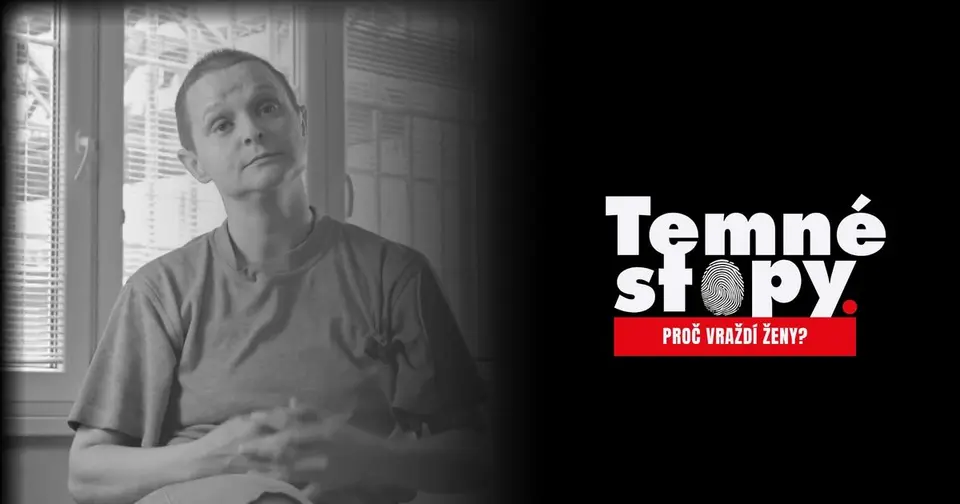
Murder in a shop and diagnosis of necrophilic sadism: who is Michelle Sudků
Michelle Sudků received an exceptional sentence for attempted murder and murder – thirty years' deprivation of liberty. Blesk.cz reopened the case in the first episode of its new podcast Dark Traces, in which journalist Bára Holá interviewed documentary filmmaker Martina Eretová, who met with the convicted person personally.
One day in a household goods shop, Sudků picked up a knife, removed it from its packaging and killed a randomly selected woman with it directly in front of an industrial camera. What preceded this act?
Childhood and first bouts of aggression
Michelle Sudků was placed in an adoptive family at infancy. She only found out she was adopted in adulthood. She had a warm relationship with her father, but did not get along with her mother – she considered her neurotic and accused her of favouring her younger brother. As a small child, she simultaneously began to realise that she was born into a "wrong body" and felt more like a boy.
Experts, however, emphasise that a difficult childhood does not automatically make people sadists or psychopaths. Nearly everyone carries greater or lesser predispositions – the key is how a person learns to work with their own aggression.
According to her own account, Sudků suffered bouts of aggression from childhood. In one of them, she allegedly beat a dog in a fit of rage. Problems with aggression persisted into adulthood, when she worked as a nurse and care worker – she did not stay long in various work positions and continued to abuse animals. She formed romantic relationships predominantly with women, though more detailed information about her behaviour as a partner is not available.
Diagnosis and interrupted transition
Probably even before beginning the gender transition process, which she decided to undergo in 2013, she was diagnosed with necrophilic sadism at a sexology clinic. If this diagnosis preceded approval for transition, the question remains whether those who approved it knew about it – administering testosterone can further intensify aggression and sadistic tendencies. Sexual deviations are extraordinarily rare in women, which according to available information may have led to them being underestimated.
Sudků appears to have become aware of changes in her own experience herself, and the gender transition process was interrupted. In 2016, when she committed both criminal acts, she was no longer taking testosterone – however, its effect on aggression and sadistic ideation apparently persisted. The attempted murder in a café on Prague's Újezd was directly motivated by sexual deviation.
Psychiatric diagnosis and personality profile
Psychiatric examination of Sudků ruled out psychosis. She was diagnosed with a mixed personality disorder with elements of aggressive and necrophilic sadism and marked traits of immaturity, egocentricity and aggression. In decision-making, she is guided by emotions and instincts more than reason; the satisfaction of her own needs, ideally immediately, is dominant. Her profile also includes pathological lying, a tendency towards theatrical behaviour, confabulation and distorting reality to suit her own needs.
This is precisely why it was difficult for doctors at the psychiatric hospital to discern whether her threats and accounts of her past were meant seriously or served merely to gain attention.
Hospitalisation and release a day before murder
Since 2013, Sudků had been repeatedly hospitalised in a psychiatric hospital. According to her own account, she was not a model patient – she did not cooperate with treatment, took medications irregularly and drank alcohol and used pervitin. She displayed similar behaviour during hospitalisation in July 2016. Because she was admitted voluntarily, not by court order, she was discharged after two weeks following a morning visit.
Accumulated frustration and anger at her release, combined with the personality traits described above, resulted in a desire for revenge against society. Sudků compared herself in court to Olga Hepnarová, who in the early 1970s in Prague drove a lorry into a group of people at a tram stop and killed eight of them.
"Hepnarová wrote letters to doctors about how she was doing and how it turned out. I told doctors what thoughts I was having, I wrote sadistic poems, no one listened to me, and so it turned out how it turned out," Sudků said in court in 2017.
Control capacity and criminal responsibility
Experts concluded that during both attacks, Sudků may have had slightly diminished control capacity in a fit of rage. Cognitive abilities – that is, awareness that she was doing something wrong – remained intact. In pursuit of immediate satisfaction of her own needs, all restraints fell away.
After the completed murder, a potential culprit was sought within the system. The doctors of the psychiatric hospital did not make any errors according to the investigators' findings. Police officers who transported Sudků to Bohnice following the café attack were sentenced to conditional imprisonment. The case nonetheless leaves more unanswered questions than it answers.
What comes after serving the sentence
After serving her sentence, Sudků faces preventive detention – institutional protective treatment for offenders whose freedom is considered to pose a high danger to society. Unlike serving a sentence, the length of stay in detention is not predetermined; the court regularly reviews the reasons for its continuation. The aim of detention is both the protection of society and preparation of the convicted person for a possible return to freedom – in Sudků's case, however, this scenario appears highly improbable.
Source: Blesk.cz