Organised crime drives femicides in Ecuador: one woman killed every 19 hours
The surge in organised crime is exacerbating violence against women in Ecuador, with 323 femicides recorded in the first nine months of 2026.
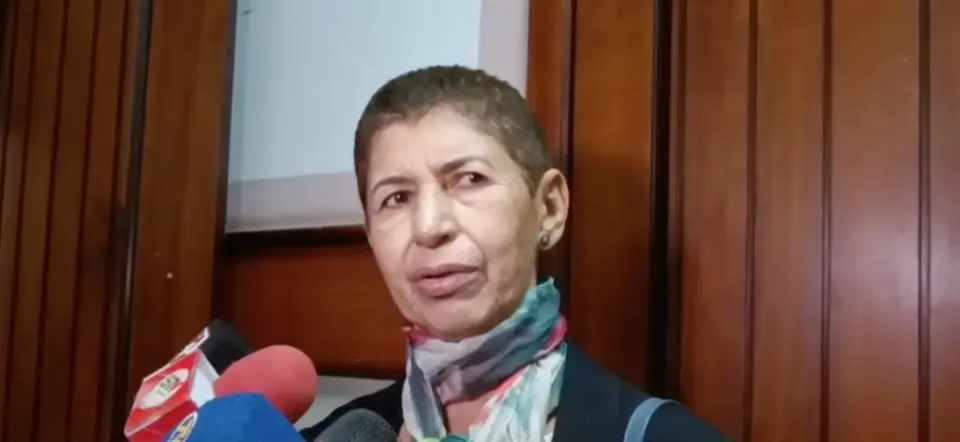
Organised crime and femicides in Ecuador: 323 deaths in nine months
The expansion of organised crime, territorial disputes between criminal gangs and institutional weakening are aggravating gender-based violence in Ecuador, warned local activists on Tuesday ahead of the International Day for the Elimination of Violence against Women. According to confirmado.net, between 1 January and 24 September 2026, the Aldea Foundation recorded 323 femicides in the country, 243 of them linked to organised crime structures.
One woman killed every 19 hours
The Aldea Foundation documented that during that same period, one woman was killed every 19 hours in Ecuador, compared with one every 22 hours in the same period the previous year. Of the total femicides recorded, 67 occurred in intimate, family and sexual contexts, and 13 were transfemicides; at least 26 victims were girls or adolescents. Since 2014, the organisation has tallied 2,779 femicides in the country.
Organised crime as a multiplier factor
"The surge in organised crime, territorial control and the proliferation of weapons in territories not only increase lethality against women in public spaces, but also exacerbate violence within homes," Zoila Menéndez, spokeswoman for the Colectiva de Mujeres Tejedora Manabita, told Sputnik News Agency.
Menéndez noted that alongside the historical set of factors—socio-cultural patterns, economic inequality and financial dependence—there is now added the fear of retaliation from criminal groups. Territorial control, she explained, restricts women's mobility, limits their access to basic services and weakens community support networks.
Her organisation works with women in several municipalities in Manabí, one of the provinces most affected by the security crisis, where 62 of the 380 femicides recorded so far this year were tallied according to the independent monitoring by social organisations.
Bodies as "spoils of war"
Cecilia Mena, from Acción Ciudadana por la Democracia and member of the National Coalition of Women of Ecuador, agreed that independent records show a surge in lethal violence parallel to the deterioration of public security. "The penetration of organised crime, criminal gangs, territorial appropriation has indeed caused violence to intensify against women and girls in the country," she stated.
In disputes for territorial control, Mena warned, "women's and girls' bodies are taken as spoils of war". The security crisis has left 6,889 victims so far in 2026, eroding progress in gender equality, with greater use of firearms and high incidence among young people aged 18 to 35.
Mena expressed particular concern about cases in which homicides in criminal contexts are classified as scores being settled between gangs without investigating possible gender motivations. That framing, she warned, could deprive victims' children of access to financial assistance provided for minors orphaned by femicide. "Behind these lives that are being cut short there are always children left in orphanhood who should be protected by the State," she emphasised.
Overwhelmed institutions and law without resources
Although Menéndez acknowledged that Ecuador has a favourable legal framework—the Organic Law to Prevent and Eradicate Violence against Women, in force since 2018—she questioned its effective implementation. Lack of funding and judicial delays limit its real reach. Overload in protection systems delays protective orders, expert assessments and sentences. "This generates impunity and discourages victims from continuing with their cases. We need more specialised prosecutors and judges," she stated.
In several municipalities, the cantonal protection boards lack specialists and basic resources such as computers, internet connection and vehicles.
Mena, for her part, criticised the merger of the Ministry for Women and Human Rights with the Ministry of Government, ordered in 2025, estimating that it reduced the capacity of the State to respond. According to her calculations, of around 300 officials the portfolio had, little over 100 would remain. "The legal framework is one thing, the institutional framework is another," she summarised.
Official figures reveal undercount
A bulletin from the Judicial Council published in June 2026 shows sustained increase in violent deaths of women since 2021. In 2025 there were 788 violent deaths—the highest annual figure since femicide was classified as a crime in 2014—yet only 62 were formally recorded as femicides. In the first half of 2026, 376 victims were counted and only 33 femicides formalised as such.
The official report itself acknowledges difficulties in identifying gender elements and framing cases under that criminal provision. Between August 2014 and June 2026, the Judiciary identified 1,210 violent deaths with gender elements; 310 of them—26 per cent—were recorded under other criminal provisions despite presenting characteristics compatible with femicide. Of the total, 103 cases were attributed to partners or ex-partners and 91 to family members.
Civil society organisations attribute the gap between their figures and official ones to evidentiary obstacles and failures in early detection of gender indicators, despite the fact that the Latin American Protocol Model—adopted by Ecuador's Public Prosecution Service—requires all violent deaths of women to be investigated initially as possible femicides.
Outdated national survey
Both activists called for an update of national statistics to evaluate public policies. The last National Survey on Family Relations and Gender-based Violence against Women (ENVIGMU), carried out in 2019, indicated that roughly 65 out of every 100 women had suffered some form of violence during their lifetime. The organisations are awaiting publication of a new edition of the study.
Source: Google News EC — Crime