Court rejects habeas corpus for Luisa González and maintains preventive detention on money laundering charges
A Chimborazo court unanimously rejected the habeas corpus petition for former presidential candidate Luisa González, who remains in detention on suspicion of money laundering in the Laberinto case.
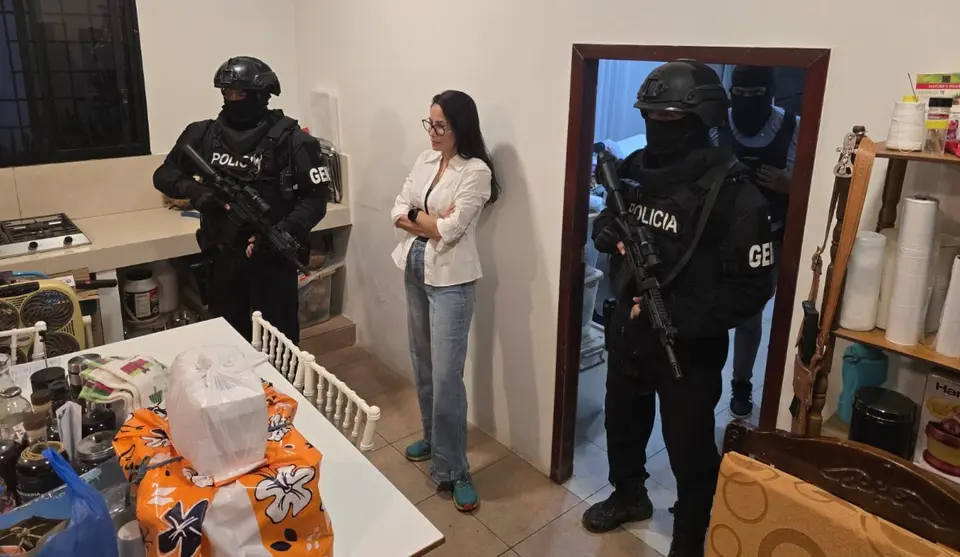
Judge upholds González's detention after denying defence appeal
A court in Chimborazo province rejected the habeas corpus motion filed by the defence of Luisa González, former presidential candidate for the Ciudadana Revolution (RC) movement, according to icndiario.com. The political leader will remain in preventive detention whilst judicial proceedings advance on suspicion of money laundering.
"The court unanimously declares the action inadmissible and therefore rejects the habeas corpus petition presented," ruled Judge Fabián Toscano. The confirmation of the precautionary measure was based on the absence of evidence demonstrating unconstitutional harm to the rights of the accused.
González was detained on 22 October at her residence in Manabí province. Since her arrest, she has alleged political persecution by the Government against the opposition, a position that various analysts have rejected, pointing to the solidity of the evidence gathered in the investigation.
Laberinto case: other figures involved
The process, called "Laberinto", also involves other political figures. Santiago Díaz, a former RC parliamentarian, faces a preventive detention order and is currently incarcerated for a separate crime of rape of a minor. Wendy Onofre, secretary of the RETO movement, faces the same precautionary measure as González. Estefanía Molina, responsible for RC finances, received alternative measures: periodic appearance before the authorities, prohibition on leaving the country and electronic monitoring.
Hypothesis: 500,000 dollars channelled for 2023 campaign
According to the General Prosecutor's Office, the Laberinto case investigates possible irregularities in the source of funds and advertising expenses for the 2023 presidential campaign. The central hypothesis holds that between May and August of that year, funds were channelled through a network of legal entities to direct approximately 500,000 dollars towards electoral activities. Authorities are also investigating the possible origin of funds linked to the illegal trafficking of hydrocarbons and other corporate financial transactions.
Context: accumulated investigations into correísmo
This case is added to a series of proceedings affecting leaders of the organisation founded by former president Rafael Correa, who governed between 2007 and 2017 and is currently a fugitive from Ecuadorian justice with a firm eight-year sentence for the Sobornos corruption case. In early 2026, the Prosecutor's Office also opened a new line of investigation called the "Caja Chica" case, aimed at clarifying alleged money laundering through funds from Venezuela to finance the 2023 presidential campaign.
Source: Google News EC — Crime