National Court revokes Parot's conditional release over extreme gravity of offences
A judge has annulled the third-degree prison status of Henri Parot, an ETA prisoner convicted of 39 murders. The magistrate demands greater consolidation before expanding his freedom.
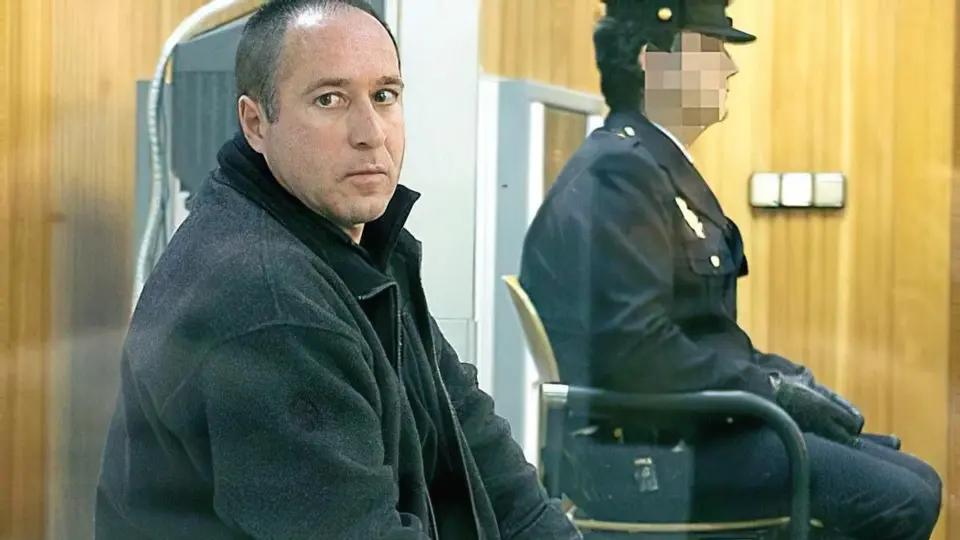
Revocation of Parot's third-degree status
The National Court has revoked the third-degree prison status granted to Henri Parot, an ETA member convicted of terrorist actions that caused 39 deaths. According to La Vanguardia, judge José Luis Castro upheld the Public Prosecutor's appeal, considering that the "extreme gravity" of the 68-year-old prisoner's criminal record requires greater consolidation of his rehabilitation progress before expanding his freedom.
The order, dated Wednesday, pronounces on decisions that the Basque Government had made. The Justice Department had granted third-degree status to Parot on 8 September, based on the proposal of the Treatment Board at Zubieta prison. This relaxation added to an earlier measure he had been enjoying since October 2024, in application of article 100.2 of the Prison Regulations.
The prison reports justifying the grade progression highlighted the favourable evolution of the inmate. Among the favourable factors were recognition of his criminal activity and the harm caused, proper use of prison leave, support from his family and social network, the dissolution of ETA, his participation in a restorative justice programme in Álava, voluntary work for socially excluded persons, and symbolic payment of civil liability.
The prison reports also indicated a low risk of reoffending. However, the Public Prosecutor considered this progression "precipitous" and insisted that it was "impossible to disregard the extraordinary gravity of the inmate's record". Judge Castro shared this criterion, stressing that the high number of deaths and the impact of the offences on their relatives and society could not be excluded from the assessment.
Castro determined that it is necessary to establish that progress in the rehabilitation process is solid before expanding the scope of freedom. Parot's definitive sentence completion is scheduled for 27 August 2028.
The ruling does not end the relaxation of his sentence that he has enjoyed since October 2024. However, the order goes beyond Parot's specific case and raises the need to promote legal reform so that victims can challenge decisions on the granting of prison leave or progression to third-degree status.
The magistrate devoted a large portion of the 14-page order to analysing the role of victims in sentence execution. He established that current legislation contemplates their participation in certain circumstances, although it does not grant them standing to appeal progressions to third-degree status. This possibility is restricted to the inmate and the Public Prosecutor's Office.
Castro noted that, although the Public Prosecutor safeguards the interests of victims, these remain dependent on the public prosecutor's discretion when challenging prison decisions. The judge advocates allowing them to be parties in proceedings in which administrative or judicial resolutions affect their interests, especially in offences committed with violence or intimidation.
The magistrate specifically proposes extending this participation to the granting of the first release permit, the application of article 100.2, and classifications to third-degree status. In the current proceedings, the order has rejected the victims' intervention, although it has agreed to provide them with information relating to it.
Parot, who has been in prison since 1990, is currently serving his sentence partially through relaxation measures. His case is part of a broader context of debates about the rehabilitation of ETA prisoners, as illustrated by the recent case of Mikel Otegi. This ETA member has been released after 23 years in prison and having fully served his sentence for the murder of two ertzainas in 1995 at his homestead in Itsasondo. Otegi was sentenced to 34 years imprisonment, a sentence that came in 2012 after a lengthy legal process, and was not an ETA member when he committed the acts, but rather sympathised with the abertzale left.
Source: La Vanguardia