Ten migrants with arrest warrants among 30 identified in single night in Ceuta
In a single traffic check in Ceuta, ten of every thirty migrants identified had court orders for imprisonment on drug trafficking, violence and murder charges.
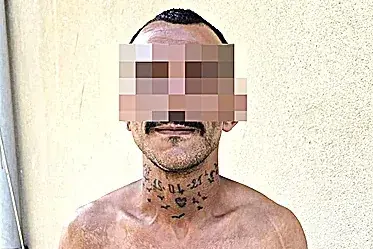
Nocturnal police check in Ceuta reveals arrest warrants in one of every three identified
In a single night, ten of the thirty people identified by police in Ceuta were found to have court orders for imprisonment. According to El Mundo, which had access to police records, those sought featured in various criminal proceedings for drug trafficking, violent robberies, homicide and attempted homicide, among other offences. The proportion—approximately one in every three Moroccans subjected to the operation—has once again raised alarms among Spain's State Security Forces and Bodies.
A police officer consulted by the newspaper emphasised the seriousness of the figure: "These are not simply people with police records or pending administrative cases, but individuals subject to court requests that ordered their location and subsequent imprisonment."
Identification, a key element of the police response
For investigators and police officials, the incident brings back to the table one of the central difficulties facing the autonomous city since the mass entry recorded on 30 July: identifying, verifying and clearing the backgrounds of thousands of people who arrived in an extraordinarily short period, whilst police services operate under far greater than usual pressure.
The problem, according to officers, is not only how many people remain in Ceuta, but who they are, what backgrounds they have accumulated, and what their administrative and judicial situation is. The task of establishing identity has thus become the cornerstone of the police response to a crisis that continues to generate new consequences.
The scope of the checks has also been limited by lack of resources. During the first weeks, hundreds of people gathered outside police stations waiting to be identified. Officers deployed to reinforce identification tasks encountered additional difficulties, among them a shortage of translators.
Sexual assaults and daily fights
Other issues add to this scenario. The Public Prosecutor's Office recorded 23 complaints of sexual assault related to the crisis from 30 July onwards, with eight alleged perpetrators identified by the end of August. Five of the investigations involved sexual assaults and nine of the victims were minors.
Fights between groups of migrants have intensified into a daily occurrence at different points across the city. Police sources place the number of confrontations that can be recorded in a single day at up to ten. The clashes occur between groups competing for territory and access to certain enclaves. In some cases they reach particular levels of violence: men present open wounds on their bodies and officers from the Police Intervention Unit (UIP) are confiscating large quantities of large-sized bladed weapons.
Resources overwhelmed on multiple fronts
Pressure is sustained on multiple simultaneous fronts in the autonomous city. Reception, identification, expulsions and returns, border surveillance and public safety compete for resources that the Government itself has acknowledged were overwhelmed by the scale of the mass entry recorded between 30 and 31 July.
Source: El Mundo