Valencia's High Court will decide whether to retry the trial for the murder of the canon
The TSJCV is examining whether to annul the 28-year sentence against the only accused in the murder of canon Alfonso López Benito, while the actual perpetrator remains at large.
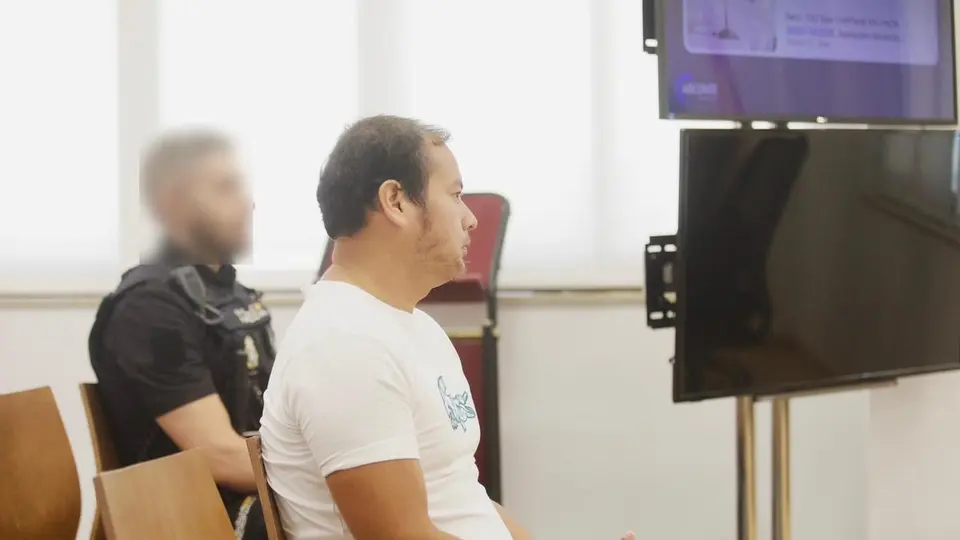
The TSJCV analyses whether to annul the conviction for the murder of the canon of Valencia's cathedral
The High Court of Justice of the Valencian Community (TSJCV) will have to rule in the coming weeks on whether to order a retrial in the murder case of the emeritus canon of Valencia's cathedral, Alfonso López Benito, found dead in a flat in the Archbishop's residence that he occupied free of charge on Avellanas Street in the city's historic centre, on the night of 21 to 22 January 2024, according to Google News ES — Crime (es).
The only person convicted of this crime, Miguel Tomás V. N., a Peruvian migrant in irregular immigration status, is currently serving a 28-year prison sentence despite the Public Prosecutor's Office, the jury verdict and the sentence itself acknowledging that he was not the one who caused the death of the priest. The actual perpetrator of the homicide remains free.
The defence demands annulment of the trial over "falsehoods" and "errors" in the verdict
This Thursday 2 July, the Civil and Criminal Division of the TSJCV held the appeal hearing in which criminal lawyer Jorge Carbó, defence counsel for Miguel Tomás, requested the revocation of the sentence and the holding of a new trial. In a presentation lasting just over half an hour—as opposed to the five pages with which the prosecutor opposed the appeal—Carbó argued that both the ruling of the presiding judge and the verdict of the nine jury members contained "falsehoods", "lies", "errors", "inaccuracies" and non-existent facts that, in his view, upheld a predetermined guilt.
"The jury simply chose to believe that version, which is nothing more than an opinion from the police", Carbó stated, adding that "it is evident that the person in charge of the investigation was interested in obtaining a conviction against the only accused he was able to present before the courts, even accepting that he was not the actual perpetrator of the canon's murder, who remains free and whom he has shown little zeal in locating and arresting".
"No fingerprints, no DNA, no witnesses": the defence denounces absolute lack of evidence
Carbó insisted on the "absolute absence of evidence" against his client: "No fingerprints, no connection to the router of his telephone, despite the fact that he had previously been in the flat, no DNA, no witnesses who saw him, no image captured by cameras". By contrast, he argued that the jury incorporated in the verdict the existence of "inconclusive DNA", a claim the lawyer rejected: "It is not from my client and very probably is from the real murderer, who remains at large".
In the flat there was, according to the defence, DNA from the victim, from his assistant, and from a disabled man whom the canon had asked to have sexual relations with him in the same bed in which he would be murdered hours later. The DNA found on the pillow on which the dead priest's head had rested is considered by Carbó to be the "very likely" fingerprint of the real perpetrator of the crime.
On the matter of mobile phone records, the lawyer pointed out that the accused's mobile phone showed positioning at "up to three different masts" during the time frame of the crime, whilst the victim's telephone "remained in the flat, connected to his router". He also ruled out that Miguel Tomás had acted as bait for the canon to open the door, since "for weeks the victim had blocked Miguel's number. They were not friends, they no longer had any contact, and he was not a person of trust".
The police investigation also failed to determine how the murderer gained access to the residence. According to Carbó, "the police requested the list of calls from 22 January onwards, when the victim had already died, but not from 21 January, the crucial day, so we do not know who called him to get him to open the door".
Procedural irregularities: the jury altered paragraphs and the judge used a draft
The appeal also details a series of procedural irregularities. Among them, that jurors altered one of the paragraphs of the verdict when they failed to reach consensus in the voting, and that the presiding judge used the narrative of established facts from his first draft—and not the final text submitted to the jury—when writing the ruling, "probably due to an error" in document selection. As a result, what appears in the sentence does not match what is in the final verdict, given that both the defence and the Public Prosecutor's Office had modified respective paragraphs of the verdict's subject matter.
Carbó also questioned the statement of the head of the police investigation, who asserted at trial—"in a surprising manner", since it had never been recorded in the police report or any other document—that Miguel Tomás had confessed to him "with gestures", immediately after being detained and before his duty solicitor arrived, that he had been in the flat and had seen the victim dead on his back.
"So the jury falls for it. Then, what is the point of a defence if it is the police who will establish the facts? And no other police officer said this, only the chief", Carbó objected. The lawyer considered that this account was decisive in bringing the jury to the "intimate conviction" of his client's guilt, without any logical argument to support it.
A conviction with errors ranging from the victim's age to purchases attributed to the accused
The appeal also lists a series of errors ranging from apparently minor details—such as the incorrect age of the victim, "irrelevant, but which demonstrates the lack of rigour"—to facts of greater significance, including the assertion that the convicted person made purchases at El Corte Inglés using a card related to the case.
The TSJCV now has it within its hands to determine whether the defects denounced by the defence justify the holding of a new trial or whether, conversely, the 28-year sentence against Miguel Tomás V. N. should be upheld as it was handed down.
Source: Google News ES — Crime (es)