Begoña Gómez seeks acquittal before jury trial over alleged influence peddling
The wife of Pedro Sánchez denies using her marital status to create the chair at Complutense University or enriching herself through the software.
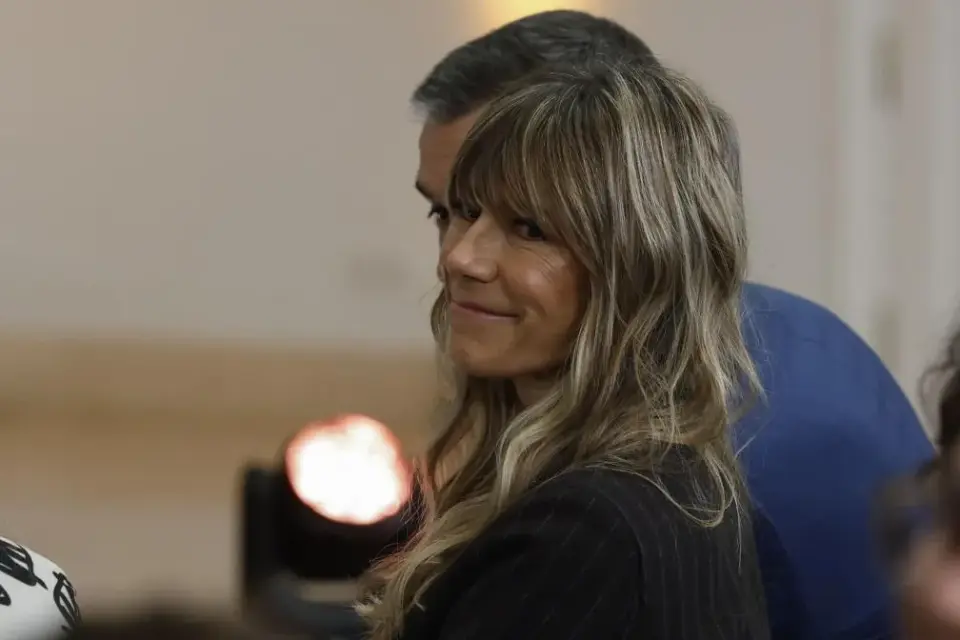
Begoña Gómez's defence rejects all charges before the lay jury
Begoña Gómez, wife of Government President Pedro Sánchez, submitted a defence document on Friday in which she requests her acquittal ahead of the jury trial she faces over alleged offences of influence peddling and misappropriation. According to El Mundo, which obtained access to the document, the defendant categorically denies all charges relating both to the creation of an extraordinary chair at Complutense University of Madrid (UCM) and to the use made of software developed within that framework.
Denial of using her husband's position
In the document, the defence argues that Gómez "neither influenced nor exercised moral pressure" on the rector or vice-rector of Complutense University "nor on any other authority or official by taking advantage of her marital bond to secure the creation of the extraordinary chair that she directed". The text also emphasises that her direction of that chair "has not resulted in any economic benefit to Begoña" and that she performed those functions "on a voluntary basis for four years".
The Madrid Provincial Court, which confirmed the holding of the jury trial, found indications of Gómez's participation in alleged offences of influence peddling, both in relation to the creation of the chair and in intermediation on behalf of businessman Juan Carlos Barrabés.
The software and technological platform
Regarding the charges linked to the software, Gómez's defence argues that her client "at no point acted with intent to enrich herself" and that "she neither appropriated the technological platform nor put it to private use". The document specifies that "the technological platform has always been conceived as property of the UCM" and that the University "suffered no patrimonial loss whatsoever", given that "expenses related to the development of the platform were financed by contributions from the collaborating entities".
The Provincial Court also found indications of the offence of misappropriation of public assets in relation to the use made of that software. The charge of unlawful appropriation initially attributed to her was redirected to misappropriation for technical reasons.
The role of personal adviser Cristina Álvarez
Another axis of the proceedings concerns the conduct of Cristina Álvarez, Gómez's personal adviser at La Moncloa, who is also accused in the trial. The Provincial Court found indications of misappropriation owing to the "use for private purposes" of that civil servant, "appointed as the wife of the President of Government".
The defence argues that Álvarez's function "is to provide support in all activities that have been traditionally undertaken by the President's spouse, both of an institutional nature and of a private or professional character". The document adds that the adviser "has not neglected her functions" as such by having assisted Gómez in matters relating to the chair. To support this interpretation, the defence cites among its documentation the memoirs of Ana Botella, wife of former president José María Aznar, as well as references to the work undertaken by advisers to other spouses of heads of the executive.
The prosecution seeks 13 years' imprisonment
The popular prosecution seeks a sentence of 13 years' imprisonment for Begoña Gómez: two years for influence peddling and eleven for two offences of misappropriation, one linked to the use of the software and another to the activity that Álvarez allegedly undertook in private professional matters for the President's wife.
The defence, by contrast, seeks acquittal and the imposition of procedural costs on the popular prosecution and the civil party, whom it accuses of "reckless procedural conduct". Absent an early general election, the jury trial could take place before the next general elections.
Source: El Mundo