Civil Guard arrests four in operation against money laundering in Córdoba jewellery sector
The Civil Guard has arrested four people in an operation against alleged money laundering at the Córdoba Jewellery Park. Two have been remanded in custody after 70 officers carried out seven simultaneous searches.
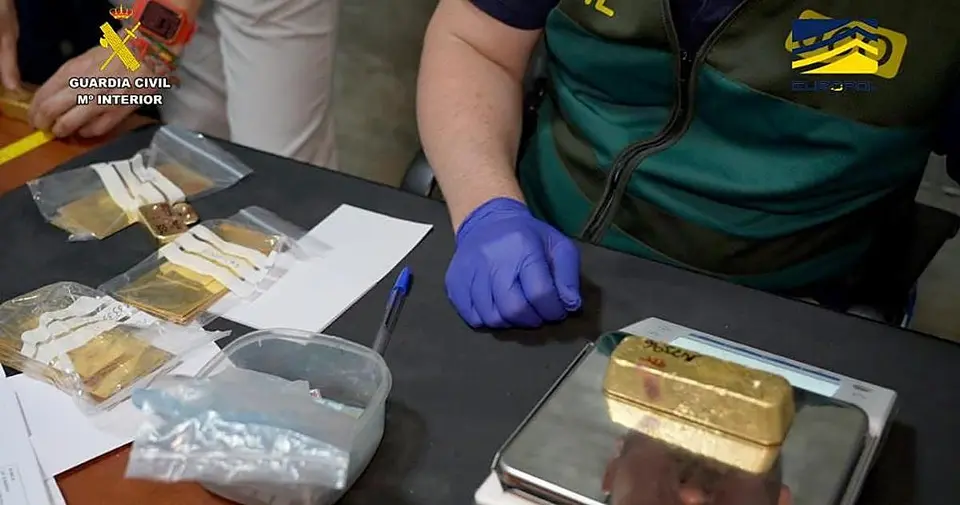
Operation against money laundering in Córdoba
According to ABC, the Civil Guard carried out an extensive operation on 12 November against alleged money laundering at the Córdoba Jewellery Park. Approximately 70 officers from the Organic Unit of Judicial Police (UOPJ) conducted seven simultaneous searches: five at private residences and two at companies within the Córdoba complex. The operation resulted in the arrest of four people, two of whom were remanded in custody last week.
During the searches, investigators seized large quantities of cash, precious metals and accounting documentation that is being analysed. The operation has been kept under strict secrecy, although some details of the alleged criminal scheme have emerged. ABC has been able to confirm that at least one of the investigated companies operated with very few employees—fewer than five—but invoiced enormous sums, in contrast with other firms in the Park with more than a hundred workers that handled smaller volumes.
The suspected modus operandi
Investigators suspect that the network used companies dedicated to precious metals trading to introduce illicit money into the legal circuit. The current operation is linked to the major operation Fenicio-Diávolo 24, carried out in June 2025, which uncovered a complex system: the network acquired gold and silver of irregular origin in cities such as Madrid, Salamanca and Zamora, paying with black market money from drug trafficking and tax fraud. They then introduced the metal into companies at the Córdoba park to give it legal appearance and sent the laundered funds abroad, mainly to China, managing to launder around 400,000 euros daily. Investigators are now trying to determine the exact role that the four investigated companies played in this new phase.
The jewellery sector's response
The president of the provincial jewellery association, Isidoro García-Escribano, has emphasised that the investigated companies do not belong to the productive base of Córdoba's jewellery industry and allegedly used gold for money laundering. According to García-Escribano, the Jewellery Park houses many legitimate companies that are not jewelleries, such as management consultancies and even a dental technician. He explained that these firms entered the park with valid tax identification and company deeds.
García-Escribano justified the presence of these companies in the complex by the security it provides. "If we are talking about gold movements, they are always better off inside the park than outside," he said. The sector considers that the reputational damage comes at a particularly inopportune moment: Córdoba's jewellery industry has just been awarded Protected Geographical Indication (PGI), the first in Spain and Europe in its category. Córdoba accounts for 60% of Spain's national jewellery production and 90% of Andalusia's.
"Such a brilliant year as the one we have been having is somewhat tarnished by this image, when we have absolutely nothing to do with it," lamented the president. García-Escribano emphasised that gold is the vehicle through which money is laundered because of its enormous value and ease of movement, but that this is not the responsibility of the jewellery sector as a whole. He called for caution and reminded that "the presumption of innocence must be maintained" until the courts clarify the true scope of the scheme.
Sources from the investigation have confirmed to ABC that, for the moment, no further searches or arrests have been made.
Source: ABC