Revenue Authority maintains 35 investigations into tax fraud in hydrocarbons sector
The Tax Agency has 35 ongoing investigations into VAT fraud in the hydrocarbons sector, with total debt close to 1,500 million euros.
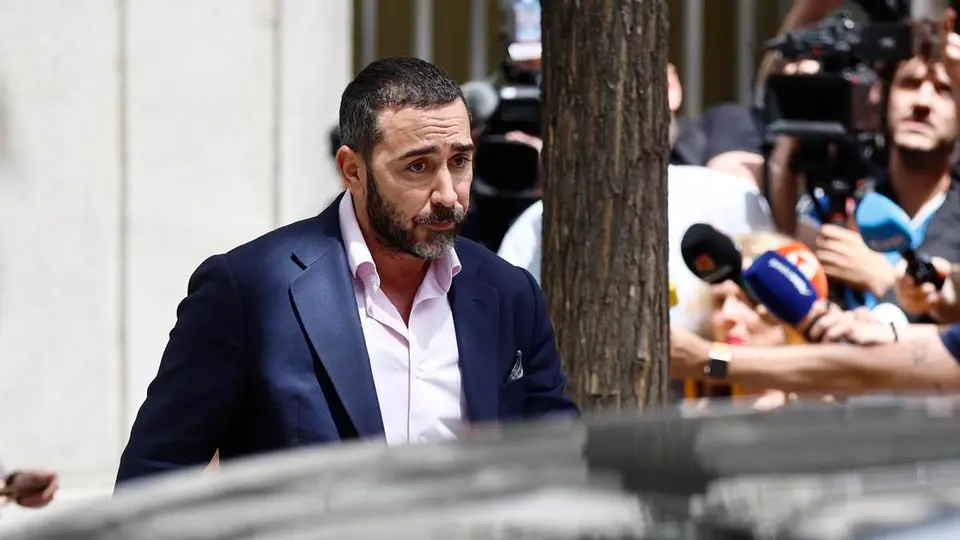
Hydrocarbon fraud: 35 cases opened and 1,500 million euro debt
The Tax Agency is pursuing 35 investigations linked to possible fraud in VAT declarations in the hydrocarbons sector. According to Google News ES — Crime (es), the revenue authority has tightened controls after detecting a "surge" in this type of illegal activity, and has placed its elimination among its "priority objectives" given "the enormous damage it was causing, both to society and to the Public Treasury".
The most recent and highest-profile case is allegedly led by Víctor de Aldama, an entrepreneur, broker and self-confessed corrupt individual, who is attributed a key role in the diversion of 180 million euros from public funds. The case remains pending trial.
The sector's major debts
The 35 proceedings are at different levels and stages of legal process. To illustrate the scale of the problem, it is sufficient to note that five of the ten largest debtors on the annual list published by the revenue authority are companies linked to this type of fraud, with debts totalling close to 900 million euros. The figures by company are: Bio Zenite Energy (232.9 million), Metaway Combustibles (195.6 million), Vertix Petroleum (194.7 million), Marillion SLU (151.1 million) and Biomar Oil (119.1 million). Collectively, the total debt of all the companies involved comes close to 1,500 million euros, out of a total of 15,400 million claimed by the Tax Agency.
The Villafuel scheme and its connections
Among the companies under investigation is Villafuel SL, which gives its name to a scheme in which, besides Aldama — sentenced to four and a half years in prison over the Facemasks case, although acquitted by the Supreme Court from serving time in jail — businesswoman Carmen Pano appears. The latter declared that she had transferred 90,000 euros in cash to the headquarters of the PSOE on Ferraz street, an amount which, according to Pano, belonged to Claudio Rivas, owner of Villafuel.
Rivas faces two additional cases before the National Court: the Gaslow case, for alleged VAT fraud of 148 million euros in hydrocarbons between 2018 and 2021, and another file related to the company SKT Oil, for an estimated loss of over 70 million between 2016 and 2018.
The fraud mechanism: shell companies and cheaper prices
The method employed was, in general terms, relatively simple. The alleged fraudsters set up shell companies that purchased fuel, sold it charging VAT to their customers and disappeared before Revenue could claim the tax. This operation allowed them to offer fuel at prices below market levels, which gave them market share at the expense of their competitors and the public treasury.
The hydrocarbon scheme has become intertwined with Spanish politics through the so-called Koldo case, to the point that it is difficult to draw with precision the boundaries between one matter and the other.
New controls from 2023
Faced with the sustained growth of fraud, the Government opted to strengthen the requirements for operating as a wholesaler in the sector. Until 2023, companies only had to prove their legal, technical and economic-financial capacity before the register managed by the Ministry of Industry, and it was the National Commission of Markets and Competition (CNMC) that published the list of active wholesale operators.
That year, the Ministry for Ecological Transition assumed those powers and, simultaneously, the Tax Agency launched the Register of Fiscal Deposit Extractors (Redef), recognising that "repressive control measures (and retrospective ones) were not sufficient to combat fraud in the sector". Through Redef, the holders of fiscal deposits became subsidiary liable in case of debt, provided they had allowed the extraction of fuel by operators not included in the register.
The first version of the list incorporated companies that were already being investigated for VAT fraud, so the register had to be cleaned up well into 2024. According to the Tax Agency, since then "VAT fraud in the sector has been reduced very significantly".
The 'Italian solution' and VAT advance payment
With the 2024 tax reform, the Revenue Authority introduced the so-called 'Italian solution', which requires operators to guarantee VAT payment — via guarantees or an advance — before the fuel leaves the deposit, and not months later. Only companies recognised as 'reliable' can be exempted from this requirement. The measure seeks to prevent companies from disappearing without paying the corresponding taxes.
The system came into force on 1 February. Sources from the revenue authority indicate that the results "are proving very positive", since they allow early detection of fraud if it occurs.
The forms that must be completed by operators in the sector are currently undergoing updating. The Ministry of Ecological Transition published in June a consultation to review those documents, with the aim of incorporating new fuel categories and improving anti-fraud instruments.
Source: Google News ES — Crime (es)