Spanish court annuls daily prison releases for ETA member over errors in Basque Government file
Three judges uphold the revocation of daily prison releases for ETA member Carasatorre, convicted of the murder of Gregorio Ordóñez, citing procedural defects
Spanish court annuls daily prison releases for ETA member over errors in Basque Government file
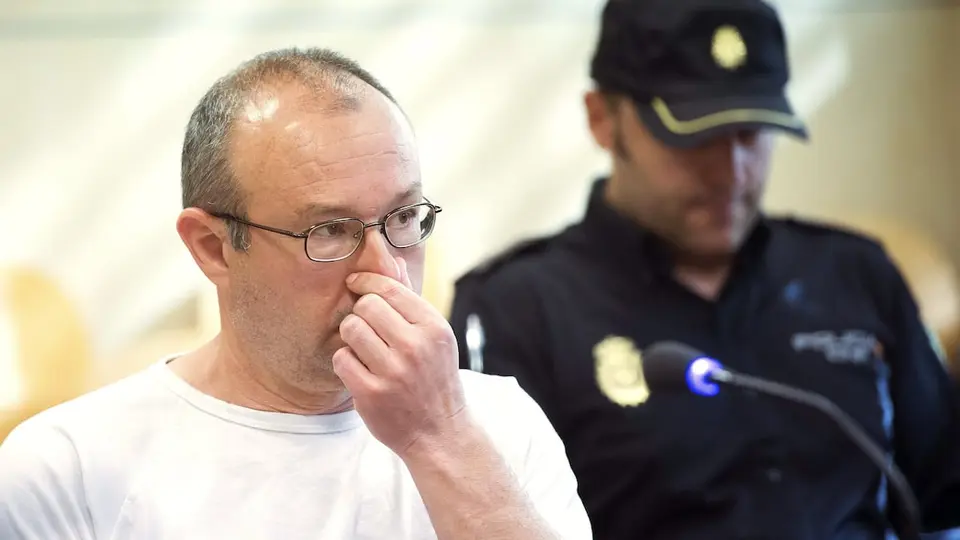
A Spanish court has decided to keep terrorist Juan Ramón Carasatorre Aldaz, known as Zapata, in prison without daily release privileges. The ruling, issued by three judges of the National Court, confirms what judge José Luis Castro determined in April: the Basque Government agreement that had granted him semi-liberty from January lacked the necessary documentation.
Carasatorre is serving a sentence for the 1995 killing of San Sebastián city councillor Gregorio Ordóñez of the People's Party and two other victims. The ruling, announced on Tuesday though dated 18 May, emphasises that the regulation allowing an inmate in ordinary regime to enjoy benefits of the third degree must be applied with extreme rigour, particularly in cases of terrorism offences.
The judges indicate that the Basque regional administration did not provide the specific rehabilitation programme required. It only presented various reports, a possible job placement and voluntary work plans, but nothing that constituted a structured plan with clear goals and justification for why it could not be carried out within the prison.
Another relevant fact: the prison's technical body, the Treatment Board, did not recommend the measure for this inmate. In fact, it preferred that he remain in second degree, the situation of the majority of Spanish prisoners. The judges understand that this demonstrates there was no adequate prior technical work.
The court does not hide the fact that the inmate has shown good behaviour, has participated in activities within the centre, has acknowledged the harm caused and has evolved positively. Even so, it argues that these aspects do not replace the obligation to present an individualised programme. It also points out that he had never previously had permits that would allow his behaviour outside the walls to be assessed, and recalls the seriousness of the crimes committed.
The ruling calls on the regional executive to present this measure in the future with all the documentation required by the regulation, should it propose it again. Curiously, this decision comes shortly after the same court did authorise semi-liberty for another armed group member, Gregorio Vicario Setién, under similar circumstances.
Information from El País
Source: El País