Unknown DNA on Émile's T-shirt: 106 tests negative, investigation turns to tourists
DNA analysis conducted on 106 residents of Haut-Vernet revealed no match with the trace found on young Émile's t-shirt. Officers are considering a new campaign targeting tourists who were present in July 2023.
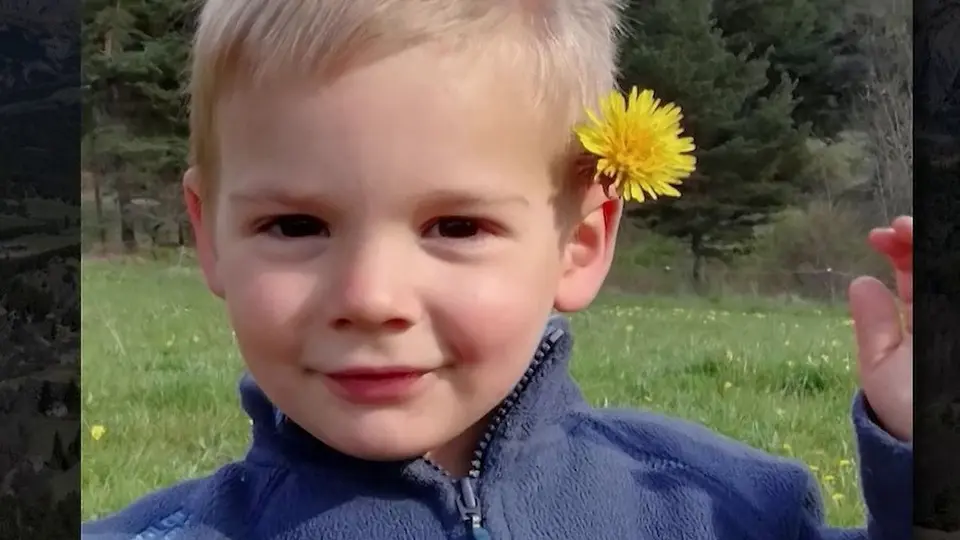
Unidentified DNA on Émile's T-shirt: 106 swabs negative, investigation at a standstill
According to France Info, the results of DNA analysis released on Friday, 28 August are conclusive: none of the 106 people sampled matches the unknown trace found on young Émile's t-shirt. More than three years after the child's disappearance in the hamlet of Haut-Vernet, in the Alpes-de-Haute-Provence, the identity of the carrier of this DNA remains a mystery.
The swabs had been taken in February, primarily from residents of the village who were present on 8 July 2023, the day the boy went missing. The t-shirt itself had been discovered by chance eight months after the disappearance, on a forest path located three kilometres from the village. It was on this garment that an unregistered DNA trace had been found, opening up a lead that investigators hoped would be decisive.
The family awaits answers, lawyer clarifies the stakes
Émile's grandparents, through their lawyer, are demanding that investigations continue. "What they are expecting, indeed, is to find out who this DNA belongs to, because identifying the DNA present on the t-shirt does not necessarily mean we will find who caused Émile's death, but at least we will be able to know if this person could have had access to this t-shirt after Émile's death, if this person could have deposited the garment at the place where we found Émile's skull, so it is something very important," says Me Isabelle Colombani, lawyer for the grandparents.
The distinction is legally significant: identification of this DNA would not necessarily designate a perpetrator, but would allow for reconstruction of part of the chain of events — in particular the question of the placement of the garment at the scene.
A new sampling campaign in preparation
According to France Info, officers should soon launch a new series of DNA swabs, this time aimed at tourists present in Haut-Vernet during the summer of 2023. This lead is considered difficult to pursue. Jacques Dallest, former prosecutor and author of Criminal Memory — Confidences of a magistrate, tempers expectations: "If the perpetrator was passing through this village, for example, it could be someone living at the other end of the department or from an external department, it is not straightforward, it cannot be the entire population, obviously, that would be impossible."
Finding holidaymakers who stayed in this remote hamlet two years earlier represents a considerable logistical challenge for investigators. The number of potentially concerned individuals remains undetermined, and their current whereabouts unknown.
Anonymous letters, another investigative thread
Alongside genetic analysis, officers continue to examine the numerous anonymous letters sent to the family and law enforcement since Émile's disappearance. Each is examined in the hope that a name, an address, or a detail might move the case forward. To date, none has yielded a decisive identification.
The investigation into young Émile's disappearance — whose remains were found in March 2024, still in the vicinity of Haut-Vernet — continues without any charges filed or declared suspect. The DNA trace on the t-shirt remains one of the rare pieces of physical evidence available to investigators.
Source: France Info