The Lyhanna case: a gendarmerie investigator testifies to exhaustion and systemic failures
A female gendarme judicial police officer testifies to exhausting working conditions whilst handling child sexual abuse cases, echoing the Lyhanna scandal. Workload, delays and lack of resources undermine investigations.
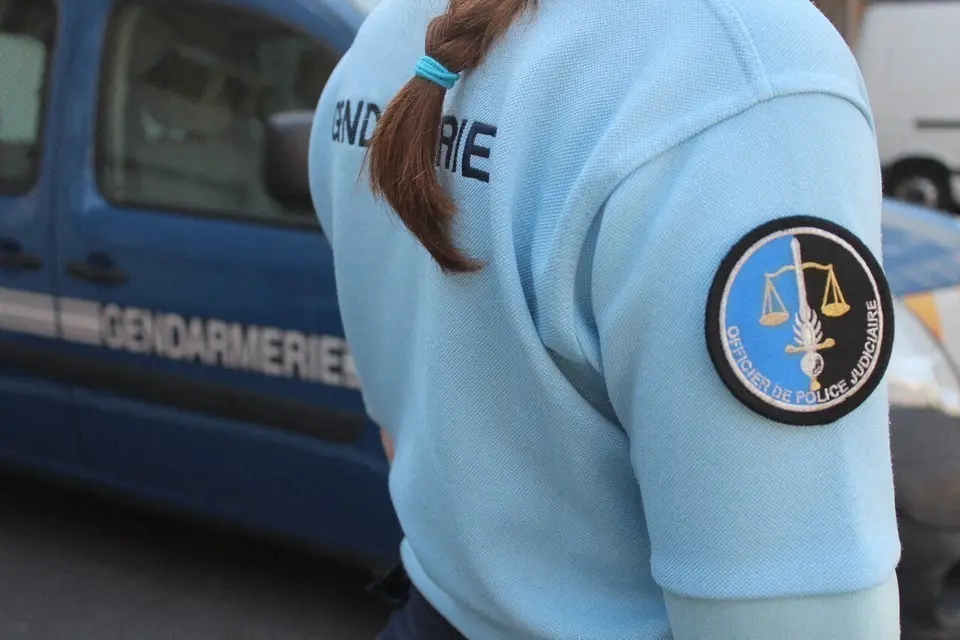
"A scandal like the Lyhanna case could have damaged me too": a gendarmerie investigator breaks her silence
According to Google News LU FR, a judicial police officer with the national gendarmerie, identified by the first name Margot*, has given a revealing testimony about the conditions in which she handles, on a daily basis, cases of sexual violence against minors — testimony brought to light by the Lyhanna case, which has shaken France.
"A scandal like the Lyhanna case could have damaged me too," she confides. A mother and a gendarme, Margot says she feels "affected in two ways" by this tragedy.
---
Lyhanna's death and acknowledged failures
The body of Lyhanna, 11, was discovered on 4 June 2026 in a farm in the Gers. The DNA of Jérôme Barella was found on the young victim. The principal suspect, he was nonetheless the subject of a complaint for rape of a minor since August 2025, without having been taken into police custody by the gendarmes in charge of the case.
General Hubert Bonneau, director general of the national gendarmerie, himself acknowledged "a failure". The administrative inquiry entrusted to the general inspections of the gendarmerie (IGGN) and of justice (IGJ), whose initial findings were presented on 22 June, revealed "a cumulation of time lost and an absence of procedure follow-up, both on the part of the public prosecutor and the gendarmerie," according to the head of the IGJ.
---
Forty cases per judicial police officer, constantly
Margot, in her thirties, has been a judicial police officer since 2019. Within a community of brigades (COB) in southern France, she shares her duties with three other judicial police officers: reception of complaints, recording of offences, conduct of interrogations, all under the supervision of magistrates.
Each of these four judicial police officers manages permanently around forty cases. Added to this is the follow-up of procedures handled by around twenty gendarmes operating in the territory of the COB. "We're not the most to be pitied, that's for sure, even though we're very much in demand and few in number," she acknowledges.
---
An explosion in complaints since MeToo
Sexual and gender-based violence constitutes an increasing share of their workload. "Within the national gendarmerie, we today receive four complaints every hour for sexual and gender-based violence and rape of minors," illustrated General Bonneau.
"Since the MeToo movement, these acts are much more reported, we have tripled the number of complaints," confirms Margot. Over the past year, she has had to handle around twenty cases of rape of minors under 15 years of age.
---
One and a half years to close a single case
One of these procedures marked her particularly: a child sex offender already convicted twice for similar offences. It took her "one and a half years to wrap it all up".
"It was hell, I couldn't move forward. Between on-call duties, night patrols, traffic checks, surveillance of rave parties… I would schedule an interview but there was always some duty that came up and prevented me from doing it. Without that, I could have finished in six months."
Similar testimonies abound on a Facebook group for gendarmes that brings together more than 30,000 members. The administrator, who goes by "Ladie Fox", indicates that the Lyhanna case "is being talked about a lot" in these spaces. According to her, these gendarmes "are angry at the system" and "find it too easy to be targeted by the government whenever failures are mentioned".
---
Judicial experts, transcriptions, delays: obstacles accumulate
Beyond operational workload, Margot points to other structural obstacles. "It's sometimes complicated to schedule appointments with judicial experts, child psychiatrists… When it's an emergency, we can get a slot within two months."
Interviews with minors also represent a considerable workload. "We have to note everything, not just words but also gestures. That used to take three weeks. Now we have adapted software, so it goes a bit faster."
In the case she is discussing, the suspect was taken into police custody "fourteen months" after the investigation opened. "It's always the last part of the procedure," notes the gendarme. "If custody comes too early, we waste time and alert the suspect to the investigations."
---
Victims who call every week
This slowness weighs heavily on complainants. "Victims sometimes call us every week. It's difficult to make them understand that we haven't been able to move forward on their case. We try not to get it wrong, even though nobody is safe from it."
In this specific case, the alleged victim, aged under 15, "was only afraid of running into her attacker again because she lived, with her parents, in the same area as him".
Margot says she "was lucky": the suspect was placed in pre-trial detention for other offences, which allowed her to take him into custody whilst he was imprisoned. But held by an on-call duty at the time of the interrogation, she was unable to conduct it herself.
"Another gendarme dealt with it, who knew nothing about the case. So the interview was very rushed, botched," she regrets. At the time of publication of this testimony, the man in question had not yet been tried.
---
Three out of four judicial police officers on sick leave
The human cost of this overload is evident. "At the end of this case, I had to take sick leave I was so exhausted. Out of four judicial police officers, three of us were off on sick leave last year." Margot attributes this strain to a glaring lack of human resources and an organisation that leaves investigators alone facing cases of extreme complexity.
\The first name has been changed to protect the investigator's anonymity.*
Source: Google News LU FR