Nice attack: victims' relatives demand trial for local authorities
Ten years after the carnage on 14 July 2016 on the Promenade des Anglais, the civil parties are calling for the political and administrative officials of the time to answer for their security choices. The investigation, long stalled, has recently resumed.
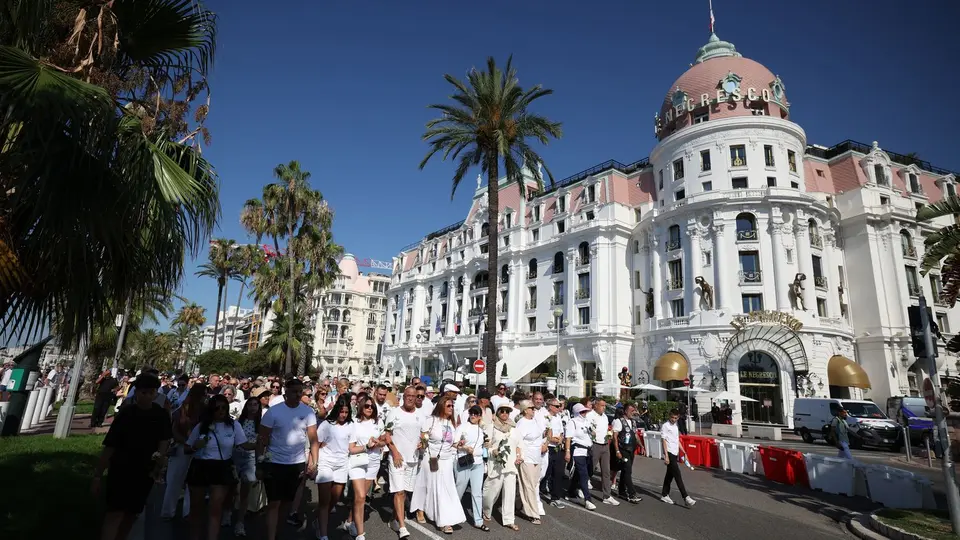
Nice attack: victims' relatives demand trial for local authorities
A 19-tonne truck ploughed into a crowd on the Promenade des Anglais in Nice on 14 July 2016. The toll: 86 deaths and several hundred injured. Ten years after this carnage, those who survived and the families of the deceased are calling for sanctions against the elected officials and senior civil servants who were responsible for securing the site.
The courts have already tried and convicted eight alleged accomplices of the attacker, who was himself killed by law enforcement that night. But the civil parties believe this sentence is not enough. They want the local leaders of 2016 to be brought to justice for failing to take the necessary protective measures against a terrorist threat that was already known.
The Mémorial des Anges association, which speaks for many of the bereaved, denounces a prolonged sense of isolation. After a lengthy period of stagnation, the investigation into those responsible at an institutional level has suddenly progressed in recent weeks. The file had been transferred to Marseille at the beginning of 2024 due to jurisdictional difficulties. In June, several police officers were questioned. Searches were also carried out within the city hall, the prefecture, and in the offices of national and local security forces.
Thierry Vimal, father of a 12-year-old child killed that evening, recalls a seven-year wait without any movement. He remembers a meeting with Nice judges who had committed to shedding light on the matter, before silence fell on the file once again.
Many questions remain unanswered. How many officers were actually posted along the seafront? Had state services considered an attack by vehicle? On this night of national celebration, no barrier prevented the heavy vehicle from entering an area where 25,000 people were watching the fireworks display.
For the complainants, this question of public protection is paramount, even more so than the conviction of those who aided the terrorist. Thierry Vimal contrasts the attack itself, an act of war perpetrated by an external adversary, with the failings of the public authorities charged with defending citizens. This failure, according to him, generates a particular rage, born of a deep sense of abandonment.
This rift between victims and institutions had already been expressed during the counter-terrorism hearings, notably when the former chief magistrate of the city Philippe Pradal and his deputy in charge of security Christian Estrosi appeared. Both are now targeted by the investigation, as are the former representative of the state in the department and his direct collaborator.
For now, none of these four men has been charged. They remain under the status of assisted witnesses, a status which excludes their referral to an assize court. Thierry Vimal nonetheless harbours the hope that a trial could one day open, so that the tragedy of 14 July 2016 might finally yield its lessons a decade after the events.
Source: franceinfo
Source: France Info