Dati trial in Paris: absence of Carlos Ghosn paralyses proceedings on first day
The trial of Rachida Dati for passive corruption opened in Paris without Carlos Ghosn, whose summons was served too late. The court decided to proceed despite the controversy.
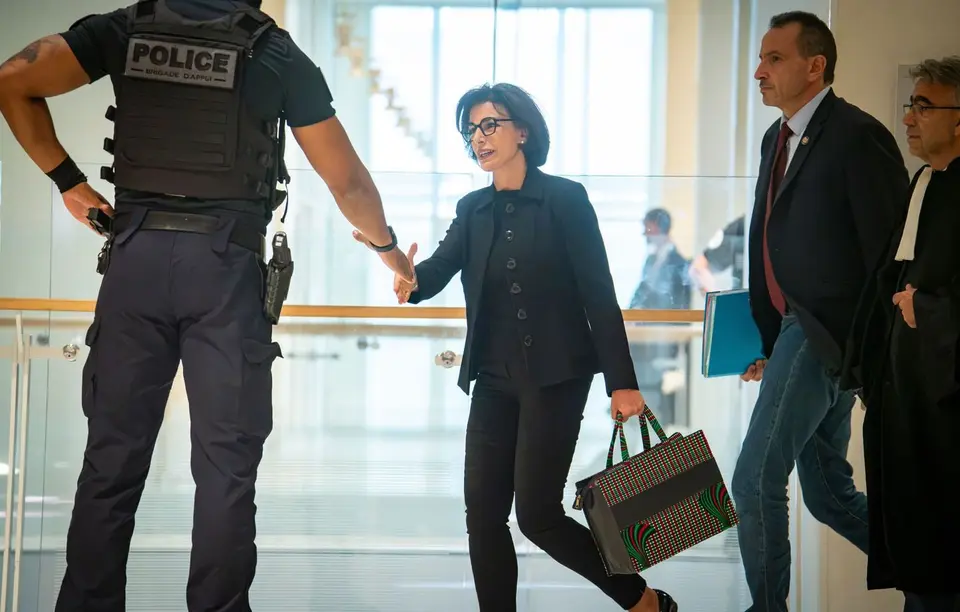
Carlos Ghosn absent, Rachida Dati alone in the witness box on first day of trial
The hearing had barely begun when the president of the 32nd criminal court of Paris posed the question: "Is there a lawyer for Carlos Ghosn?" Silence in the courtroom. The clerk confirmed that no representative had come forward — unaware that the Lebanese counsel of the former CEO of Renault-Nissan was discreetly following the proceedings from the back of the room. According to 20minutes.fr, this absence was expected: Ghosn had made known since late summer that he would not appear, his summons having been served a week late. After more than two hours of debate over a possible adjournment, the court decided to proceed with the trial.
It was therefore alone, before a packed courtroom, that Rachida Dati appeared in the witness box, dressed in a black trouser suit with an impeccable blow-dry. The former minister and current mayor of the 7th arrondissement of Paris is suspected of having received 900,000 euros between 2009 and 2013 from RNBV, a Renault subsidiary, in exchange for illegal lobbying within the European Parliament, where she then sat as a Member of Parliament. She has consistently denied these claims, asserting that she provided legal advice in her capacity as a lawyer.
"Rachida Dati will have to assume alone what is being blamed on M. Ghosn," her lawyer, Olivier Pardo, lamented. Paradoxically, the defence opposed the adjournment of the case. "Rachida Dati wants to be tried because she wants to exit with her head held high," he insisted. Throughout the afternoon, the defendant remained seated, arms and legs crossed, with a closed expression and no apparent reaction.
A summons that arrived too late
The procedural error is at the heart of the tensions on this first day. The court president, Claire Saas, clarified that Carlos Ghosn should have been summoned no later than 6 July 2026. However, his summons was only served on 6 July — the deadline date — rendering it de facto invalid. The document had nevertheless left the National Financial Prosecutor's Office (PNF) as early as November 2025. In late December, it was sent to the general consulate in Beirut, which sent a letter — not by registered mail — to Carlos Ghosn. For several months, no further action was taken.
In early May, noting that Ghosn had not collected his summons, the French courts contacted the consulate four times. It was only on 2 July that a new letter, this time by registered mail, was sent to the person concerned. He did not receive it until 6 July. As early as the next day, Ghosn contacted the consular services, but his summons was already no longer valid. The PNF, called into question by the defence, rejected all responsibility, citing its multiple follow-ups.
A dilatory manoeuvre, according to the civil parties
For the lawyers of the civil parties, the scenario leaves no doubt: it is a deliberate strategy by the former car magnate to escape the proceedings. "The reality is that Carlos Ghosn has no intention whatsoever of presenting himself before the courts," said Kami Haeri, lawyer for Renault, a civil party to the trial. Ghosn "knew the dates of this trial, he only had to ensure he was untouchable until 6 July," he added.
Jérôme Karsenti, lawyer for the Anti-Corruption Association, was even more direct: "It is evident that Carlos Ghosn had absolutely no intention of being tried [...] his sole objective is to make a fool of justice."
No one expected Ghosn, exiled in Lebanon and subject to a warrant since 2023, to be physically present in Paris. But his absence has concrete legal consequences. "With a proper summons, we would have at least had his written statements," Pardo recalled. More significantly, this irregularity opens the door for him to lodge an opposition to the forthcoming judgment, which would allow him to be retried in first instance.
The prosecution remains sceptical as to the usefulness of a new summons. "There is a very strong probability of recurrence of the situation if a new summons is sent," the prosecution estimated. The merits of the case have not yet been addressed.
Source: Google News LU FR