Dati trial: former minister under pressure at Paris correctional tribunal
Rachida Dati, tried for corruption and abuse of influence, was intensely questioned about her €900,000 legal fees paid by Renault-Nissan BV.
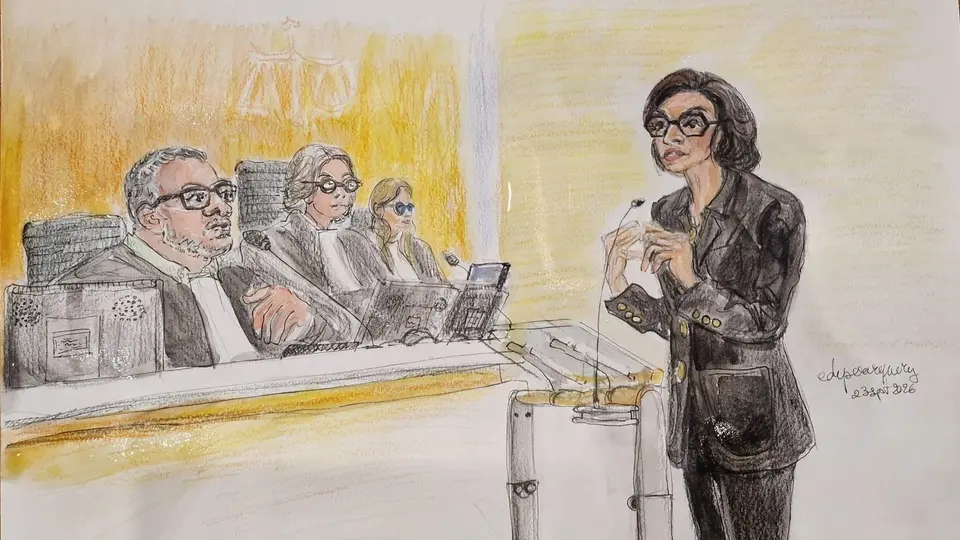
Dati struggling before judges over her work for Renault-Nissan
According to France Info, Rachida Dati's questioning intensified on Wednesday 23 September before the Paris correctional tribunal, where the former Justice and Culture Minister has been appearing for a week on charges of corruption, abuse of influence, and concealment of abuse of power and breach of trust.
She is accused of receiving €900,000 in legal fees between 2010 and 2012, paid by Renault-Nissan BV (RNBV), a company then run by Carlos Ghosn. The reality of the work carried out, performed in parallel with her role as MEP and mayor of the 7th arrondissement of Paris, lies at the heart of the suspicions.
Morocco missions under scrutiny
When the hearing resumed on Wednesday afternoon, the assessor judges focused on the defendant's trips abroad. One of them targeted a factory in Tangier, the framework agreement between Renault and the Moroccan authorities for which had been signed in 2008 — before any intervention by Dati. Questioned about her precise role, she replied: "I was not in the most technical depth, I was with the decision-makers."
She argued that Carlos Ghosn wanted to ensure that Morocco would honour its financial commitments in a context of "very, very significant social unrest". Her role, she explained, was to ensure there would be "not a stone in the shoe, or an obstacle". Her answers, delivered at a rapid pace despite repeated objections from the clerk, did not dispel the court's doubts.
The assessor also noted that she had not sought reimbursement for her travel expenses to Morocco, claiming to have combined personal trips and professional missions. "How can you handle these matters in the course of private stays?", he asked, openly evoking "the impression of casualness" this created. "You know, I have never taken a beach holiday", Dati replied, citing her dependant family and her retired father.
European mandate and lobbying accusations
The female assessor judge sitting to her right then addressed her candidacy in the spring 2009 European elections. Dati indicated that she had "given in" out of loyalty to Nicolas Sarkozy and the UMP, but also for her daughter, who was then a few months old: "I had to hold the line."
On her activity in the European Parliament, she described the chamber as "a political respite", "not at all hostile". The assessor immediately replied: "If it is so pleasant, why do you go there so little?" Dati assured that she had done "the minimum" required, describing herself as a "rank-and-file MP" and rejecting any "dilettantism".
The point of this questioning is clear: the prosecution contends that Dati used her European mandate to serve Renault's interests. Three written questions addressed to EU institutions are presented as the quid pro quo of the corruption pact allegedly concluded with Ghosn.
Confronted with these suspicions, Dati repeated that she had "never been in a position of conflict of interest" and that there was "no commission" for the manufacturer. However, she acknowledged having informed Carlos Ghosn by email of a written question she had asked in July 2012 about vehicle noise levels — a matter she herself describes as contrary to Renault's interests. "In the interests of transparency", she justified, adding: "I take a position against my client, and that is hardly going to work!"
Tense exchange with the prosecution
The National Financial Prosecutor's Office (PNF) closed the questioning. When prosecutor Julien Augereau questioned her about the negotiation of her fees, Dati became muddled in her explanations before concluding laconically: "It is a discussion we had together." When asked about any advice received from the political world, she replied that the subject "had not been raised".
The exchange quickly became heated. Dati raised her voice, accusing the prosecutor of treating her differently from other elected officials: "I respected the law like the other MPs, it is not abnormal or illegal behaviour." The tribunal president had to call her to order. "Ms Dati, please speak facing us." "Sorry, my apologies. Besides, it will relax me", the defendant murmured.
The prosecutor then insisted on a central point: how had Dati, barely out of government, been able to negotiate such fees with an international group of Renault-Nissan's stature? The question remained unanswered at the end of this hearing day.
Source: France Info