Trial of "Islamic State poster girl": Émilie König faces her accusers in Paris
Émilie König, a Breton woman suspected of having propagandised for the Islamic State group and recruited other women, is continuing her trial at the special assize court in Paris. She apologised during her initial hearing and acknowledged that she is no longer radicalised.
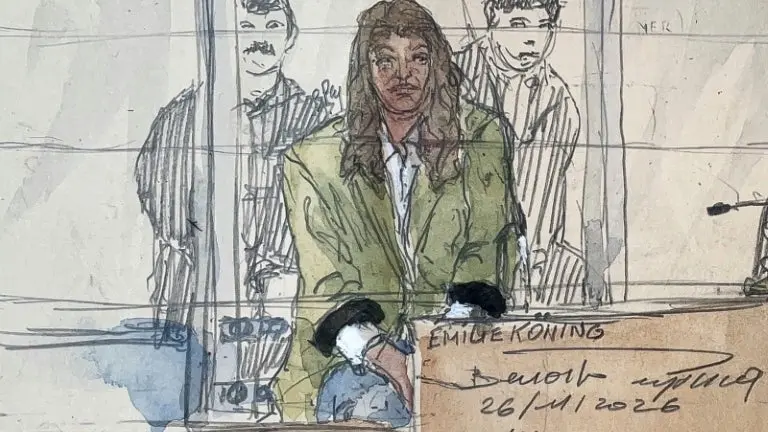
Second day of hearing for Émilie König
According to BFM TV, the trial of Breton woman Émilie König continued on Friday before the special assize court in Paris, for criminal terrorist association. At 42 years old, the woman who had appeared veiled in Islamic State propaganda videos appeared this time without a veil, dressed in a yellow jacket, stating that she is no longer radicalised.
During her first statement on Thursday, König apologised in tears. "I wanted to apologise to my children. My two eldest did not deserve to grow up without a mother. The younger ones did not deserve to be born there," she declared, adding that she was apologising "to the entire French nation".
König's role in recruiting women
König is suspected through her propaganda activities of having contributed to the recruitment of other women to join the Islamic State in Syria. Vanessa B., a Islamic State "returnee" sentenced to 11 years' imprisonment last October, testified during this second day of hearing that König had housed her upon her arrival in Syria and had encouraged her to meet someone. "She reassured me by telling me I could leave for Turkey at any time," affirmed Vanessa B. from her prison in Roanne.
Vanessa B., who had two children in Syria who died there at a young age, confirmed in her October trial that she had been in contact with König. This testimony illustrates the intermediary role that König is believed to have played, facilitating the arrival of French women in territories controlled by the terrorist group.
König's journey in Syria
In 2013, König left France for Syria with her two children. She first settled in Azzaz in north-western Syria, then in Raqqa, the capital of the Islamic State, after marrying a French fighter from the terrorist group, Mohamed S. During her stay, she benefited from housing and status, elements which allowed her to play an active role in the Islamic State community.
Personal background and context of radicalisation
During the first day of hearing, investigators presented König's family context. "She grew up with the feeling of not having been wanted," indicated an investigator. The woman from Lorient is said to have been, according to her solicitor, "assaulted, brutalised, beaten in her childhood and adolescence" before "finding in the Islamic State a valorisation she had never known".
The president of the court read a letter from König's mother, enumerating the problems encountered: drug addiction and repeated lies. The mother concluded her letter with a definitive rejection: "This is the last time in your life you will hear from me. I bid you farewell."
Psychological expert assessment and continuation of trial
During this second day, several hearings were expected, including that of a psychological expert who had evaluated König. The testimony of women who had contact with her in Syria forms a central part of the public prosecutor's strategy to establish her active role in recruiting and promoting the terrorist group. The trial continues to shed light on the functioning of Islamic State women's networks and the radicalisation mechanisms that led several French women to travel to Syria.
Source: BFM TV