Trial of Émilie König: Daesh propagandist faces assize court in Paris
Émilie König, a Breton woman who became a propagandist for the Islamic State in Syria, appears before the special assize court of Paris from 26 to 30 November. She faces 30 years' imprisonment for terrorist conspiracy.
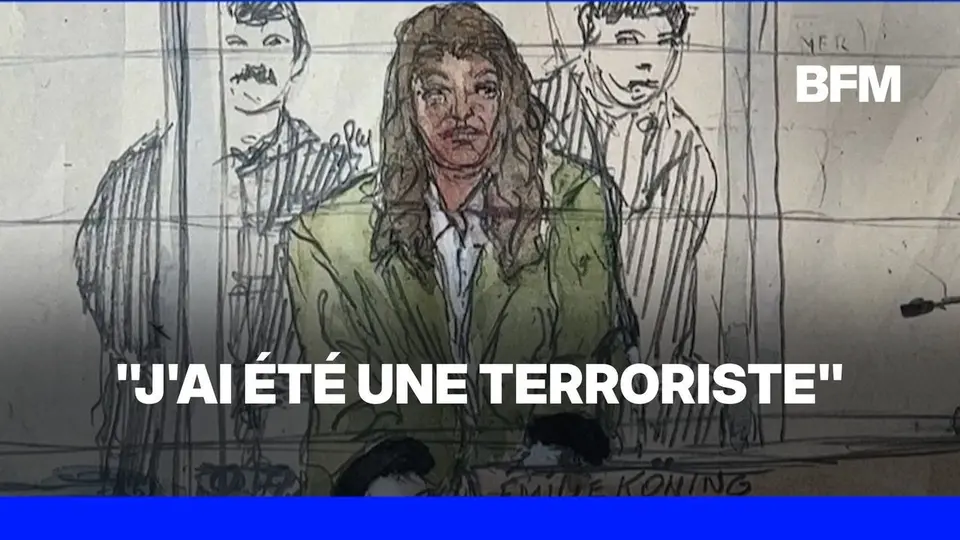
The trial of an Islamic State propagandist
According to BFM TV, Émilie König, a Breton woman who joined the Islamic State in Syria in the 2010s, has appeared before the special assize court of Paris since Thursday 26 November. She is prosecuted for terrorist conspiracy and faces thirty years' imprisonment. The proceedings will continue until Monday 30 November.
Converted to Islam at 17 years old under the forename Samra, König adopted the name "Ummu Tawwab" (mother of he who forgives) when she joined the ranks of the Islamic State. She claims today, at 41 years old, to have renounced Islamic radicalisation and to be concentrating on her five children: two adult older children who remained in France, and three minors placed with foster families upon their return from Syria.
The National Counter-Terrorism Prosecutor accuses König of having fully committed herself between 2013 and 2017 alongside jihadists, benefiting from "property, financial and logistical support" from the group. According to the prosecution, she extensively disseminated "the ideology and military strategy" of the terrorist organisation, to the point of becoming a "true figurehead". The magistrates will have to assess her current dangerousness.
Born on 9 December 1984 in Ploemeur in Morbihan, König had a childhood marked by the absence of her father, who left the household when she was 2 years old. She suffered sexual violence at 13 years old and her sporting education was interrupted by a knee injury. She went from one small job to another in Lorient and Paris — shop assistant, barmaid, hostess — whilst increasing her consumption of cocaine and alcohol.
In 2005, pregnant at 21 years old, she returned to Brittany to give birth to a boy. She then met a cannabis dealer who adopted her son. This man became violent: König suffered beatings and gave birth prematurely to her second son in 2007. At 25 years old, she fled Brittany with her two children to Boulogne-Billancourt in Hauts-de-Seine.
In 2010, her religious practice intensified. She prayed regularly, wore the niqab and then the full veil. In a documentary made by sociologist Agnès De Féo in 2012, she declared that she did not vote because "politicians are against us, Muslim women". She grew closer to the small group Forsane Alizza, which campaigned against the law prohibiting the concealment of the face. After its dissolution, König called for "holy war" on Facebook; the authorities then froze her bank accounts.
Captivated by online jihadist propaganda, König envisaged her "hijra" (exile) to Muslim lands. She initially considered Yemen and Saudi Arabia before turning to Syria. In early 2013, she exchanged messages on Facebook with Axel Baeza, a 28-year-old convert from Nîmes who had left for the Iraq-Syria zone in summer 2012. Seduced by this "mujahid" (fighter), König and Baeza married at a distance by Skype in April 2013.
The following month, König joined her husband in Syria thanks to a dowry of 300 dollars that Baeza had sent her. From the first weeks, Baeza showed himself to be violent: he subjected König to belt blows and slaps at the slightest contradiction. After three months in Syria, the first signs of disillusionment appeared.
Source: BFM TV