Libyan trial on appeal: seven years' imprisonment sought against Sarkozy
The public prosecutor's office has sought seven years' imprisonment against Nicolas Sarkozy in the Libyan trial on appeal, the same sentence as in the first instance. The verdict is expected on 30 November.
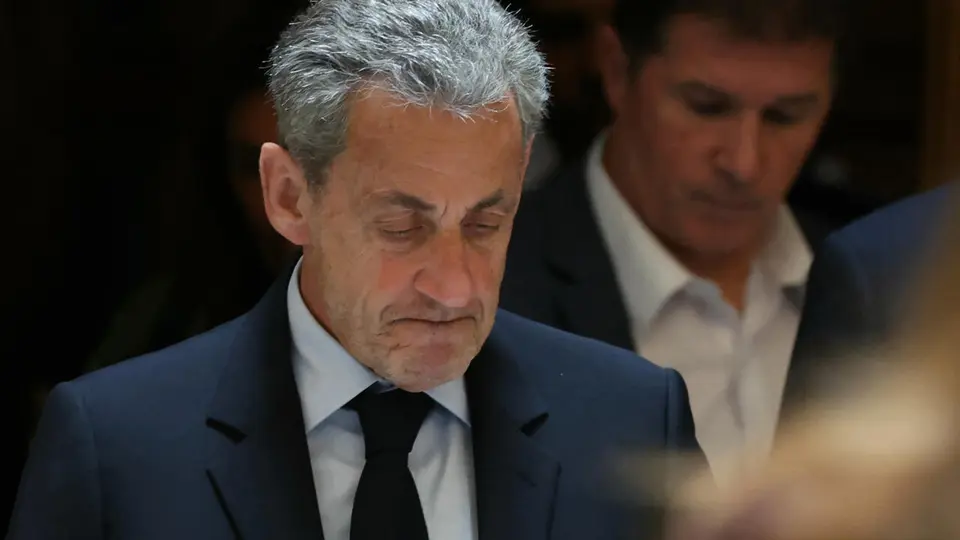
Seven years sought against Sarkozy at the end of a three-day prosecution address
The public prosecutor's office sought seven years' imprisonment against Nicolas Sarkozy following three days of prosecution arguments before the Paris Court of Appeal, according to RFI. This request is identical to that made during the first instance trial.
Assistant State Counsel Rodolphe Juy-Birmann described the former head of state as the "principal, sole beneficiary" and "instigator" of the criminal association, the person who "pulls the strings, distributes the roles, whilst always taking care to remain in the background" and who has "exempted himself from all barriers of caution and integrity". The prosecution did not, however, seek an immediate remand warrant.
In addition to the prison sentence, the prosecution sought a fine of 100,000 euros and five years' ineligibility — the same requests as in the first instance, on a maximum exposure of ten years.
The prosecution calls for broader conviction
In the first instance, Sarkozy had been found guilty only of criminal association, and sentenced to five years' imprisonment. Following this judgment, he became the first president of the Fifth Republic to be incarcerated, spending twenty days behind bars.
Before the Court of Appeal, the public prosecutor's office went further: it asked the judges to find the former president guilty of all charges, including corruption, illegal financing of his 2007 presidential campaign, and handling of embezzled Libyan public funds.
According to the prosecution, Nicolas Sarkozy, whilst serving as Minister of the Interior under Jacques Chirac, allegedly concluded an agreement with dictator Muammar Gaddafi in order to obtain covert financing from the Libyan regime. In return, he allegedly undertook, in particular, to examine the legal situation of Abdallah Senoussi, Gaddafi's brother-in-law and second-in-command of the regime. The latter had been sentenced in absentia in 1999 to life imprisonment by French courts for ordering the UTA DC-10 bombing, which killed 170 people in 1989, including 54 French nationals. He was then seeking a lifting of the international arrest warrant against him.
The prosecution's scenario is based notably on two secret meetings organised in late 2005 in Libya between Senoussi and Claude Guéant as well as Brice Hortefeux, two close collaborators of Sarkozy. In 2006, approximately six million euros allegedly subsequently passed through the accounts of intermediary Ziad Takieddine, since deceased, who had participated in these covert meetings.
These manoeuvres allegedly led, according to the public prosecutor's office, to "tainting the financing of the supreme election of the Fifth Republic", introducing a "breach of equality" between candidates and a "risk of foreign interference".
The gravity of the facts and absence of remorse at the heart of the prosecution address
To justify a sentence "in the upper part of the spectrum", the Assistant State Counsel emphasised two elements. On the one hand, the intrinsic gravity of the facts: "Without exemplary conduct from public officials, trust erodes", and "the preservation of the social contract" constitutes "a major issue requiring stern repression of breaches of integrity". On the other hand, the attitude of the defendants, who "have shown no introspection, remorse or repentance" and have, following the first judgment, "publicly called the impartiality of justice into question". It is therefore necessary to "punish dishonesty", the magistrate concluded.
Throughout the three days of prosecution arguments, Sarkozy listened without making eye contact with the prosecution, according to RFI's special correspondent at the Court of Appeal, Laura Martel.
The defence promises to demonstrate the client's innocence
Sarkozy's lawyer, Christophe Ingrain, rejected all the accusations at the end of the hearing. "We will demonstrate in fifteen days, during our closing arguments, the complete innocence of Nicolas Sarkozy. There is no [Libyan] money in his campaign, in his assets, and for good reason: there was no financing of Nicolas Sarkozy's campaign by Libya. [...] Nicolas Sarkozy is innocent, his election was not tainted", he declared to the press.
The former president himself has maintained throughout the proceedings that "not a single cent" of Libyan money reached his 2007 presidential campaign.
Civil parties welcome the prosecution requests
The prosecution requests were welcomed by Guillaume Denoix de Saint Marc, founder of the French association of victims of terrorism, a civil party in this trial alongside several survivors and relatives of victims of the UTA DC-10 bombing. "I hope Nicolas Sarkozy goes back to prison, at least long enough to write a second book", he said ironically.
The Paris Court of Appeal's decision is expected on 30 November. In the event of conviction, the former president's only remaining option, should he wish to avoid a return to custody, would be to lodge a cassation appeal.
Source: RFI