Network of fake overnight stays by uniformed officers: damage of €15.5 million, 21 arrested
Two criminal organisations defrauded the state using forged accommodation invoices for uniformed officers. The case involves 1,309 individuals.
Forged accommodation receipts for uniformed officers: network stole €15.5 million from the state
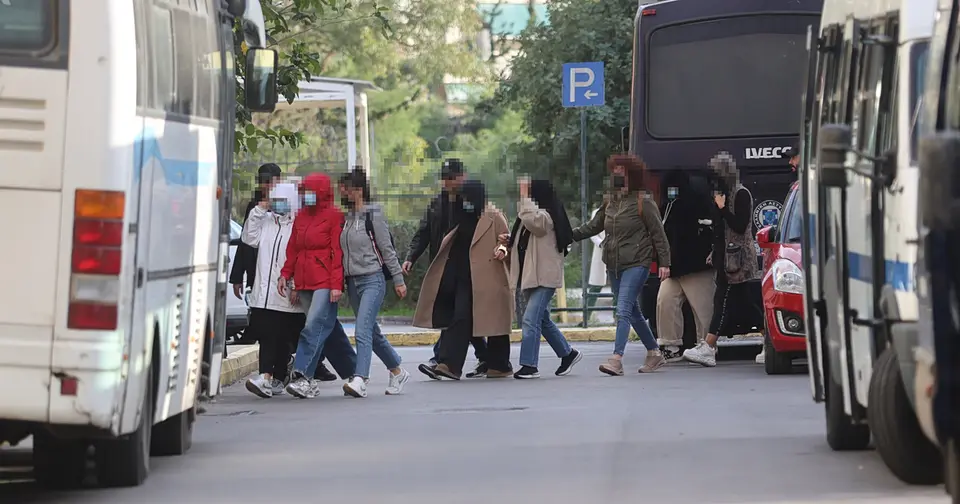
A network of fake overnight stays by uniformed officers caused damage exceeding €15.5 million to the state. The network operated through two parallel criminal organisations in Athens, Ioannina, Mytilene and abroad, according to In.gr. A total of 1,309 uniformed officers and civil servants are involved in the case, whilst among the 21 arrested individuals, four police officers stand out, two military officials and one coastguard officer.
The two organisations, which operated independently of each other, provided accommodation receipts for a fee reaching €300 to uniformed officers who were relocated outside their base for work reasons. These expenses were charged to the state.
Ghost houses and 23 "residents" in 44 sq.m.
The uniformed officers either had never stayed at the hotels they declared, or showed accommodation in ghost properties or residences managed by members of the network. The two gangs had leased more than 173 residential properties in various areas of the country to issue fake accommodation receipts.
Many of these properties lacked even water and electricity. In one notable case, a property of 44 square metres showed 23 people residing simultaneously according to receipts.
Compensation ranged from €80 to €110 per night for each uniformed officer, plus €30 for meals — totalling up to €150 per day. Even in rare cases of actual accommodation, the amount stated in the receipts was significantly higher than what had actually been paid.
How the system worked
The network exploited a change in the method of payment for overnight stays. Previously, payments were made directly by the Ministry; subsequently, they began to be credited to the bank accounts of the uniformed officers themselves, who paid the accommodation costs themselves.
The gangs preferred receipts under €500 so that bank transactions were not mandatory. In cases where electronic payment was required, the procedure was as follows: the uniformed officer paid, for example, €3,000 electronically, received a fake receipt, and subsequently the accused returned €2,700 in cash to him, keeping €300 as commission. The uniformed officer then submitted the receipt to his department and received the entire stated amount.
Three key figures and offices in Italy
Three individuals reportedly played a pivotal role in the two organisations. The head of the first is reported to be a former riot police officer and former trade unionist from Ioannina who was seconded to Athens. According to residents of the area, he appeared frequently with extremely expensive vehicles, comparable to those confiscated by authorities.
In the same network was an accountant who maintained an office in Helioupoli, through which fake invoices and fake receipts were issued. A third man undertook to personally deliver the forged documents to uniformed officers — according to ERT, even outside the General Police Directorate of Attica (GADA) and outside the courts of the former Evelpidon School.
In the second organisation, operating in Ioannina and Athens, the head was the same former trade unionist, whilst his wife, known as "Markella", is reported to be deputy head. She is reported to be the owner of an accounting office that issued forged receipts with a "rate" of €150 per invoice. The network had offices in Athens, Ioannina and Italy in order to serve uniformed officers — including coastguard personnel — who travelled there and required receipts for fake overnight stays abroad.
Separation of case file and referrals
Yesterday, 20 of the 21 arrested individuals were brought before the courts. The case file was separated into two branches. Criminal prosecution was brought against 16 accused for the felonies of directing, forming and participating in a criminal organisation, complicity in fraud against the state carried out continuously, and money laundering from criminal activity. The 16 were referred to the competent investigating magistrate and given a deadline to give their statement.
The remaining four are military personnel and face misdemeanour charges; they were referred to the military court, as military personnel are subject to different service and criminal treatment. The competent authorities characterise the two groups as "communicating vessels" of a single network that defrauded the state for an amount exceeding €15.5 million.
Source: In.gr