Predator case: lawyer Kesses accuses Court of Cassation of covering up surveillance
Lawyer Zacharias Kesses has levelled sharp criticism at the Prosecutor's Office of the Court of Cassation over five dismissal orders in the wiretapping case.
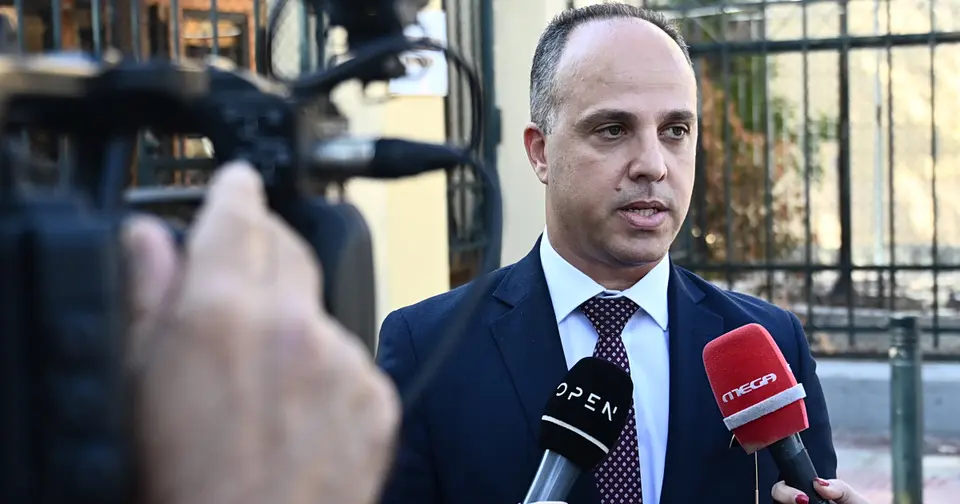
Kesses: "Five dismissal orders in a case concerning 87 persons"
Lawyer Zacharias Kesses, representing victims of the Predator spyware, has launched severe criticism at the handling of the case by the Prosecutor's Office of the Court of Cassation. Speaking on the "Anatropes" show on Mega News 104.6, as reported by Vima, Kesses cited repeated decisions against conducting investigations — both through a report by Court of Cassation prosecutor Tzavella and through five orders by prosecutor Bakela.
"We have a report from Mr Tzavella and we also have five orders from Mr Bakela, by which he has decided not to conduct investigations," the lawyer stated. Among the requests that were dismissed, he cited separate orders concerning applications by former prime minister Antonis Samaras, journalist Thanasis Koukakis, MP Christos Spirtzis and a private individual.
The contradiction: a court decision that was ignored
Kesses stressed that even an anonymous letter or telephone report could lead to basic investigation, whereas in this case there was no response to a court decision that required investigation.
"Here we have a court decision from the Single-Member Court of 26 February 2024, which by court decision has requested investigation, and what we have is certain prosecutors, two specific ones, saying that there is no reason for me to investigate," he stated. He also referred to the investigation by prosecutor Zisis in 2024, noting that the victims of the surveillance, political figures, the commander of the Armed Forces or EYP officials were not called to give statements. That investigation concluded that the crime of espionage was not substantiated.
According to Kesses, the decision of the Single-Member Court of First Instance of Athens revealed new evidence and documents that made examination of the crime necessary — including the surveillance of Defence Minister Nikos Dendias. The case file was forwarded to the prosecutor of the Court of Cassation, who, according to him, decided on 27 April that there was no reason for a new investigation.
"We do not know what has been lost and what has leaked"
The lawyer made particular reference to information that may have leaked through surveillance of persons with critical responsibilities in the state apparatus.
"We do not know what has been lost, what has leaked, what they saw in the minister's office, in Mr Dendias's office, what they took from the commander of the Joint Chiefs of Staff," he stated, raising questions about the investigation into the surveillance of the commander of the Joint Chiefs of Staff, the security director of EYP and the head of counter-intelligence. He also referred to a specific operation that, according to him, was underway on 22 November 2021 — the day on which the telephone of the head of counter-intelligence was bugged.
The prosecution of an EYP official and the matter of secrecy
Kesses also criticised the handling of the complaint filed on 1 September 2024 by the then counter-intelligence director of EYP, who alleged that he had fallen victim to surveillance through spyware. The case was dismissed on the grounds that the complainant had not provided specific information about the file he was handling and what might have leaked.
The lawyer characterised this reasoning as problematic, citing article 27 of law 4704/2020, which, according to him, provides for a duty of confidentiality for EYP employees and restricts their ability to disclose classified information. "What Mr Bakela should have done was to request that the documents be declassified, so that we can establish what leaked," he stated. According to information available to him, disciplinary proceedings were brought against the specific official by the service following the submission of the complaint.
"The second and more shocking scandal is the cover-up"
Kesses argued that the wiretapping case has two distinct dimensions: the entrapment of 87 persons — including individuals with critical responsibilities — and the subsequent handling of the case by the competent authorities. The latter, in his assessment, is the more serious.
"The wiretapping scandal has two stages. The first stage concerns the entrapment of 87 persons, some of whom had critical responsibilities. The second and more shocking scandal, with the most serious crimes, which carry much graver culpability, is the cover-up. And there we are not talking about dereliction of duty. We are talking about abuse of power," he stated.
The lawyer argued that responsibility for abuse of power should be sought against the prosecutors who, according to him, failed to take the steps they should have to investigate the case. Commenting again on the dismissal of the complaint filed by the EYP official, he characterised this move as indicative of institutional erosion. He also referred to the forthcoming court proceedings on 11 December, when new evidence on the case is expected to emerge.
Source: To Vima