Nikola Ivančić: leader of cocaine cartel trafficking drugs from South America to Croatia
Nikola Ivančić, a Croatian involved in a drug affair connected to Liberia's former First Lady, was already convicted in 2019 for organising cocaine smuggling. The network attempted to transfer 11.3 tonnes of drugs.
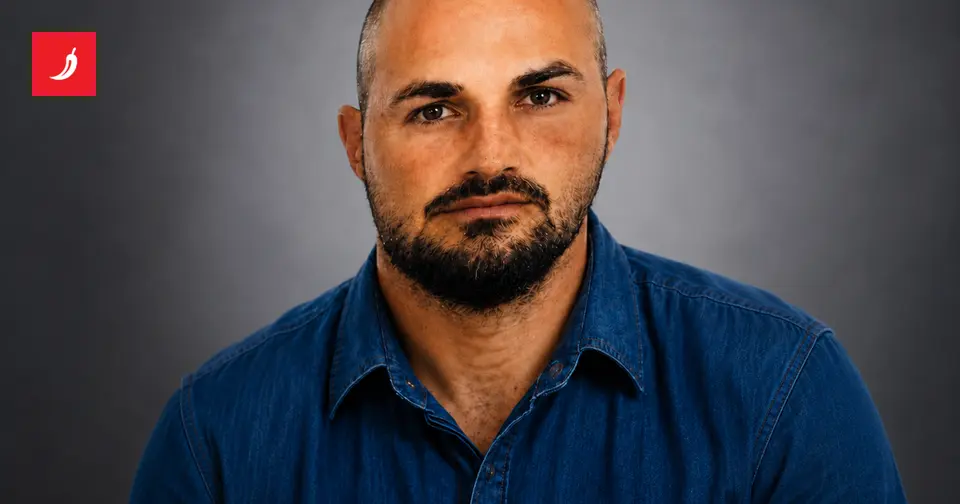
Ivančić led a network that sourced cocaine from Peru, Ecuador and Argentina
Nikola Ivančić, one of the Croatians identified by Index.hr in a drug affair linked to Liberia's Vice President Jewel Howard-Taylor, is not without a previous criminal record. As early as 2019, he pleaded guilty before the Zagreb County Court for organising cocaine smuggling from South America and settled on a sentence of three and a half years in prison — relatively lenient given the scale of the criminal offence. He had effectively already served the sentence through investigative detention from 2009 to 2012. Now a new indictment awaits him.
The organisation that Ivančić ran was active from 2005 to January 2009. Cocaine was sourced in Peru, Ecuador and Argentina, then organised transport brought it to Croatia where it was sold on the domestic illegal market. Ivančić, as he himself admitted, was at the top of this pyramid: he connected associates, financed drug purchases and travel, gave operational instructions and sought safer ways to transport cocaine across the Atlantic.
Peruvian intermediary and distribution network
A key role in the procurement network was played by Peruvian José Martin Moreno Perea, nicknamed "Pepe". According to the court ruling, he negotiated purchasing terms in Peru, linked Ivančić's organisation with local dealers and participated in preparing the drugs for smuggling to Croatia. Money for cocaine was sent via Western Union and MoneyGram — the court established that at least 1,334,612 kuna in the currency of the time was delivered through these channels for the organisation's needs.
Communication within the network was concealed through telephone calls and email. Ivančić sent detailed instructions to members, and in cases of non-compliance or suspected disloyalty, threats and force were used. Members of the organisation had access to weapons.
Ivančić personally introduced one of his associates into South American drug circles: he took him to illegal cocaine production laboratories, gave him a forged American passport and driving licence to facilitate movement across the region, and paid him up to 1,500 dollars per month for this work.
Attempted 11.3 tonnes, delivered 27 kilograms
The court established that the group attempted to transfer at least 11.3 tonnes of cocaine to Croatia, but these attempts were halted by police interventions. Only just over 27 kilograms were successfully transported, of which at least 26.80 kilograms ended up on the illegal market. For the delivered cocaine at least around 53,000 dollars were paid, and Ivančić was credited with unlawful proceeds of two million kuna in the currency of the time.
After arriving in Croatia, the drugs were distributed to Zagreb, Split, Poreč and other parts of the country. Ivančić personally handed over 11 kilograms of cocaine for transport to Split on two occasions. In the Poreč area and surroundings, one customer was sold at least ten kilograms of cocaine over several years — initially in quantities of 100 to 250 grams once or twice per month at around 40 euros per gram, and as time went on deliveries increased.
Tent fabric, DHL parcels and drug mules
The methods by which drugs were attempted to be transferred from South America, according to the ruling, were almost film-like in their variety.
In one case, the purchase of six kilograms of cocaine for 18,000 dollars in Peru was arranged, with a plan to transport it to Zagreb by plane. The cocaine was soaked into tent fabric and taped to a suitcase. The plan fell through in July 2006 at Madrid's Barajas airport, where Spanish police found 3,695 grams of cocaine in the taped material and another 3,554 grams in the tent fabric.
Another channel was DHL. Cocaine from Peru was sent hidden among cosmetics, clothing and handicrafts. On 27 July 2006 alone, Peruvian police seized three shipments at a DHL warehouse: they contained 443, 321 and 1,784 grams of cocaine. Some parcels were addressed to Zagreb addresses with non-existent house numbers. According to the ruling, Ivančić approved this method of smuggling and bore the cost of sending.
The organisation went a step further: cocaine was soaked into paper which was then sent in parcels to fictional names and addresses. When a parcel ended up amongst undelivered DHL shipments in Zagreb, it was accessed through an internal contact. Ivančić would then bring the parcels to a specially rented flat, where he would reprocess the cocaine from the soaked material back into solid form. In this way, according to the ruling, at least one kilogram of cocaine was successfully smuggled and sold. One seized shipment was particularly unusual: a book with printed musical notes had 1,510 grams of cocaine soaked into it.
The third channel involved so-called "swallowers". Ivančić gave the instruction to examine whether cocaine could be sent to Croatia in the stomachs of couriers. The drugs were packaged in small pellets in Lima adapted for swallowing, couriers were instructed how to ingest them, and they were also given medicines meant to ease the process. At least 2.8 kilograms of cocaine were transported to Zagreb through this channel. Couriers were paid 2,500 euros for the work, and Ivančić financed the drugs, costs and logistics of the entire operation.
Cocaine hidden in condoms in Buenos Aires
One of the more bizarre cases, which Index.hr described based on court documentation, occurred in 2007 in Buenos Aires. Just over 241 grams of cocaine was purchased there for 800 dollars, with Ivančić providing the money. The drugs were then hidden in condoms inside the body of one of the couriers.
Ivančić now faces, besides the sentence he already served from 2019, a new indictment — one connected to the affair with Liberia's former First Lady, which Index.hr has already reported on.
Source: Index.hr