Ukrainian diver detained in Croatia for Nord Stream sabotage worked on Hollywood film
Volodymyr Zhuravliov was arrested in Pula whilst advising a film starring Sean Penn and Adrien Brody about the attack itself.
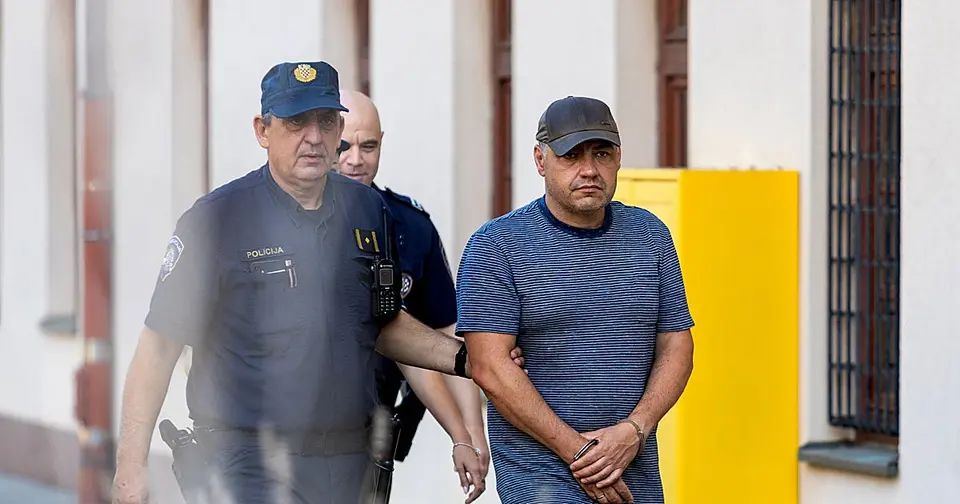
Detained on film set about Nord Stream while being sought for sabotage
According to Google News ES — Crime, Croatian authorities have arrested Ukrainian diver Volodymyr Zhuravliov in the city of Pula, where he was working as a technical adviser on a Hollywood film shoot about the attack on the Nord Stream gas pipelines. The film, titled 'Snake Island', stars Adrien Brody and Sean Penn under the direction of Doug Liman. The detention took place last Wednesday pursuant to a European detention order issued by Germany.
Zhuravliov is a Ukrainian national, professional diver and diving instructor with a career linked to diving schools in Kyiv. The German Public Prosecutor's Office accuses him of having attached explosives to the gas pipelines together with other divers in the September 2022 attack that put Nord Stream 2 out of service. The charges include bomb attack, unconstitutional sabotage and destruction of infrastructure.
The Pula Croatian court ordered pre-trial detention "with a view to his extradition" to Germany, arguing "risk of flight", following interrogation conducted by a public prosecutor. In his initial statements, the suspect denied any connection with Russian intelligence.
Second detention, same suspect
This is not the first time Zhuravliov has been arrested for the same facts. Polish authorities had previously detained him for his alleged involvement in the destruction of the gas pipelines, but refused to extradite him and released him. The argument put forward was that any Ukrainian attack of that kind would have constituted a legitimate act of war and not a crime. From Poland he travelled freely to Croatia, where he was hired as an adviser in the film production.
German investigators are working on the hypothesis that Zhuravliov did not act on behalf of any Russian intelligence agency, but was recruited as a mercenary for that specific operation, given his training and experience in diving, in exchange for economic compensation.
The net tightens on the diving team
Zhuravliov's detention is the second in the framework of the German investigation into the Nord Stream sabotage. The alleged leader of the group, Serhii Kuznetsov, a former Ukrainian officer, was captured on holiday in Italy in August 2025 and subsequently extradited to Germany. At the end of June last, the Federal Prosecutor's Office formally brought charges of complicity in a war crime for attacking civilian targets, in addition to causing an explosion, destroying property and disrupting public services.
German prosecutors contend that the plans for the sabotage were developed on behalf of Ukrainian state agencies with the aim of preventing Russia from pressuring Germany during the conflict and using gas revenues to finance the war. Danish and Swedish police suspended their investigations in 2024, but Germany continued the inquiry following a Ukrainian lead from 2023. German courts have assumed jurisdiction over the case because the damaged gas pipelines terminate in the state of Mecklenburg-Western Pomerania, and their loss directly affected the country's energy and domestic security.
Infrastructure valued at 12 billion euros
Nord Stream 2, whose destruction is being investigated, represented an investment of approximately 12 billion euros. Half was financed by Russian Gazprom and the remainder was distributed among five major European energy companies — Engie, OMV, Shell, Uniper and Wintershall — with a contribution of 950 million euros each. The gas pipeline was finalising its construction at the time of the attack and never came into operation.
Russia had halted gas supply through Nord Stream shortly before the attack, presumably in response to Western sanctions imposed following the invasion of Ukraine. The destruction of the gas pipeline eliminated German energy dependence on Moscow, but plunged the German economy into a crisis from which it has still not managed to recover fully.
The German prosecution further contends that the alleged Ukrainian sponsors also planned to blow up the TurkStream gas pipeline, which transports Russian gas to Turkey through the Black Sea, although that plan was never executed.
Source: Google News ES — Crime (es)