Huge Assets Seized in Central Bank Scandal Investigation
Investigators have frozen assets worth nearly 92 billion forints in the case surrounding the Hungarian National Bank. Two proceedings are running: one on suspicion of breach of trust and another on suspicion of money laundering.
Huge Assets Seized in Central Bank Scandal Investigation
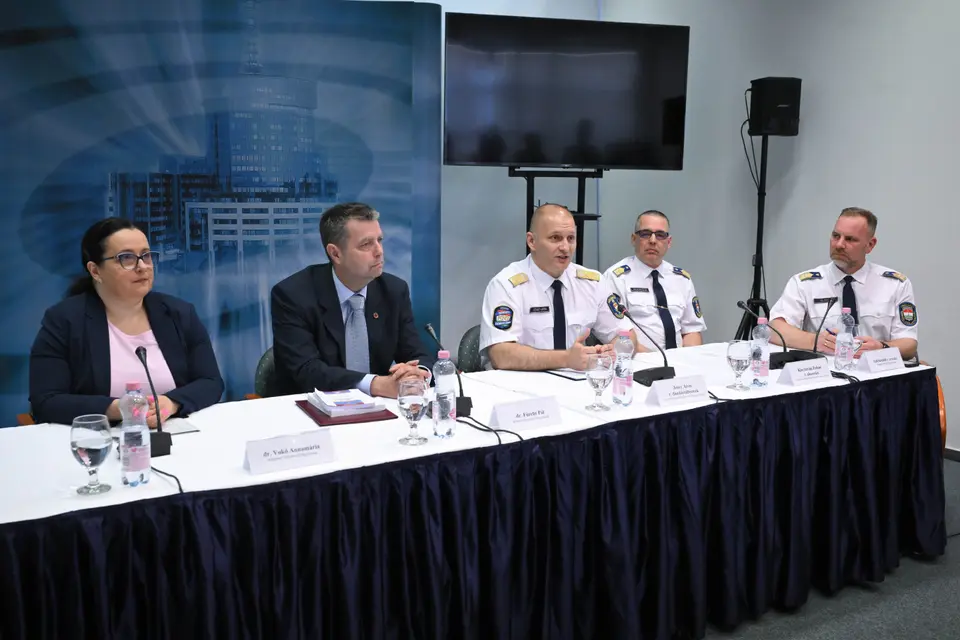
In the central bank case that erupted last spring, authorities are investigating on two fronts, it emerged at a press conference. One line of inquiry is examining breach of trust in connection with renovations of the financial institution's buildings and other property transactions. The other line has been open since last February: a limited company's activities are being examined under a microscope from the perspective of money laundering.
The investigating authorities have frozen nearly 92 billion forints in cash and securities as evidence so far. The bulk of the seized sum was held by companies, but almost half a billion forints in cash was also seized from four private individuals, according to reports from 444.hu.
Within the circle suspected of money laundering, 97 private individuals, thirty-six companies and eleven private equity funds are under investigation. Áron Jeney, the commander of the investigative office, revealed that there was a company with one hundred and seventeen bank accounts running under a single name.
The Central Prosecution Office and the National Investigation Office carried out raids in recent days at an office building in Infopark in the capital, where Raw Development Kft., which belongs to Bálint Somlai's interests, operates. According to Annamária Vokó, the head of the prosecution office, coordinated action was carried out affecting seventeen legal entities. At one location, they seized more than three hundred boxes of paper-based documents, as well as tens of terabytes of digital material.
Pál Fürcht, the head of the prosecution office, calculated that if someone were to read the collected documents for eight hours a day, it would take twenty-one years to get through them. For this reason, the tax authority has been involved in the investigation. According to the chief prosecutor, the entire structure was created by lawyers and economists. Although no coercive measures have yet been applied against anyone, this is partly part of the investigation strategy: making a charge is only advisable if all evidence is on solid ground. "The case is incomprehensibly huge," he stated.
The recovery of assets could be aided by a regulation coming into force in early July, which reverses the burden of proof: if the authority suspects assets originated from a crime, the owner must prove the assets' origin. In the most serious cases, imprisonment of up to twenty years can be imposed.
Source: 444